Tough Trivia, 4/23/21

Pierre_de_Coubertin_Anefo2
Pierre de Coubertin

Yesterday’s question was: Baron Pierre de Coubertin (1863–1937) founded the International Olympic Committee (IOC) in 1894, which lead to the first modern Games in Athens, Greece, in 1896. The Games were held every four years, and were only cancelled during the World Wars, in 1916, 1940, and 1944, and postponed in 2020 due to the Covid-19 pandemic. In 1924, the number of sports in competition expanded with the commencement of the winter Olympics (first held in Chamonix, France). The years of the winter and summer games were split following 1992, with the then-next winter Olympics held in 1994. So, the questions are: Which five countries hosted the most Olympic games? And how many different countries have hosted the Olympics? Bonus: which years were the Olympics held in the United States?

The answer is:

1. With eight already in the books and one planned, far and away the most popular country to host the Olympics is the USA. The summer games were held in St. Louis in 1904, Los Angeles in 1932 and 1984 (and planned for LA in 2028), Atlanta in 2002. The winter games were in Lake Placid in 1932 and 1980, Squaw Valley in 1960, and Salt Lake City in 2002.

2. France has hosted the games five times, with another one planned: Paris in 1900 and 1924 (and planned again for 2024), and winter games in Chamonix (1924), Grenoble (1968), and Albertville (1992).

3. Three countries are tied, hosting the Olympics four times. Germany in Berlin in 1916 and 1936, Munich (West Germany, during the Cold War) in 1972, and winter games in Garmisch-Partenkirchen in 1936.
Italy has hosted three times, with one more planned: Rome in 1960, and winter games in Cortina d’Ampezzo in 1956, Turin in 2006, and Milan-Cortina d’Ampezzo planned for 2026.
Japan has hosted three times, with one coming up soon: Tokyo in 1964, winter games in Sapporo in 1972 and Nagano in 1998, and the 2020 Summer Olympics planned for Tokyo have been postponed due to the pandemic.

Twenty-three different countries have hosted Olympics: Australia, Austria, Belgium, Brazil, Canada, China, Finland, France, Germany (and West Germany), Greece, Italy, Japan, Mexico, Netherlands, Norway, Russia (and the USSR), South Korea, Sweden, Switzerland, the United Kingdom, and the USA.

***

Today’s question is:

Currently, the US Mint produces and circulates six coin denominations: cent, nickel, dime, quarter, half dollar, and dollar. But those aren’t the only denominations the US has minted: in past years, there were several other denominations. How many others can you name? Bonus points if you know which years they circulated. (Remember, Tough Trivia takes the weekend off, so the answer will be posted Monday.)

***

Ian’s Tough Trivia is a daily feature of this blog. Each day, I post a tough question, as well as the answer to the previous day’s question. At some point, I’ll offer a prize for whoever has the most correct answers, and another for whoever participates most often (I’ll take into account people coming in after the start: regular participation starting later is just as good as regular participation starting earlier). There may also be a prize for the funniest or most amusing wrong answer. Simply comment on this post with your answer. I’ll approve the comments after the next question is posted. Sure, you can probably find the answers by searching the web, but what’s the fun in that?

Financial support in the form of tips is very much appreciated: paypal.me/ianrandalstrock


Tough Trivia, 4/22/21

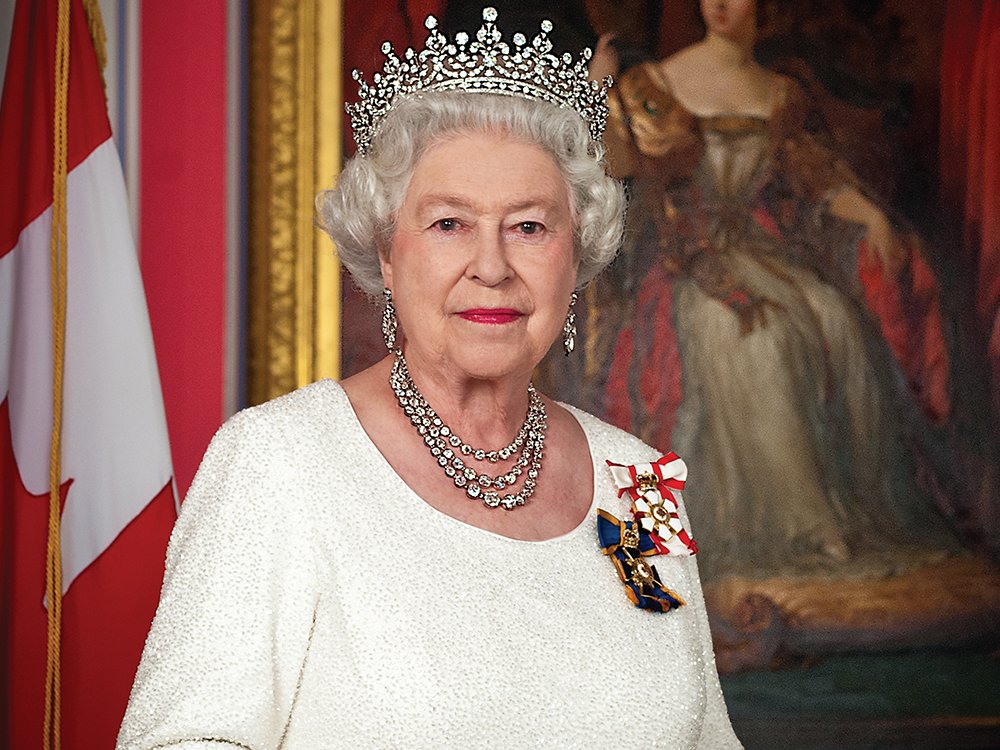
Yesterday’s question was: Elizabeth II, queen of the United Kingdom of Great Britain and Northern Ireland, is the fourth-longest-reigning confirmed monarch in the world (after France’s Louis XIV, Thailand’s Bhumibol Adulyadej, and Liechtenstein’s Johann II). Can you name the five British monarchs whose reigns were the longest?

The answer is:

1. Elizabeth II, who took the throne upon her father’s death, on February 6, 1952, more than 69 years ago. Born in April 1926, when her grandfather, George V, was king. Her uncle became King Edward VIII in early 1936, and abdicated later that year, making her father King George VI. She’ll pass Johann II on May 7, 2022, and Bhumibol Adulyadej 35 days later. If she lives until May 27, 2024 (when she will be 98 years, 36 days old), she will surpass Louis XIV’s record as the longest-reigning monarch of any sovereign state.

425px-Queen_Victoria_by_Bassano2. Victoria, Elizabeth’s great-great-grandmother, who reigned from June 20, 1837, to January 22, 1901 (63 years, 216 days). Born in June 1819, her father, Prince Edward, was the fourth son of the reigning King, George III. She was fifth in the line of succession at her birth (after George’s four oldest sons). Her father died seven months after her birth, and the king died a week later, putting her third in the succession (she was now the niece of King George IV). In 1830, George IV died, and the throne passed to his brother, William IV, with Victoria next in line. Upon William’s death, Victoria became queen, a month after her eighteenth birthday.

800px-Allan_Ramsay_-_King_George_III_in_coronation_robes_-_Google_Art_Project3. George III, Victoria’s grandfather, who reigned from October 25, 1760, to January 29, 1820 (59 years, 96 days). He was 22 years old when his grandfather, George II, died. His father, Frederick, Prince of Wales, died in 1751.


800px-JamesIEngland4. James VI of Scotland, also known as James Charles Stuart, and later as James I from the union of the Scottish and English crowns. He took the Scottish throne on July 24, 1567—barely a year after his birth—and died on March 27, 1625 (57 years, 246 days). The kingdoms of Scotland and England were united under James on March 24, 1603.


1024px-Henry_III_funeral_head5. Henry III, also known as Henry of Winchester, was born in Winchester Castle on October 1, 1207, the eldest son of King John. His father died October 28, 1216, making the nine-year-old Henry King of England, Lord of Ireland, and Duke of Aquitaine. He held the throne until his death on November 16, 1272 (56 years, 19 days).

***

Today’s question is:

Baron Pierre de Coubertin (1863–1937) founded the International Olympic Committee (IOC) in 1894, which lead to the first modern Games in Athens, Greece, in 1896. The Games were held every four years, and were only cancelled during the World Wars, in 1916, 1940, and 1944, and postponed in 2020 due to the Covid-19 pandemic. In 1924, the number of sports in competition expanded with the commencement of the winter Olympics (first held in Chamonix, France). The years of the winter and summer games were split following 1992, with the then-next winter Olympics held in 1994. So, the questions are: Which five countries hosted the most Olympic games? And how many different countries have hosted the Olympics? Bonus: which years were the Olympics held in the United States?

***

Ian’s Tough Trivia is a daily feature of this blog. Each day, I post a tough question, as well as the answer to the previous day’s question. At some point, I’ll offer a prize for whoever has the most correct answers, and another for whoever participates most often (I’ll take into account people coming in after the start: regular participation starting later is just as good as regular participation starting earlier). There may also be a prize for the funniest or most amusing wrong answer. Simply comment on this post with your answer. I’ll approve the comments after the next question is posted. Sure, you can probably find the answers by searching the web, but what’s the fun in that?

Financial support in the form of tips is very much appreciated: paypal.me/ianrandalstrock

Tough Trivia, 4/21/21

Yesterday’s question was: Colors in fireworks are usually generated by pyrotechnic stars. Pyrotechnic stars are pellets of which may contain metal powders, salts, or other compounds that, when ignited, burn a certain color or make a certain spark effect. Burning the proper metal can produce any of the colors of the rainbow. Which metals produce which colors?

The answer is:

Red: lithium or strontium
Orange: calcium
Yellow: sodium
Green: barium
Blue: copper
Indigo: cesium
Violet: potassium or rubidium
Gold (not ordinarily a rainbow color): iron
White (also not a rainbow color): aluminum, beryllium, magnesium, or titanium

***

qe2
Queen Elizabeth II

Today’s question is: Elizabeth II, queen of the United Kingdom of Great Britain and Northern Ireland, is the fourth-longest-reigning confirmed monarch in the world (after France’s Louis XIV, Thailand’s Bhumibol Adulyadej, and Liechtenstein’s Johann II). Can you name the five British monarchs whose reigns were the longest?

***

Ian’s Tough Trivia is a daily feature of this blog. Each day, I post a tough question, as well as the answer to the previous day’s question. At some point, I’ll offer a prize for whoever has the most correct answers, and another for whoever participates most often (I’ll take into account people coming in after the start: regular participation starting later is just as good as regular participation starting earlier). There may also be a prize for the funniest or most amusing wrong answer. Simply comment on this post with your answer. I’ll approve the comments after the next question is posted. Sure, you can probably find the answers by searching the web, but what’s the fun in that?

Financial support in the form of tips is very much appreciated: paypal.me/ianrandalstrock

Tough Trivia, 4/20/21

Yesterday’s question was: Only one US President has also served as Speaker of the House of Representatives. Who was it? Similarly, only one US President has also served on the Supreme Court. Who was that?

The answer is:

11polk
James Knox Polk

James Knox Polk (1795–1849) represented Tennessee in the House of Representatives from 1825 to 1839, and served as the 13th Speaker from December 7, 1835 to March 3, 1839. He did not seek re-election in 1838, and instead was elected Governor of Tennessee, serving one two-year term (1839–41). He lost the election of 1841.

When the 1844 campaign season opened, Polk hoped to win the Democratic nomination for Vice President under former President Martin Van Buren. Former President Andrew Jackson, however, had a break with his former protégé Van Buren, and supported Polk for the top slot. On the ninth ballot, Polk won the nomination, and in the election, Polk took 49.5% of the popular vote, and 170 of the 275 electoral votes. He was, however, the first president to win the election while losing his state of residence (Tennessee) and his birth state (North Carolina). Polk kept his campaign promise, and served only one term as president. He died in June 1845, a scant three months after leaving office.

27taft
William Howard Taft

William Howard Taft was born in Cincinnati, Ohio, on September 15, 1857. His father, Alphonso, served as the 31st Secretary of War (March 8–May 22, 1876), the 34th Attorney General (May 22, 1876–March 4, 1877), the US Minister to Austria-Hungary (1882–1884), and the US Minister to Russia (1884–1885). William attended Yale and then practiced law. In 1887, at the age of 29, he was appointed to a judgeship on the Superior Court of Cincinnati, and then later elected to a full five-year term on the court. His professional goal was always a seat on the Supreme Court, and in 1889, Ohio Governor Foraker suggested Taft for the vacancy on the Supreme Court (he was 32). President Benjamin Harrison chose someone else, and in 1890, appointed Taft Solicitor General of the United States. In 1892, he resigned when he was appointed to a newly created judgeship on the Sixth Circuit Court of Appeals. In 1900, President William McKinley asked Taft to resign, in order to head the commission to organize a civilian government in the Philippines, which he did. In July 1901, Taft became the civilian governor of the Philippines. In late 1902, President Theodore Roosevelt offered Taft a seat on the Supreme Court, but Taft refused, saying his work as governor was not yet done. In January 1904, Roosevelt appointed Taft the 42nd Secretary of War. Roosevelt offered Taft Supreme Court appointments in 1905 and 1906, but by this time, Taft had come to terms with the likelihood he would be the next Republican nominee for President (a position both Roosevelt and Taft’s wife Helen had been pushing him toward). Taft did indeed win the nomination, and handily won the election.

During his one term as President, his policies diverged from those of his friend and mentor, Theodore Roosevelt, and when Roosevelt returned to the United States, he challenged Taft for the nomination. Taft was renominated, so Roosevelt formed his own party to run for the presidency, split the Republican vote, and Taft became the only incumbent President to place third in his bid for re-election. After his presidency, Taft returned to Yale as a professor.

Chief Justice Douglass White died on May 19, 1921, and President Warren Harding considered several others to replace him before finally settling on Taft, who had told him months earlier that he wanted the position. On June 30, 1921, Harding officially nominated Taft, and the Senate confirmed his appointment the same day, by a vote of 61–4, without any committee hearings and only a brief debate in executive session. Taft was sworn in on July 11, the only person to serve as both President and Chief Justice. In failing health, he resigned February 3, 1930, and died on March 8.

***

Today’s question is: Colors in fireworks are usually generated by pyrotechnic stars. Pyrotechnic stars are pellets of which may contain metal powders, salts, or other compounds that, when ignited, burn a certain color or make a certain spark effect. Burning the proper metal can produce any of the colors of the rainbow. Which metals produce which colors?

***

Ian’s Tough Trivia is a daily feature of this blog. Each day, I post a tough question, as well as the answer to the previous day’s question. At some point, I’ll offer a prize for whoever has the most correct answers, and another for whoever participates most often (I’ll take into account people coming in after the start: regular participation starting later is just as good as regular participation starting earlier). There may also be a prize for the funniest or most amusing wrong answer. Simply comment on this post with your answer. I’ll approve the comments after the next question is posted. Sure, you can probably find the answers by searching the web, but what’s the fun in that?

Financial support in the form of tips is very much appreciated: paypal.me/ianrandalstrock

Walter Mondale, 1928-2021

42mondaleVice President Walter Mondale (1977-81) has died at the age of 93. Half of the longest-lived President-and-Vice President team, he had served as the Attorney General of Minnesota, and was Vice President Hubert Humphrey’s successor in the Senate for 12 years before Jimmy Carter chose him to run for the Vice Presidency. After their one term in the White House, Mondale served for three years as the US Ambassador to Japan under President Clinton.

Before his death, Mondale wrote a good-bye letter to his staff (available here).

Axios has some more words about him at this link.

And CNN’s announcement is here.

Politico’s obituary is long and good.

Mondale is #5 on the list of longest-lived Vice Presidents, and #1 on the list of longest-retired Vice Presidents (as his President, Jimmy Carter, is on the list of Presidents). He was the first major party Presidential candidate to choose a female running mate, when he put New York Representative Geraldine Ferraro on the ticket in 1984 (though they lost to Ronald Reagan’s landslide re-election). He also stepped in to run for Senator in Minnesota in 2002, when the party’s nominee, incumbent Paul Wellstone, died in a plane crash two weeks before election day. 


Tough Trivia, 4/19/21

Friday’s question was: Cent, nickel, dime, quarter, half dollar, and dollar. The US has six circulating coin denominations. List them in order of the longevity of the current design. Bonus points if you can name whose face is on each obverse, and what design is on the corresponding reverses.

The answer is:

proofset2017Dime, 1946. The year after he died, the Mercury dime was phased out in honor of Franklin Delano Roosevelt, with a new torch, oak branch, and olive branch design on the reverse.

Half dollar, 1964. John Kennedy was assassinated in late 1963. In 1964, he bumped Benjamin Franklin off the half dollar, appearing with the seal of the President on the reverse. In 1976, the seal was replaced with an image of Independence Hall for the Bicentennial, but then the seal returned in 1977.

Nickel, 2006. In 1938, Thomas Jefferson’s portrait first appeared on the nickel, paired with his home, Monticello, on the reverse. In 2004 and 2005, there were four special designs honoring the bicentennial of Lewis & Clark’s expedition. In 2006, Monticello returned to the reverse with a new portrait of Jefferson on the obverse.

Cent, 2010. Abraham Lincoln’s portrait was placed on the obverse in 1909, with a wheat stalk reverse design. In 1959, the reverse was changed to an image of the Lincoln Memorial. In 2009, there were special reverse designs honoring Lincoln’s bicentennial. And in 2010, the current shield design first appeared on the reverse.

Quarter, less than three months ago. In 1932, George Washington first appeared on the obverse of the quarter, with a heraldic eagle on the reverse. In 1976, the quarter (and half dollar and dollar coins) had a special Bicentennial reverse design: a colonial military drummer. The eagle returned in 1977. In 1999, the State Quarter Series debuted, with a redesigned obverse, and five different reverses minted during the year, representing each of the states. After ten years, the Mint realized the changing designs were popular, and continued, covering DC and the territories in 2009, and then representing national parks and landmarks starting in 2010 (still, with five new designs each year).

Dollar, 2009 (sort of). In 2000, the smaller-than-a-half dollar sized, silver colored dollar coin with Susan B. Anthony’s portrait was replaced by the same-sized, gold colored dollar coin with Sacagawea on the obverse and a bald eagle in flight on the reverse. Starting in 2009, the reverse was changed to several different Native American themes. Since 2012, the Mint has only produced these coins for collector sets and stockpiles, because of their unpopularity. At the same time (2007–2016, plus more coming), the Mint produced Presidential dollar coins, with images of deceased Presidents on them. Again, for circulation, but since 2012, newly minted coins have not been released into circulation because of a lack of demand. Finally, beginning in 2018, the Mint began producing American Innovation dollars, with the State of Liberty on the obverse, and four different images (representing four different states) on the reverse. The Mint claims these are coins for circulation, but the lack of demand keeps them from entering circulation as normal.

***

Today’s question is: Only one US President has also served as Speaker of the House of Representatives. Who was it? Similarly, only one US President has also served on the Supreme Court. Who was that?

***

Ian’s Tough Trivia is a daily feature of this blog. Each day, I post a tough question, as well as the answer to the previous day’s question. At some point, I’ll offer a prize for whoever has the most correct answers, and another for whoever participates most often (I’ll take into account people coming in after the start: regular participation starting later is just as good as regular participation starting earlier). There may also be a prize for the funniest or most amusing wrong answer. Simply comment on this post with your answer. I’ll approve the comments after the next question is posted. Sure, you can probably find the answers by searching the web, but what’s the fun in that?

Financial support in the form of tips is very much appreciated: paypal.me/ianrandalstrock

Tough Trivia, 4/16/21

Yesterday’s question was: “Name the US Space Shuttles. How many missions into space did each Space Shuttle fly? Which Shuttle is now at which museum?”

IMG_5251The answer is:

  • Columbia (OV-102), first flew on April 12, 1981. Completed 27 missions, and disintegrated during re-entry on its 28th mission, on February 1, 2003.
  • Challenger (OV-099), first flew April 4, 1983. Completed nine missions, and exploded 73 seconds after launch on its 10th mission, on January 28, 1986.
  • Discovery (OV-103), first flew on August 30, 1984. Completed 39 missions, landing for the final time on March 9, 2011. Discovery is on display at the Steven F. Udvar-Hazy Center of the Smithsonian National Air and Space Museum at Dulles International Airport, Fairfax County, Virginia.
  • Atlantis (OV-104), first flew on October 3, 1985. Completed 33 missions, landing for the final time on July 21, 2011. Atlantis is on display at the Kennedy Space Center Visitor Complex, Merritt Island, Florida.
  • Endeavour (OV-105), first flew May 7, 1992. Completed 25 missions, landing for the final time on June 1, 2011. Endeavour is on display at the California Science Center, Los Angeles, California.
  • Enterprise (OV-101) was built as a test vehicle, without engines or a functional heat shield, and thus, not capable of spaceflight. It flew in the atmosphere after, being released from its Boeing 747 Shuttle Carrier Aircraft, five times between August 12 and October 26, 1977. Enterprise is on display at the Intrepid Sea, Air & Space Museum, New York, New York.
  • Pathfinder (unofficially known as OV-098) is a Space Shuttle test simulator made of steel and wood. Constructed in 1977 as an unnamed facilities test article, it was used to check roadway clearances, crane capabilities, and so on. After the Space Shuttle program no longer needed it, it was sold to the America-Japan Society, which displayed it in the Great Space Shuttle Exhibition in Tokyo from 1983 to 1984. Then it returned to the US, and is on display at the US Space & Rocket Center in Huntsville, Alabama.

***

Today’s question is: Cent, nickel, dime, quarter, half dollar, and dollar. The US has six circulating coin denominations. List them in order of the longevity of the current design. Bonus points if you can name whose face is on each obverse, and what design is on the corresponding reverses.

***

Ian’s Tough Trivia is a daily feature of this blog. Each day, I post a tough question, as well as the answer to the previous day’s question. At some point, I’ll offer a prize for whoever has the most correct answers, and another for whoever participates most often (I’ll take into account people coming in after the start: regular participation starting later is just as good as regular participation starting earlier). There may also be a prize for the funniest or most amusing wrong answer. Simply comment on this post with your answer. I’ll approve the comments after the next question is posted. Sure, you can probably find the answers by searching the web, but what’s the fun in that?

Financial support in the form of tips is very much appreciated: paypal.me/ianrandalstrock

Tough Trivia, 4/15/21

Yesterday’s question was: “On the stock exchanges, companies are known by their ticker symbols: two- or three- or four-letter codes denoting the companies. With 26 possible letters in each slot, there are a very large number of possibilities. But there are also 20 companies with single-letter ticker symbols. How many of them can you name?”

The answer is:

A = Agilent Technologies (an analytical instrument manufacturer, headquartered in Santa Clara, California)
B = Barnes Group (an industrial and aerospace manufacturer and service provider, headquartered in Bristol, Connecticut)
C = Citigroup
D = Dominion Energy (a power and energy company, headquartered in Richmond, Virginia)
E = Eni S.p.A. (an Italian multinational oil and gas company)
F = Ford Motor Company
G = Genpact (a professional services firm, headquartered in New York City)
H = Hyatt
J = Jacobs Engineering Group (a technical professional services firm, headquartered in Dallas, Texas)
K = Kellogg’s
L = Loews Corporation (an American conglomerate holding majority stakes in Altium Packaging, Boardwalk Pipeline Partners, CNA Financial, Diamond Offshore Drilling, and Loews Hotels)
M = Macy’s
O = Realty Income Corporation (a real estate investment trust, headquartered in San Diego, California)
R = Ryder System Inc. (a transportation and logistics company, known for its rental trucks)
T = AT&T
V = Visa, Inc.
W = Wayfair (an e-commerce company that sells furniture and home goods, headquartered in Boston, Massachusetts)
X = U.S. Steel
Y = Alleghany Corporation (an investment holding company headquartered in New York City)
Z = Zillow (an online real estate marketplace company, headquartered in Seattle, Washington)

***

800px-STS120LaunchHiRes-edit1Today’s question: Name the US Space Shuttles. How many missions into space did each Space Shuttle fly? Which Shuttle is now at which museum?

***

Ian’s Tough Trivia is a daily feature of this blog. Each day, I post a tough question, as well as the answer to the previous day’s question. At some point, I’ll offer a prize for whoever has the most correct answers, and another for whoever participates most often (I’ll take into account people coming in after the start: regular participation starting later is just as good as regular participation starting earlier). There may also be a prize for the funniest or most amusing wrong answer. Simply comment on this post with your answer. I’ll approve the comments after the next question is posted. Sure, you can probably find the answers by searching the web, but what’s the fun in that?

Financial support in the form of tips is very much appreciated: paypal.me/ianrandalstrock

Tough Trivia, 4/14/21

Grant_WoodYesterday’s question was “Who were the models used by Grant Wood when he painted American Gothic?”

The answer is: Grant Wood (1891–1942) painted American Gothic in 1930. He used his sister, Nan Wood Graham (1899–1990, who also appears in a portrait he painted of her in 1933) and their dentist, Dr. Byron McKeeby (1867–1950) from Cedar Rapids, Iowa. Nan told people her brother had envisioned the pair as father and daughter, not husband and wife, which Wood himself confirmed in a letter in 1941: “The prim lady with him is his grown-up daughter.”

***

Today’s question: On the stock exchanges, companies are known by their ticker symbols: two- or three- or four-letter codes denoting the companies. With 26 possible letters in each slot, there are a very large number of possibilities. But there are also 20 companies with single-letter ticker symbols. How many of them can you name?

***

Ian’s Tough Trivia is a daily feature of this blog. Each day, I post a tough question, as well as the answer to the previous day’s question. At some point, I’ll offer a prize for whoever has the most correct answers, and another for whoever participates most often (I’ll take into account people coming in after the start: regular participation starting later is just as good as regular participation starting earlier). There may also be a prize for the funniest or most amusing wrong answer. Simply comment on this post with your answer. I’ll approve the comments after the next question is posted. Sure, you can probably find the answers by searching the web, but what’s the fun in that?

Financial support in the form of tips is very much appreciated: paypal.me/ianrandalstrock

Tough Trivia, 4/13/21

Yesterday’s question was: Everybody remembers “When in the course of human events” and “life, liberty, and the pursuit of happiness.” July 4, 1776, and John Hancock. That it was Thomas Jefferson’s wordsmithing which put the words in that document. But the Declaration of Independence wouldn’t have meant anything if it wasn’t adopted by the 13 colonies and signed by their 56 representatives. Including John Hancock in his state’s delegation, which state had the most signatories, and which state the fewest? Bonus points if you can list the number of signatories for each state.

And the answers:

  • Pennsylvania, 9 (including Benjamin Franklin).
  • Virginia, 7 (including future President Thomas Jefferson, and Benjamin Harrison V, who was the father of future President William Henry Harrison and the great-grandfather of future President Benjamin Harrison).
  • New Jersey, 5.
  • Massachusetts Bay, 5 (including President of Congress John Hancock, future President John Adams, and future Vice President Elbridge Gerry).
  • Connecticut, 4.
  • Maryland, 4.
  • New York, 4.
  • South Carolina, 4.
  • Delaware, 3 (including Caesar Rodney, who was depicted on Delaware’s state quarter in 1999).
  • Georgia, 3 (including Button Gwinnett, see below).
  • New Hampshire, 3 (including Josiah Bartlett, namesake for the fictional president of the United States in the television series The West Wing).
  • North Carolina, 3.
  • Rhode Island and Providence Plantations, 2.

Grant_Wood_-_American_Gothic_-_Google_Art_ProjectButton Gwinnett (1735–May 19, 1777) was born in England, represented Georgia in the Continental Congress, signed the Declaration of Independence (top signature in the left-most column), and died in duel. Gwinnett was fairly obscure prior to the signing of the Declaration, and died soon thereafter, so there are only 51 known examples of his signature, making it the rarest and most sought-after (only ten of those signatures are in private hands). The rarity of his signature has become a plot point in a lot of fiction, including the 1932 film Washington Merry Go Round, the 1958 film The Last Hurrah, a 1971 episode of Mannix, a 2018 episode of Elementary, and a 1953 science fiction story called “Button, Button” by Isaac Asimov.

Today’s question is: Who were the models used by Grant Wood when he painted American Gothic?

***

Ian’s Tough Trivia is a daily feature of this blog. Each day, I post a tough question, as well as the answer to the previous day’s question. At some point, I’ll offer a prize for whoever has the most correct answers, and another for whoever participates most often (I’ll take into account people coming in after the start: regular participation starting later is just as good as regular participation starting earlier). There may also be a prize for the funniest or most amusing wrong answer. Simply comment on this post with your answer. I’ll approve the comments after the next question is posted. Sure, you can probably find the answers by searching the web, but what’s the fun in that?

Financial support in the form of tips is very much appreciated: paypal.me/ianrandalstrock