Two questions today, because they’re kind of brief:
An isogram is a word in which none of the letters appears more than once. It appears that the longest possible isogram in the English language has 17 letters. Do you know this word? And do you know a longer isogram? (The longest theoretically possible isogram is, of course, 26 letters long.)
What is the shortest word in the English language that uses all five vowels?
***
 Friday’s question was: The Star Trek series featured a veritable fleet of starships named Enterprise. Let’s pare it back a little, and just focus on the television shows and movies. On screen, how many captains of the starship Enterprise can you name? (People actually assigned as captain, not just “Mr. Scott, take the conn while I beam down to this planet to romance the alien of the week.”) Bonus points if you remember the actors who played them.
The answers:
NX-01 (during the Star Trek years 2151–2161): Jonathan Archer (played by Scott Bakula) [in the series Star Trek Enterprise (aired 2001–2005)]
 NCC-1701 (2245–2285): Christopher Pike (Jeffrey Hunter in the unaired pilot, and Sean Kenney in “The Menagerie”); James Tiberius Kirk (William Shatner) [Star Trek the Original Series (1966–1969)]; Willard Decker (Stephen Collins), Admiral James Kirk (William Shatner) [Star Trek the Motion Picture (1979)]; Spock (Leonard Nimoy) [Star Trek II: the Wrath of Khan (1982)]; commandeered and commanded by, and then destroyed by, Admiral James Kirk (William Shatner) [Star Trek III: the Search for Spock (1984)]
NCC-1701-A (2286–2293): demoted Captain James Kirk (William Shatner) [Star Trek IV: the Voyage Home (1986), Star Trek V: the Final Frontier (1989), and Star Trek VI: the Undiscovered Country (1991)]
NCC-1701-B (2293-2329): John Harriman (Alan Ruck) [Star Trek: Generations (1994)]
 NCC-1701-C (2332-2344): Rachel Garrett (Tricia O’Neil) [Star Trek the Next Generation episode “Yesterday’s Enterprise” (1990)]
NCC-1701-D (2363-2371): Jean-Luc Picard (Patrick Stewart) [Star Trek the Next Generation (1987–1994) and Star Trek Generations (1994)]; Edward Jellico (Ronny Cox) [Star Trek the Next Generation episode “Chain of Command” (1992)]; Admiral William Riker (Jonathan Frakes) [Star Trek the Next Generation episode “All Good Things…” (1994)]
NCC-1701-E (2372– ) Jean-Luc Picard (Patrick Stewart) [Star Trek: First Contact (1996), Star Trek: Insurrection (1998), and Star Trek: Nemesis (2002)]
The series were rebooted with the Kelvin Timeline in the 2009 film:
NCC-1701: Christopher Pike (Bruce Greenwood) [Star Trek (2009)]; James T. Kirk (Chris Pine) [Star Trek (2009), Star Trek Into Darkness (2013), and Star Trek Beyond (2016)]
Further modifications came about with the series Star Trek Discovery:
NCC-1701: Christopher Pike (Anson Mount) [Star Trek Discovery, second season (2019)]
***
Ian’s Tough Trivia is a daily feature of this blog (Monday’s category is History; Tuesday is Arts; Wednesday is Science; Thursday is Entertainment; and Friday is Grab Bag). Each day, I post a tough question, as well as the answer to the previous day’s question. Simply comment on this post with your answer. I’ll approve the comments after the next question is posted. Sure, you can probably find the answers by searching the web, but what’s the fun in that?
And if you’ve got a favorite trivia question—or even just a topic for which you’d like to see a question—let me know! Reader participation is warmly encouraged.
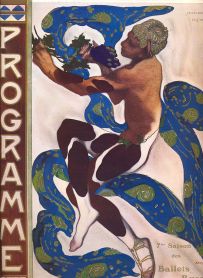 Yesterday’s question was to match the ballets with their composers. The answers are:
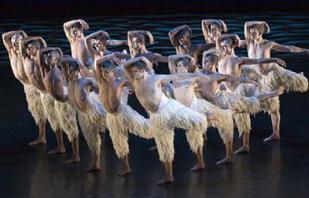 ***
*** Yesterday’s question was:
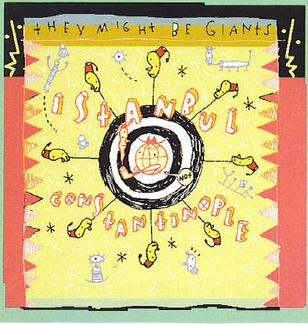 Friday’s question: On the 500th anniversary of the fall of Constantinople to the Ottomans, Jimmy Kennedy and Nat Simon wrote “Istanbul (Not Constantinople),” which was released by The Four Lads in 1953. That gives away one of the answers, but today’s question regards old names of world cities. How many of the current city names do you recall? (Some other time, we’ll do US cities.): Ikosium, Stuart, Bytown, Lutetia, Batavia, Edo, Leningrad, Byzantium, Londinium.
 Yesterday’s question was: The word game of Scrabble was created in the 1930s and 1940s, with the distribution and point values of the letter tiles determined by frequency analysis. Thus, the highest-scoring letters were those which were exceedingly difficult to use. In later years, however, with the growth of Scrabble tournaments, and the expansions of acceptable words beyond “a standard English dictionary,” those difficult-to-use letters became much easier to use, but their values were not adjusted. Today’s question: for how many of the 26 English letters do you know the Scrabble point values?
 Yesterday’s question was a two-fer: An isogram is a word in which none of the letters appears more than once. It appears that the longest possible isogram in the English language has 17 letters. Do you know this word? And do you know a longer isogram? (The longest theoretically possible isogram is, of course, 26 letters long.)
 Yesterday’s question was: Watching National League Football is one of the most popular forms of entertainment in the United States, so this may be a fairly easy question: how many of the 32 teams can you name? Bonus points if you can put them in the proper conference (I’m not asking about divisions within the conferences).
 Yesterday’s question was: The atmosphere, the air around us, this stuff we breathe without thinking about it (well, except when we’re experiencing a heat wave). But, do you recall what it is you’re actually breathing? Which elements make up the “air” of Earth’s atmosphere that we breathe? Bonus points if you can arrange in order of percentage of each in the air (I’m not asking for the actual percentages).
 Ian Randal Strock