Tough Trivia, 5/5/21

Today’s Tough Trivia question is: How many national flags use only the colors red, white, and blue? Bonus points if you know how many use all three of those colors.

***

Yesterday’s question was: Boeing makes a huge number of the passenger airplanes upon which we fly. They’re iconic for their model numbers: the 707, 727, 737, 747, 757, 767, 777, and 787. (Nobody remembers the 717.) In which decade did each of those model numbers enter commercial service? Bonus question: one 747 holds the record for carrying the most people on a single flight. How many people was it?

The answer is:

The Boeing 707 is a long-range, narrow-body, four engine jetliner. First flown in 1954, it entered service with Pan American World Airways on October 26, 1958. Production ceased in 1978, after 865 707s were built.

The Boeing 727 is a narrow-body jetliner with three engines on the tail. First flown in 1963, it entered service with Eastern Airlines on February 1, 1964. The last, of 1,832 727s, was built in 1984.

The Boeing 737 is a narrow-body twin jet engine airliner, one of the most popular in the world. First flown in 1967, it entered service with Lufthansa in February 1968. More than 10,000 737s have been built so far.
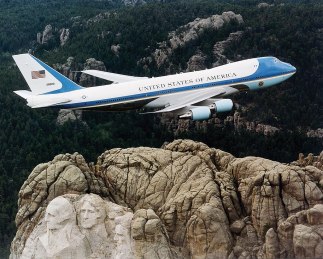
1024px-Air_Force_One_over_Mt._Rushmore
The 747 in Air Force One livery flying over Mount Rushmore. In military terminology, it is known as a VC-25.

The iconic Boeing 747, is a large, long-range, wide-body airliner with four jet engines and the hump on the forward fuselage. It first flew in 1969, and entered service with Pan Am on January 22, 1970. More than 1,500 747s have been built. On May 24, 1991, as part of Operation Solomon (which evacuated Ethiopian Jews to Israel), one El Al 747 with the seats removed carried 1,088 passengers (including two babies born in flight) on the route: the most passengers ever on one aircraft.

The Boeing 757 is a narrow-body twin jet engine airliner. First flown in 1982, it entered service with Eastern Airlines on January 1, 1983. In 2004, the last of 1,050 757s was built.

The Boeing 767 is a wide-body twin jet engine airliner. First flown in 1981, it entered service with United Airlines on September 8, 1982. More than 1,200 767s have been built as of this year.

The Boeing 777 is a wide-body twin jet engine airliner. It first flew in 1994, and entered service with United Airlines on June 7, 1995. Boeing has so far built more than 1,600 777s.

The Boeing 787, also known as the Dreamliner, is a wide-body twin jet engine airliner. It first flew in 2009, and entered service with All Nippon Airways on October 26, 2011. Through March of this year, Boeing has built 994 787s.

The Boeing 717 is the odd one out. The aircraft developed between the 707 and the 727 was not as long as the 707, and only went into military service as the C-135. It first flew in 1961, and has been in continual service (in several variants) with the US Air Force ever since.

There is also a newer 717. In the early 1990s, McDonnell Douglas developed the MD-95, a twin-engine (two on the tail), single-aisle jetliner, which first flew in 1998, and entered service with AirTran Airways on October 12, 1999. Boeing acquired McDonnel Douglas in August 1999, and rather than cancelling the MD-95, they simply rebranded it as the 717. 156 of the airplane were built before Boeing ceased production in 2006.

***

Ian’s Tough Trivia is a daily feature of this blog. Each day, I post a tough question, as well as the answer to the previous day’s question. At some point, I’ll offer a prize for whoever has the most correct answers, and another for whoever participates most often (I’ll take into account people coming in after the start: regular participation starting later is just as good as regular participation starting earlier). There may also be a prize for the funniest or most amusing wrong answer. Simply comment on this post with your answer. I’ll approve the comments after the next question is posted. Sure, you can probably find the answers by searching the web, but what’s the fun in that?

Financial support in the form of tips is very much appreciated: paypal.me/ianrandalstrock

Tough Trivia, 5/4/21

Today’s Tough Trivia question is: Boeing makes a huge number of the passenger airplanes upon which we fly. They’re iconic for their model numbers: the 707, 727, 737, 747, 757, 767, 777, and 787. (Nobody remembers the 717.) In which decade did each of those model numbers enter commercial service? Bonus question: one 747 holds the record for carrying the most people on a single flight. How many people was it?

***

Yesterday’s question was: Two men named John Marshall Harlan served on the Supreme Court. How were they related, and who appointed them?

The answer is:

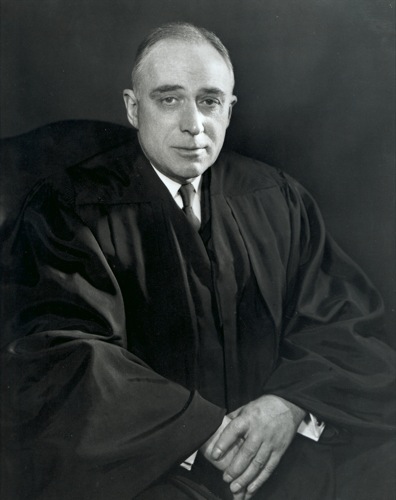
800px-JudgeJMHarlan
John Marshall Harlan

John Marshall Harlan was born June 1, 1833, in Frankfort, Kentucky. His father, James Harlan, represented Kentucky in the House of Representatives (1835–39), and then served as Kentucky’s Secretary of State (1840–44) and Kentucky’s Attorney General (1851–19). John was named for Chief Justice John Marshall, and attended law school at Transylvania University. He was admitted to the Kentucky Bar in 1853. He was appointed adjutant general of Kentucky (1851–59), and elected county judge for Franklin County in 1858. He worked against secession, and then served in the Kentucky militia as a colonel in the first years of the Civil War. He resigned his commission when his father died in 1863. Later that year, he was elected Attorney General of Kentucky, and served for four years. After losing his bid for re-election, he worked as a lawyer while remaining active in politics. When David Davis resigned from the Supreme Court to join the Senate, President Rutherford Hayes appointed Harlan, and he was unanimously confirmed by the Senate on November 29, 1877. Harlan was the lone dissenting vote in Plessy v. Ferguson (1896), which established the doctrine of “separate but equal.” He served until his death on October 14, 1911.

John_Marshall_Harlan_II_official
John Marshall Harlan II

John Marshall Harlan’s youngest son (he had six children), John Maynard Harlan, was a lawyer and alderman in Chicago. John Maynard’s only son (of four children), John Marshall Harlan II, was born in Chicago on May 20, 1899. He graduated from Princeton University, and won a Rhodes Scholarship. Later, he attended New York Law School, and was admitted to the New York Bar in 1925. From 1925 to 1927, he served as Assistant US Attorney for the Southern District of New York, and then moved into private practice. During World War II, he was a colonel in the US Army Air Force, serving as chief of the Operational Analysis Section of the Eighth Air Force in England. He was awarded the US Legion of Merit and the Croix de guerre from both France and Belgium. After the war, he returned to private practice. In 1951, he moved into the public sector, serving as Chief Counsel to the New York State Crime Commission. In January 1954, President Dwight Eisenhower appointed Harlan to the US Court of Appeals for the Second Circuit, and in March 1955, Eisenhower appointed him to the Supreme Court (he was the first Rhodes Scholar to sit on the Supreme Court). Throughout his adulthood, John II carried his grandfather’s gold watch, and when he joined the Supreme Court, he used the same furniture which had previously been in his grandfather’s chambers. He retired from the Court on September 23, 1971, and died of spinal cancer three months later, on December 29.

***

Ian’s Tough Trivia is a daily feature of this blog. Each day, I post a tough question, as well as the answer to the previous day’s question. At some point, I’ll offer a prize for whoever has the most correct answers, and another for whoever participates most often (I’ll take into account people coming in after the start: regular participation starting later is just as good as regular participation starting earlier). There may also be a prize for the funniest or most amusing wrong answer. Simply comment on this post with your answer. I’ll approve the comments after the next question is posted. Sure, you can probably find the answers by searching the web, but what’s the fun in that?

Financial support in the form of tips is very much appreciated: paypal.me/ianrandalstrock
Tough Trivia, 5/3/21

Today’s Tough Trivia question is: Two men named John Marshall Harlan served on the Supreme Court. How were they related, and who appointed them?

***

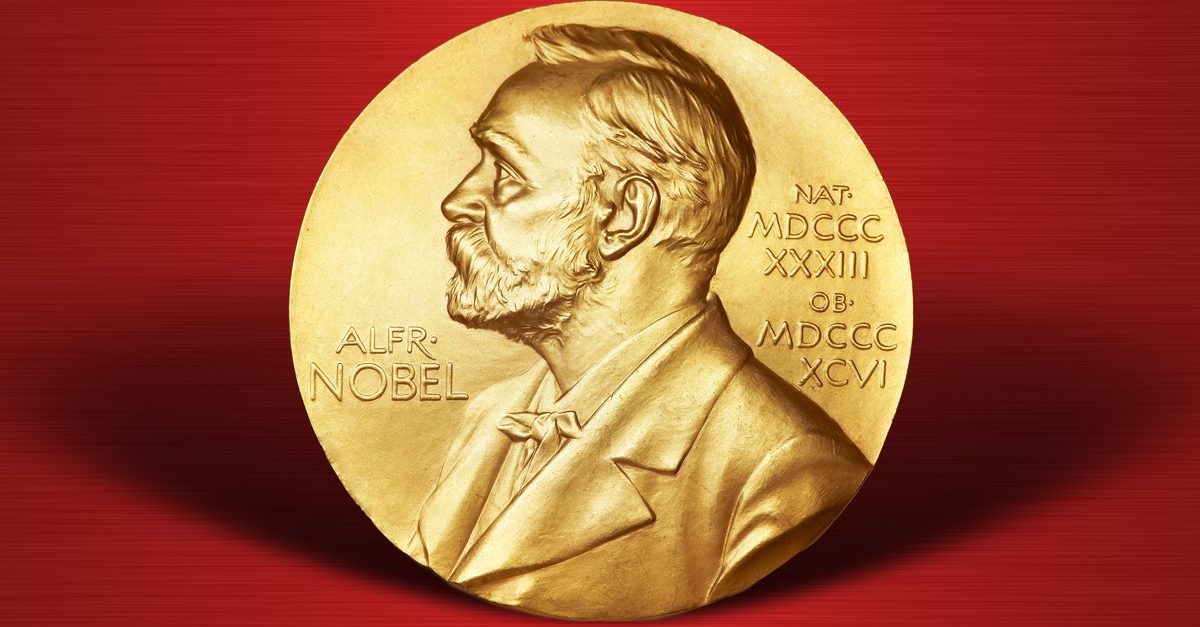
nobelprizeFriday’s question was: In which categories are Nobel Prizes awarded? And when was each first awarded? Bonus if you can name the people (not groups or organizations) who won more than one.

The answer is:

Swedish chemist Alfred Bernhard Nobel (1833–1896) is known for inventing dynamite, and for endowing the Nobel Prizes in his will. The first Nobel Prizes were awarded in 1901, in the fields of Chemistry, Literature, Peace, Physics, and Physiology or Medicine. In 1969, a sixth category was added: Economics. The “prize” consists of a gold medal, a diploma, and a monetary award (currently worth about $1.1 million).

Four people have each won two prizes:

  • Marie Curie, Polish-born French physicist and chemist (1867–1934), won the Physics prize in 1903 and the Chemistry prize in 1911.
  • Linus Pauling, US chemist (1901–1994), won the Chemistry prize in 1954 and the Peace Prize in 1962.
  • John Bardeen, US physicist (1908–1991), won the Physics prize in 1956 and 1972.
  • Frederick Sanger, British biochemist (1918–2013) won the Chemistry prize in 1958 and 1980.

***

Ian’s Tough Trivia is a daily feature of this blog. Each day, I post a tough question, as well as the answer to the previous day’s question. At some point, I’ll offer a prize for whoever has the most correct answers, and another for whoever participates most often (I’ll take into account people coming in after the start: regular participation starting later is just as good as regular participation starting earlier). There may also be a prize for the funniest or most amusing wrong answer. Simply comment on this post with your answer. I’ll approve the comments after the next question is posted. Sure, you can probably find the answers by searching the web, but what’s the fun in that?

Financial support in the form of tips is very much appreciated: paypal.me/ianrandalstrock
Tough Trivia, 4/30/21

Today’s Tough Trivia question: In which categories are Nobel Prizes awarded? And when was each first awarded? Bonus if you can name the people (not groups or organizations) who won more than one.
***

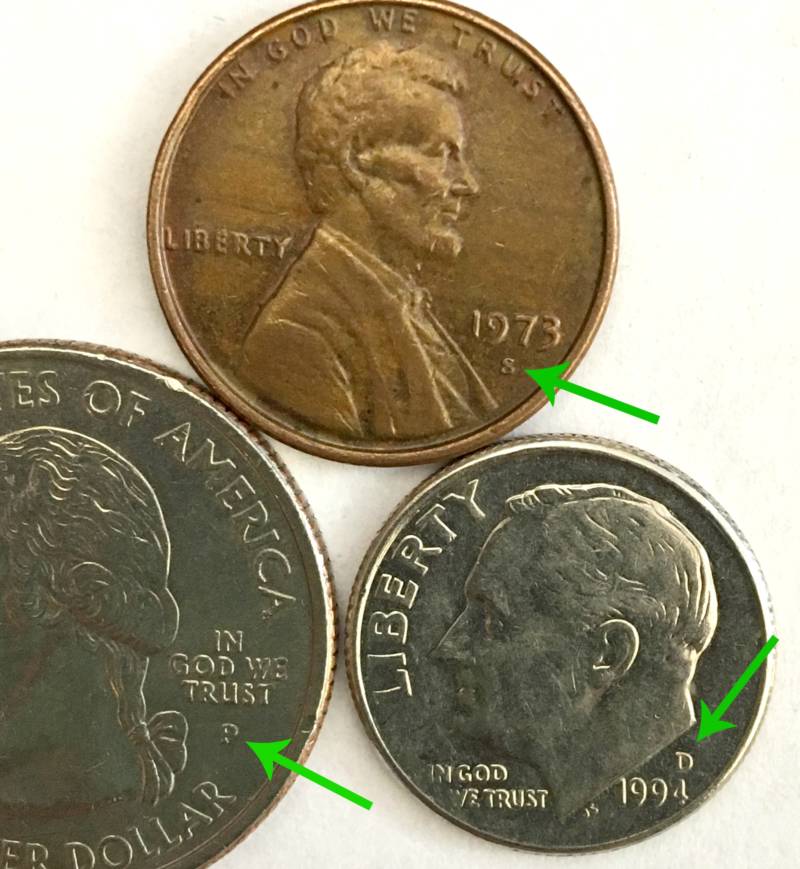
Mint-Marks-800x869Yesterday’s question was: Mint marks are small letters which denote which mint produced which coin, and today, in the United States, they appear near the date (though that was not always the case: some earlier coins had the mint marks on the opposite side of the coin from the date). Currently, there are four US mints producing and marking coins. Name them by their letter codes. Previously, there were five other US Mints marking coins. Can you name them?

The answer is:

P = Philadelphia, Pennsylvania, the first US Mint, began operations in 1793. The P mint mark does not always appear on coins; throughout much of US coin history, coins produced at the Philadelphia Mint carried no mint mark.

D = Denver, Colorado, produced its first coins on February 1, 1906.

S = San Francisco, California, opened in 1854. In 1955, the San Francisco Mint suspended activities for 13 years. In 1968, it took over production of proof coins (for collectors). Since 1975, the San Francisco Mint has been used almost exclusively for proof coinage (other than Susan B. Anthony dollar coins from 1979 to 1981).

W = West Point, New York, became on official Mint in 1988, but actually produced circulating coinage before that. From 1974 to 1986, it produced Lincoln cent coins with no mint mark (making them indistinguishable from Philadelphia-produced cents), and from 1977 to 1979, Washington quarters (again, without a mint mark). The first coin with a W mint mark was a $10 gold coin commemorating the 1984 Los Angeles Olympics. The first circulating coins produced with a W mint mark were special America the Beautiful quarters released in 2019.

Former Mints:

D = Dahlonega, Georgia (which also used the D mint mark): 1838–1861 (only gold coins).

C = Charlotte, North Carolina, 1838–1859 (only gold coins).

O = New Orleans, Louisiana, 1838–1861 and 1879–1909.

CC = Carson City, Nevada, 1870–1885 and 1889–1893.

M = Manila, Philippines, 1920–1922 and 1925–1941 (the only US branch mint located outside the continental US, it produced coinage in centavo denomination for circulation in the Philippines).

***

Ian’s Tough Trivia is a daily feature of this blog. Each day, I post a tough question, as well as the answer to the previous day’s question. At some point, I’ll offer a prize for whoever has the most correct answers, and another for whoever participates most often (I’ll take into account people coming in after the start: regular participation starting later is just as good as regular participation starting earlier). There may also be a prize for the funniest or most amusing wrong answer. Simply comment on this post with your answer. I’ll approve the comments after the next question is posted. Sure, you can probably find the answers by searching the web, but what’s the fun in that?

Financial support in the form of tips is very much appreciated: paypal.me/ianrandalstrock

Tough Trivia, 4/29/21

Today’s Tough Trivia question: Mint marks are small letters which denote which mint produced which coin, and today, in the United States, they appear near the date (though that was not always the case: some earlier coins had the mint marks on the opposite side of the coin from the date). Currently, there are four US mints producing and marking coins. Name them by their letter codes. Previously, there were five other US Mints marking coins. Can you name them?
***

Yesterday’s question was: Ignoring the conspiracy theorists and science deniers, we know that twelve people have so far walked on Earth’s Moon. How many of them can you name? (Bonus: which of the Apollo missions did not land on the Moon?)

The answer is:

1024px-Apollo_11_Crew
Apollo 11 crew (left to right): Neil Armstrong, Michael Collins, and Buzz Aldrin.

Apollo 11, launched July 16 and returned July 24, 1969. Commander Neil Armstrong and Lunar Module Pilot Edwin “Buzz” Aldrin were on the Moon for 21 hours, 36 minutes, from July 20 to 21, while Command Module Pilot Michael Collins remained in lunar orbit.

Apollo 12, launched November 14 returned November 24, 1969. Commander Charles “Pete” Conrad and Lunar Module Pilot Alan Bean spent almost 32 hours on the Moon, from November 19 to 20, while Command Module Pilot Richard Gordon remained in lunar orbit.

Apollo 14, launched January 31 and returned February 9, 1971. Commander Alan Shepard and Lunar Module Pilot Edgar Mitchell spent 33 hours on the Moon, from February 5 to 6, while Command Module Pilot Stuart Roosa remained in lunar orbit.

Apollo 15, launched July 26 and returned August 7, 1971. On the first mission to use the lunar rover, Commander David Scott and Lunar Module Pilot James Irwin spent 67 hours on the Moon, from July 30 to August 2, while Command Module Pilot Alfred Worden remained in lunar orbit.

Apollo 16, launched April 16 and returned April 27, 1972. Commander John Young and Lunar Module Pilot Charles Duke spent 71 hours on the Moon, from April 21 to 24, while Command Module Pilot Stuart Roosa remained in lunar orbit.

Apollo 17, launched December 7 and returned December 19, 1972. Commander Eugene Cernan and Lunar Module Pilot Harrison Schmitt spent 75 hours on the Moon, from December 11 to 14, while Command Module Pilot Ronald Evans remained in lunar orbit.

Apollo 13 did not reach the Moon. Launched April 11, 1970, an explosion in one of the oxygen tanks on April 13 severely damaged the spacecraft and prevented it from landing on the Moon. Commander James Lovell, Lunar Module Pilot Fred Haise, and Command Module Pilot Jack Swigert returned safely on April 17, 1970.

***

Ian’s Tough Trivia is a daily feature of this blog. Each day, I post a tough question, as well as the answer to the previous day’s question. At some point, I’ll offer a prize for whoever has the most correct answers, and another for whoever participates most often (I’ll take into account people coming in after the start: regular participation starting later is just as good as regular participation starting earlier). There may also be a prize for the funniest or most amusing wrong answer. Simply comment on this post with your answer. I’ll approve the comments after the next question is posted. Sure, you can probably find the answers by searching the web, but what’s the fun in that?

Financial support in the form of tips is very much appreciated: paypal.me/ianrandalstrock

Tough Trivia, 4/28/21

Today’s Tough Trivia question: Ignoring the conspiracy theorists and science deniers, we know that twelve people have so far walked on Earth’s Moon. How many of them can you name? (Bonus: which of the Apollo missions did not land on the Moon?)

***

Yesterday’s question was: In this history of the Supreme Court, only one person has resigned from the Court, and then later been reappointed to it. Who was it, and why did he resign the first time?

The answer is:

Chief_Justice_Charles_Evans_Hughes
Chief Justice Charles Evans Hughes.

Charles Evans Hughes, Sr. Born April 11, 1862, he was a lawyer, and the governor of New York (1907–1910). In 1910, President Taft appointed Hughes to the Supreme Court (he was unanimously confirmed by the Senate). In 1916, trying to reunify the Republican Party after the Theodore Roosevelt–William Howard Taft schism (which split the party and gave the presidential election of 1912 to Woodrow Wilson), party leaders asked Hughes to accept the nomination for president, and on June 10, 1916, he resigned from the court to campaign for the presidency (he is the only member of the Supreme Court to become a presidential candidate).

Hughes lost the election of 1916 in a fairly close vote, 49.2% to 46.1% (in the electoral college, the vote was 277 for Wilson, and 254 for Hughes). And then he went back to practicing law. In March 1921, new President Warren Harding appointed Hughes the 44th Secretary of State (he served for four years), and then once again returned to his old law firm.

On February 3, 1930, with Chief Justice Taft gravely ill, President Hoover nominated Hughes to be the next Chief Justice. The Senate confirmed Hughes by a vote of 52–26, and he took his oath of office on February 24, 1930. (Hughes’ son, Charles Jr., resigned as Solicitor General when his father became Chief Justice.)

On June 30, 1941, Hughes retired from the Supreme Court for the second time. He died on August 27, 1948.

***

Ian’s Tough Trivia is a daily feature of this blog. Each day, I post a tough question, as well as the answer to the previous day’s question. At some point, I’ll offer a prize for whoever has the most correct answers, and another for whoever participates most often (I’ll take into account people coming in after the start: regular participation starting later is just as good as regular participation starting earlier). There may also be a prize for the funniest or most amusing wrong answer. Simply comment on this post with your answer. I’ll approve the comments after the next question is posted. Sure, you can probably find the answers by searching the web, but what’s the fun in that?

Financial support in the form of tips is very much appreciated: paypal.me/ianrandalstrock

Tough Trivia, 4/27/21

Today’s Tough Trivia question: In this history of the Supreme Court, only one person has resigned from the Court, and then later been reappointed to it. Who was it, and why did he resign the first time?

***

1024px-USS_Nimitz_(CVN-68)
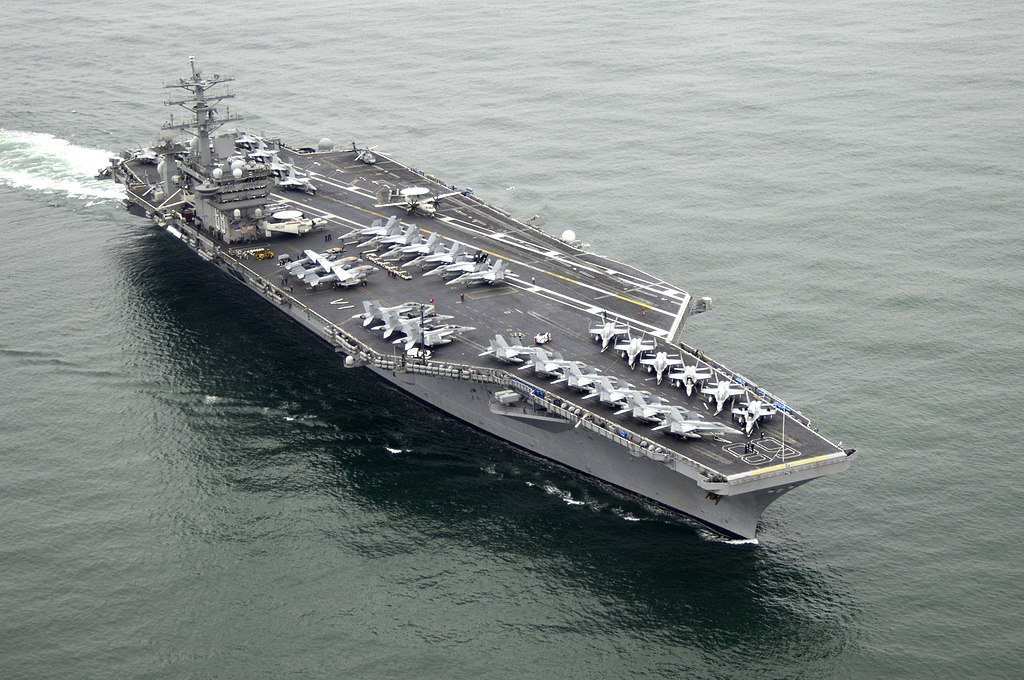
USS Nimitz in 2009.

Yesterday’s question was: There are 24 active aircraft carriers in the world (of the horizontal take-off and landing type, not counting those which are strictly vertical take-off, or helicopter carriers). Five countries have one (France, India, Russia, Spain, and Thailand [though the fighter wing was retired from service in 2006]), four countries have two (Australia [though they don’t have any carrier-based fixed-wing aircraft], China, Italy, and the UK), and the United States has eleven. Name the active US aircraft carriers… in the order they were commissioned.

The answer is:

CVN-68, USS Nimitz (named for Admiral Chester W. Nimitz), commissioned in 1975.
CVN-69, USS Dwight D. Eisenhower, commissioned in 1977.
CVN-70, USS Carl Vinson (named for the US Representative [represented Georgia, 1914–1965] and chairman of the House Armed Services Committee [1955–1965]), commissioned in 1982.

1280px-USS_Gerald_R._Ford_(CVN-78)_underway_on_8_April_2017
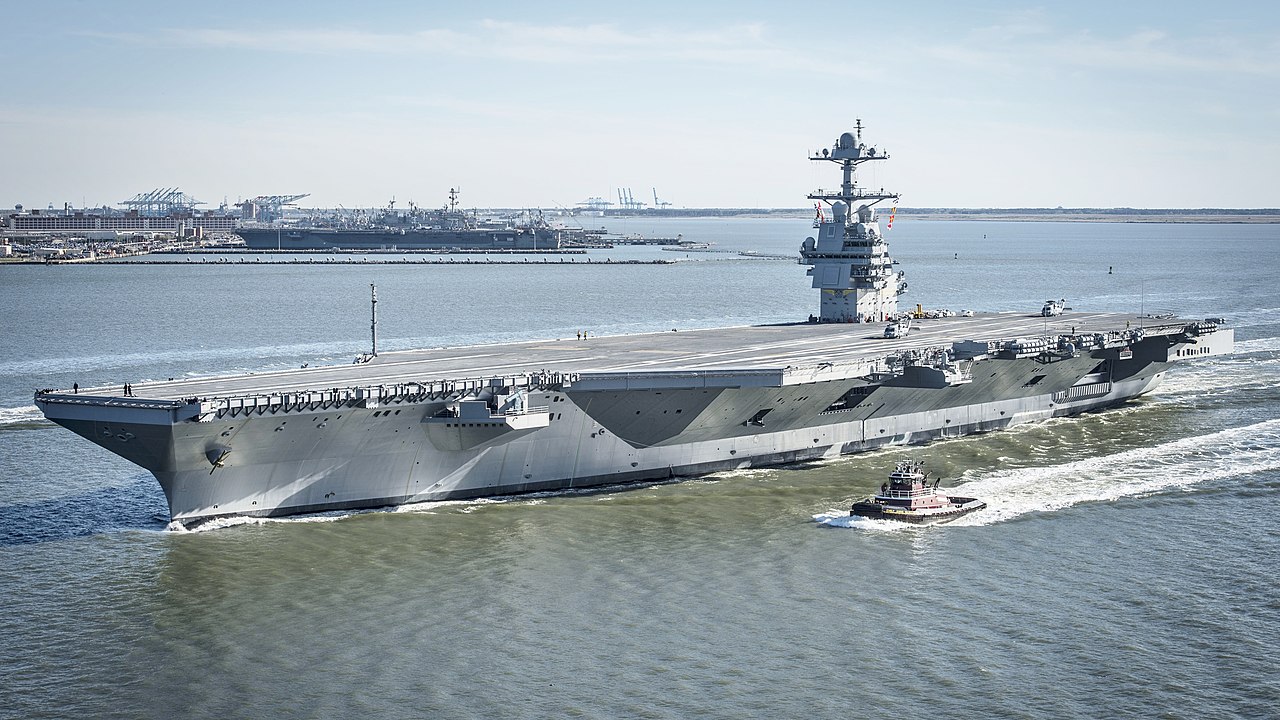
USS Gerald R. Ford in 2017.

CVN-71, USS Theodore Roosevelt, commissioned in 1986.
CVN-72, USS Abraham Lincoln, commissioned in 1989.
CVN-73, USS George Washington, commissioned in 1992.
CVN-74, USS John C. Stennis (named for the US Senator [represented Mississippi, 1947–1989] and chairman of the Senate Armed Services Committee [1969–1981]), commissioned in 1995.
CVN-75, USS Harry S Truman, commissioned in 1998.
CVN-76, USS Ronald Reagan, commissioned in 2003.
CVN-77, USS George H.W. Bush, commissioned in 2009.
CVN-78, USS Gerald R. Ford, commissioned in 2017.

***

Ian’s Tough Trivia is a daily feature of this blog. Each day, I post a tough question, as well as the answer to the previous day’s question. At some point, I’ll offer a prize for whoever has the most correct answers, and another for whoever participates most often (I’ll take into account people coming in after the start: regular participation starting later is just as good as regular participation starting earlier). There may also be a prize for the funniest or most amusing wrong answer. Simply comment on this post with your answer. I’ll approve the comments after the next question is posted. Sure, you can probably find the answers by searching the web, but what’s the fun in that?

Financial support in the form of tips is very much appreciated: paypal.me/ianrandalstrock

Tough Trivia, 4/26/21

Today’s Tough Trivia question: There are 24 active aircraft carriers in the world (of the horizontal take-off and landing type, not counting those which are strictly vertical take-off, or helicopter carriers). Five countries have one (France, India, Russia, Spain, and Thailand [though the fighter wing was retired from service in 2006]), four countries have two (Australia [though they don’t have any carrier-based fixed-wing aircraft], China, Italy, and the UK), and the United States has eleven. Name the active US aircraft carriers… in the order they were commissioned.

***

18869-3Friday’s question was: Currently, the US Mint produces and circulates six coin denominations: cent, nickel, dime, quarter, half dollar, and dollar. But those aren’t the only denominations the US has minted: in past years, there were several other denominations. How many others can you name? Bonus points if you know which years they circulated.

The answer is:

Half cent, 1793–1857.
Two cents, 1863–1873.
Three cents, 1865–1889.
Half dime (worth five cents, but considered a different denomination than the nickel), 1792–1873 (the nickel entered circulation in 1866).
s-l1000Twenty cents, 1875–1878.
Gold dollar, 1849–1889.
Quarter eagle ($2.50), 1849–1889.
Three dollars, 1854–1889.
Half eagle ($5.00), 1795–1929.
Eagle ($10.00) ,1795–1933.
Double eagle ($20.00), 1849–1933.

***

Ian’s Tough Trivia is a daily feature of this blog. Each day, I post a tough question, as well as the answer to the previous day’s question. At some point, I’ll offer a prize for whoever has the most correct answers, and another for whoever participates most often (I’ll take into account people coming in after the start: regular participation starting later is just as good as regular participation starting earlier). There may also be a prize for the funniest or most amusing wrong answer. Simply comment on this post with your answer. I’ll approve the comments after the next question is posted. Sure, you can probably find the answers by searching the web, but what’s the fun in that?

Financial support in the form of tips is very much appreciated: paypal.me/ianrandalstrock

Tough Trivia, 4/23/21

Pierre_de_Coubertin_Anefo2
Pierre de Coubertin

Yesterday’s question was: Baron Pierre de Coubertin (1863–1937) founded the International Olympic Committee (IOC) in 1894, which lead to the first modern Games in Athens, Greece, in 1896. The Games were held every four years, and were only cancelled during the World Wars, in 1916, 1940, and 1944, and postponed in 2020 due to the Covid-19 pandemic. In 1924, the number of sports in competition expanded with the commencement of the winter Olympics (first held in Chamonix, France). The years of the winter and summer games were split following 1992, with the then-next winter Olympics held in 1994. So, the questions are: Which five countries hosted the most Olympic games? And how many different countries have hosted the Olympics? Bonus: which years were the Olympics held in the United States?

The answer is:

1. With eight already in the books and one planned, far and away the most popular country to host the Olympics is the USA. The summer games were held in St. Louis in 1904, Los Angeles in 1932 and 1984 (and planned for LA in 2028), Atlanta in 2002. The winter games were in Lake Placid in 1932 and 1980, Squaw Valley in 1960, and Salt Lake City in 2002.

2. France has hosted the games five times, with another one planned: Paris in 1900 and 1924 (and planned again for 2024), and winter games in Chamonix (1924), Grenoble (1968), and Albertville (1992).

3. Three countries are tied, hosting the Olympics four times. Germany in Berlin in 1916 and 1936, Munich (West Germany, during the Cold War) in 1972, and winter games in Garmisch-Partenkirchen in 1936.
Italy has hosted three times, with one more planned: Rome in 1960, and winter games in Cortina d’Ampezzo in 1956, Turin in 2006, and Milan-Cortina d’Ampezzo planned for 2026.
Japan has hosted three times, with one coming up soon: Tokyo in 1964, winter games in Sapporo in 1972 and Nagano in 1998, and the 2020 Summer Olympics planned for Tokyo have been postponed due to the pandemic.

Twenty-three different countries have hosted Olympics: Australia, Austria, Belgium, Brazil, Canada, China, Finland, France, Germany (and West Germany), Greece, Italy, Japan, Mexico, Netherlands, Norway, Russia (and the USSR), South Korea, Sweden, Switzerland, the United Kingdom, and the USA.

***

Today’s question is:

Currently, the US Mint produces and circulates six coin denominations: cent, nickel, dime, quarter, half dollar, and dollar. But those aren’t the only denominations the US has minted: in past years, there were several other denominations. How many others can you name? Bonus points if you know which years they circulated. (Remember, Tough Trivia takes the weekend off, so the answer will be posted Monday.)

***

Ian’s Tough Trivia is a daily feature of this blog. Each day, I post a tough question, as well as the answer to the previous day’s question. At some point, I’ll offer a prize for whoever has the most correct answers, and another for whoever participates most often (I’ll take into account people coming in after the start: regular participation starting later is just as good as regular participation starting earlier). There may also be a prize for the funniest or most amusing wrong answer. Simply comment on this post with your answer. I’ll approve the comments after the next question is posted. Sure, you can probably find the answers by searching the web, but what’s the fun in that?

Financial support in the form of tips is very much appreciated: paypal.me/ianrandalstrock


Tough Trivia, 4/22/21

Yesterday’s question was: Elizabeth II, queen of the United Kingdom of Great Britain and Northern Ireland, is the fourth-longest-reigning confirmed monarch in the world (after France’s Louis XIV, Thailand’s Bhumibol Adulyadej, and Liechtenstein’s Johann II). Can you name the five British monarchs whose reigns were the longest?

The answer is:

1. Elizabeth II, who took the throne upon her father’s death, on February 6, 1952, more than 69 years ago. Born in April 1926, when her grandfather, George V, was king. Her uncle became King Edward VIII in early 1936, and abdicated later that year, making her father King George VI. She’ll pass Johann II on May 7, 2022, and Bhumibol Adulyadej 35 days later. If she lives until May 27, 2024 (when she will be 98 years, 36 days old), she will surpass Louis XIV’s record as the longest-reigning monarch of any sovereign state.

425px-Queen_Victoria_by_Bassano2. Victoria, Elizabeth’s great-great-grandmother, who reigned from June 20, 1837, to January 22, 1901 (63 years, 216 days). Born in June 1819, her father, Prince Edward, was the fourth son of the reigning King, George III. She was fifth in the line of succession at her birth (after George’s four oldest sons). Her father died seven months after her birth, and the king died a week later, putting her third in the succession (she was now the niece of King George IV). In 1830, George IV died, and the throne passed to his brother, William IV, with Victoria next in line. Upon William’s death, Victoria became queen, a month after her eighteenth birthday.

800px-Allan_Ramsay_-_King_George_III_in_coronation_robes_-_Google_Art_Project3. George III, Victoria’s grandfather, who reigned from October 25, 1760, to January 29, 1820 (59 years, 96 days). He was 22 years old when his grandfather, George II, died. His father, Frederick, Prince of Wales, died in 1751.


800px-JamesIEngland4. James VI of Scotland, also known as James Charles Stuart, and later as James I from the union of the Scottish and English crowns. He took the Scottish throne on July 24, 1567—barely a year after his birth—and died on March 27, 1625 (57 years, 246 days). The kingdoms of Scotland and England were united under James on March 24, 1603.


1024px-Henry_III_funeral_head5. Henry III, also known as Henry of Winchester, was born in Winchester Castle on October 1, 1207, the eldest son of King John. His father died October 28, 1216, making the nine-year-old Henry King of England, Lord of Ireland, and Duke of Aquitaine. He held the throne until his death on November 16, 1272 (56 years, 19 days).

***

Today’s question is:

Baron Pierre de Coubertin (1863–1937) founded the International Olympic Committee (IOC) in 1894, which lead to the first modern Games in Athens, Greece, in 1896. The Games were held every four years, and were only cancelled during the World Wars, in 1916, 1940, and 1944, and postponed in 2020 due to the Covid-19 pandemic. In 1924, the number of sports in competition expanded with the commencement of the winter Olympics (first held in Chamonix, France). The years of the winter and summer games were split following 1992, with the then-next winter Olympics held in 1994. So, the questions are: Which five countries hosted the most Olympic games? And how many different countries have hosted the Olympics? Bonus: which years were the Olympics held in the United States?

***

Ian’s Tough Trivia is a daily feature of this blog. Each day, I post a tough question, as well as the answer to the previous day’s question. At some point, I’ll offer a prize for whoever has the most correct answers, and another for whoever participates most often (I’ll take into account people coming in after the start: regular participation starting later is just as good as regular participation starting earlier). There may also be a prize for the funniest or most amusing wrong answer. Simply comment on this post with your answer. I’ll approve the comments after the next question is posted. Sure, you can probably find the answers by searching the web, but what’s the fun in that?

Financial support in the form of tips is very much appreciated: paypal.me/ianrandalstrock