Yesterday’s question was: Colors in fireworks are usually generated by pyrotechnic stars. Pyrotechnic stars are pellets of which may contain metal powders, salts, or other compounds that, when ignited, burn a certain color or make a certain spark effect. Burning the proper metal can produce any of the colors of the rainbow. Which metals produce which colors?
The answer is:
Red: lithium or strontium
Orange: calcium
Yellow: sodium
Green: barium
Blue: copper
Indigo: cesium
Violet: potassium or rubidium
Gold (not ordinarily a rainbow color): iron
White (also not a rainbow color): aluminum, beryllium, magnesium, or titanium
***
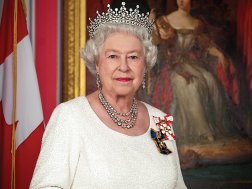
Today’s question is: Elizabeth II, queen of the United Kingdom of Great Britain and Northern Ireland, is the fourth-longest-reigning confirmed monarch in the world (after France’s Louis XIV, Thailand’s Bhumibol Adulyadej, and Liechtenstein’s Johann II). Can you name the five British monarchs whose reigns were the longest?
***
Ian’s Tough Trivia is a daily feature of this blog. Each day, I post a tough question, as well as the answer to the previous day’s question. At some point, I’ll offer a prize for whoever has the most correct answers, and another for whoever participates most often (I’ll take into account people coming in after the start: regular participation starting later is just as good as regular participation starting earlier). There may also be a prize for the funniest or most amusing wrong answer. Simply comment on this post with your answer. I’ll approve the comments after the next question is posted. Sure, you can probably find the answers by searching the web, but what’s the fun in that?
Financial support in the form of tips is very much appreciated: paypal.me/ianrandalstrock
 Button Gwinnett (1735–May 19, 1777) was born in England, represented Georgia in the Continental Congress, signed the Declaration of Independence (top signature in the left-most column), and died in duel. Gwinnett was fairly obscure prior to the signing of the Declaration, and died soon thereafter, so there are only 51 known examples of his signature, making it the rarest and most sought-after (only ten of those signatures are in private hands). The rarity of his signature has become a plot point in a lot of fiction, including the 1932 film Washington Merry Go Round, the 1958 film The Last Hurrah, a 1971 episode of Mannix, a 2018 episode of Elementary, and a 1953 science fiction story called “Button, Button” by Isaac Asimov.
 And while this is the age of the internet, and you can probably do a web search and find the right answers to each question, where’s the fun in that? I can’t make you not look it up, but don’t.

