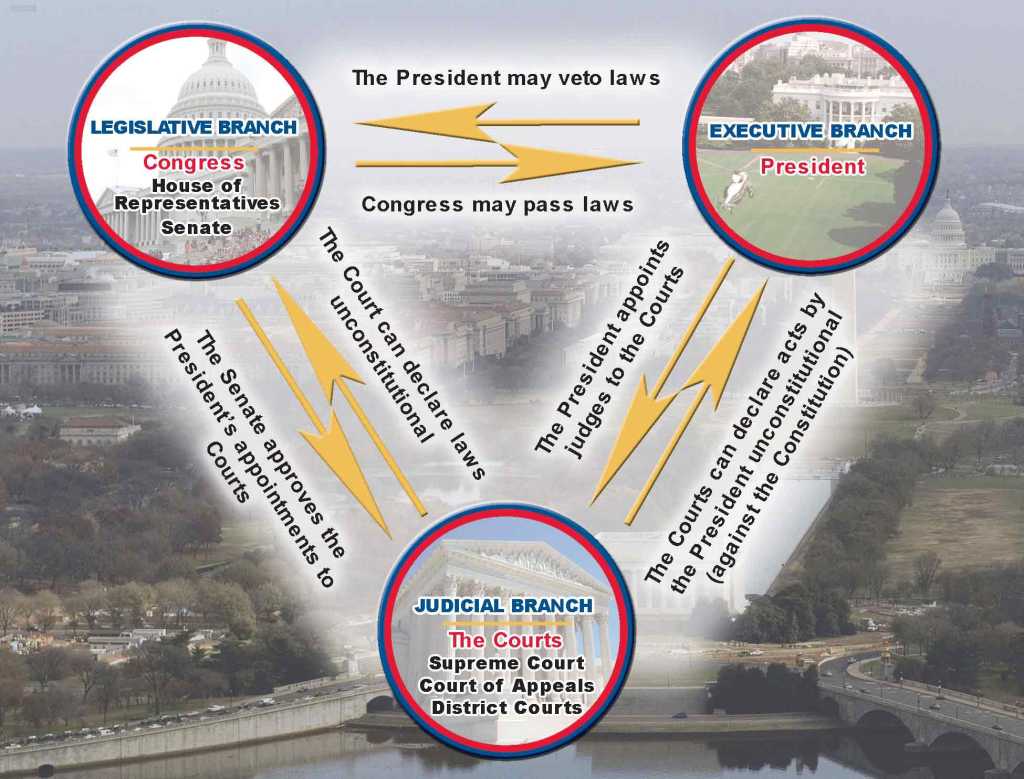
Embrace the Gerrymander!

The Republican redistricting scheme currently causing so much consternation in and toward Texas gives me hope. Not, perhaps, in the way you might think. But in it, I see the seeds of potentially, maybe, if if if, a solution to the gerrymandering that has plagued this country for two centuries.

Allow me to explain.

I’ve been railing against gerrymandering for years. Gerrymandering is the drawing of boundaries on political districts in order to group blocks of voters together, either to increase the power of one group, or to decrease the power of another. Sometimes it is used to increase the chances that a member of a minority group can win an election. But far more often these days, it is used to cement a political party’s hold on a district, to make it “safe.” (For the problems safe districts cause, see my previous writings.)

In normal times, Congressional district boundaries are redrawn every ten years, after the decennial census data is received, so that the districts accurately represent where the people live and what those people want. These are not normal times.

Governor Abbott of Texas, kowtowing to President Trump’s request, is urging the Texas legislature to redraw the state’s Congressional map right now, half-way through a decennial period, in order to concentrate the Democratic minority voters into fewer districts, and thus give the Republicans, potentially, three to five more seats in the House of Representatives. Democratic members of the Texas legislature have left the state, in order to prevent the legislature from reaching a quorum, which would—at least, in theory— prevent action on the proposal. But they’ve tried such a quorum-break in the past; it has not been successful. I doubt it will be this time, either.

So we have to accept the reality that Texas is about to further marginalize their Democratic population and flip five of their seats in the House to the Republican party.

Governor Newsom of California has been making noises about attempting the same scheme in his state, which would flip several seats from the Republicans to the Democrats. There’ve been whispers elsewhere—such as Governor Hochul in New York—that other states might do something similar if Abbot and Trump get their way in Texas. The problem I foresee is an ongoing character flaw of the Democrats: the party insists that it must be holier than thou, purer than thou, that it will play be the rules even when their opponents have shown absolutely no compunction about violating those rules. While doing so may give them a moral victory, it will inevitably lead to an actual loss. To my mind, in these cases, the Democrats are those crying “life isn’t fair.” No, it isn’t. Everyone should follow the rules. Everyone should be a good, moral, decent human being. Everyone should be more interested in the good of us all than in our individual results.

But not everyone is.

We don’t need Governor Newsom and Governor Hochul warning “don’t do it or we might do something, too.” We need him and his fellow Democratic governors to act! Today! We need them to implement precisely the schemes Abbot and the Texans are planning. We need to gerrymander the country to a fare-thee-well, to legislate out of existence those last 40 competitive seats in the House.

Because then, and only then, will we all see just how egregious the gerrymandering has become. Only then will it be brought to the Supreme Court. And to my mind, regardless of the Court’s political slant, there is no way it can allow such outrageous diminution of the minorities to survive. In such a case, I think, the Supreme Court will only be able to rule that the gerrymandering violates the people’s rights to be fairly represented, and that political maps must be drawn in a fair, impartial manner.

(Yes, I know, I’m an idealist. It may not work out that way. But I don’t see any other way to fix the mess we’re in.)

And if, IF my dream comes true, may I humbly suggest new legislation regarding how districts are drawn? A fairly simple test, actually:

No Congressional district, when drawn on a Mercator projection map, shall be drawn in such a way that a straight line drawn on that map shall be able to cross into the district more than once. That is, except in cases where the state border itself violates this dictum.

I don’t expect any of this to happen. I expect the Democrats will continue to purge their own ranks, as they threw out Al Franken. I expect they’ll yell and whine and do nothing, while Texas rejiggers their Congressional map, and that the election of 2026 will result in a Trumpian increase in the House, and we’ll continue bitching and moaning about their self-serving actions for years to come.

But wouldn’t it be nice if I was wrong, and we could actually make things better?


Democrats flee Texas to block Republican redistricting map backed by Trump


Texas Democrats arrive in Illinois to block vote back home on redrawn House maps sought by Trump


Limited options for Democrats to retaliate if Texas Republicans redraw congressional map

Two weeks, never: whatever

Donald Trump left the G7 summit in Canada early, “because he needed to be close to his advisors in the White House, to decide on our course of action with regard to Israel and Iran.” But once he got home, he decided to maybe make a decision… in two weeks. Honestly, no one should have expected anything sooner, because the only things he acts on today are the internal culture wars he keeps fighting. Real policy decision, things of global import, those are the things that are always “in two weeks,” because he doesn’t want the blame for actually doing something. Remember “I’ll end the war in Ukraine on day one”? Remember “I’ll negotiate trade deals with every country in the world”? Remember “we’ll take over the Gaza Strip and turn it into a tourist destination”? Remember “we need to take over Canada, or Greenland”?

As Jen Psaki very clearly lays out in this segment, “two weeks” is Donald Trump’s version of “I talk big, but I’m not actually going to do anything, and you’ll forget about it.” He’s been “two weeks”ing us since he took office the first time.

I’ve been thinking about his two weeks, and comparing it to Ben Bova’s story “Crisis of the Month.” In Bova’s story, the heads of the news media get together when they realize the public’s attention span for any story peters out after a month, so they need a new story with which to entrance and enrage the public every four weeks. Bova wrote it in 1988, before the internet and the 24-hour news cycle. Apparently, Trump has learned that Bova’s one month span has dropped to two weeks or less, so that by the time his “two weeks” rolls around, we’ve already forgotten whatever it was we needed him to say or do, and we’re on to the next story.

It’s time we realized that when he says “in two weeks,” what he actually means is “I’m not doing anything. Forget it, please.” Or we could just look at his record: he’s done a great deal with executive orders, but none of it is the least bit presidential, none of it is what we elect a president for, and none of it can be taken seriously.

Edited June 21, 2025 at 21:50 EDT: Sure, the one time he decides to act in less than two weeks. Oy.

Over-reacting to show political strength

In the Star Trek: Deep Space Nine episode “Shakaar” (season 3, episode 24; first aired May 22, 1995), a new political leader clashes with a political rival over the return of some farming equipment. The rival and his fellow farmers are using the equipment; the leader thinks it would be better used somewhere else. The leader, Kai Winn, asks Major Kira to talk with her friends—Shakaar and the farmers—to return the equipment, thinking that Kira’s prior relationship with them will turn the tide. Kira is unsuccessful, so Winn calls out the militia to take the equipment back by force, deeming Shakaar’s continued reticence a threat to the stability of the government, and a test of her set by the gods. She eventually calls on Commander Sisko to bring Federation forces to support her efforts. Sisko tells her this is an over-reaction, noting that she has done everything to escalate the situation far beyond reason, rather than acting as a leader to calm things down. Eventually, our heroes are able to bring a political counter-punch, and Winn backs down to end the episode.

The whole story is ringing in my ears today as I’m watching the outrageous escalation in Los Angeles, brought about through President Trump’s nationalizing and sending in the National Guard to deal with protests against policies that he himself set. Once again, we’re looking at an outrageous over-reaction apparently designed solely to solidify the over-reactor’s political position. California’s Governor Newsom and Los Angeles’s Mayor Bass have both said there is no need for federal troops to calm the protests, and that they will only inflame the situation. But Trump seems to see it as either a test set by his god, or an opportunity (akin to his forthcoming military parade) to show he is the power, he is the strength, he is the ruler. Once again, he is showing us he has no interest in being the president of a democratic republic, that he would much rather be the strongman in a dictatorship that benefits only himself and his friends.

The situation in Los Angeles is indeed a test. It may be the first volley in a test not unlike the one Abraham Lincoln described in his Gettysburg Address, when he spoke of a nation conceived in liberty, and dedicated to the proposition that all men are created equal. “Now we are engaged in a great civil war, testing whether that nation, or any nation so conceived and so dedicated, can long endure.” We are engaged in the struggle to guarantee that “government of the people, by the people, for the people, shall not perish from the earth.”

[Edited a day later to add:]

A friend pointed out to me that I might not have been clear in the above. I wasn’t saying the entire situation started with the call for troops, that that was the only escalation. It was merely the tipping point that prompted me to write.

But the Kai Winn “escalating the situation out of all legitimate proportions,” in the current situation is Donald Trump’s unceasing cries that undocumented farm workers, manual laborers, anyone who speaks Spanish and has slightly more melanin than he is a threat to the United States and our way of life. The crisis he has manufactured began with the terror he tried to instill in us: terror at the presence of the very people he frequently employed in his various real estate businesses. The violation of Posse Comitatus is only the latest step in his long con to make Americans so afraid of anyone other than Trump and his cronies that we allow them to rob us of our fortunes and freedom.

For today’s chilling extension, see Secretary Noem’s comments and actions in this article.

Young Adults are Not Happy

I find it ironic that two of the news channels both quoted the same Harvard Youth Poll, which was taken by the Institute of Politics at the Harvard Kennedy School (see it here: https://iop.harvard.edu/youth-poll/50th-edition-spring-2025), this afternoon. On CNN, they touted the finding that—among young adults—President Trump’s approval rating is 31%. On Fox, they touted the finding that—among young adults—the approval rating of Democrats in Congress is 23%. Neither one (at least, while I was watching) mentioned the approval rating of Republicans in Congress (for the record: 29%).

A little more color on those numbers. Previous iterations of the poll were run in Spring 2017 and Fall 2020. Those numbers (in order) were:
Trump: 32%, 29%, 31%. So he’s been remarkably steady, and the only one to improve since the previous poll.
Republicans: 28%, 31%, 29%. Again, steady.
Democrats: 42%, 48%, 23%. The biggest drop of the three. They should be embarrassed.

Both used the poll to show that those on the other side of the political aisle are in trouble, by quoting one or two specific numbers. But hearing them both within minutes of each other made me wonder: just what do those young people approve of? So I went dug out the poll itself. The answer, at least among the top ten issues this report is talking about, is “not much.” This group of young people is not happy with pretty much anything having to do with the government, world, or social issues.

They have very little sense of community, almost none of them think the country is heading in the right direction, their life goals are not the same as their forebears’, and very few of them trust the federal government to do the right thing.

Both CNN and Fox used the survey to make political hay, though only briefly and in passing. But neither, it seems, took the time to realize the survey says something far more important: it doesn’t matter which political party you support, your party is not doing a good job of serving the people, and the next generation is noticing. Bloviating and blaming the other side is easy, but it’s not enthusing anyone who isn’t already a dyed-in-the-wool supporter of the bloviators and the blamers.

“Not attacking” is a concession?

Taking questions in the Oval Office with the prime minister of Norway sitting next to him, President Trump just responded to a question of what concessions Russia is willing to offer to end the war in Ukraine. His response? “Stopping the war, not taking the whole country.” That’s a concession? That’s something Russia would give up to end the war? Do we blame this answer on speaking off-the-cuff, or on President Trump’s Russian patriotism?

Pump-and-dump, the Trump way

While I’m glad President Trump wised up and paused the tariffs, I’d have been much happier if he’d canceled them outright. But the whole activity—indeed, the past week’s worth of financial news coming out of the White House—points out that we don’t have a thoughtful, considerate person sitting in the Oval Office. We have a capricious, egotistical fool. And while such a person is not normally dangerous, the fact that he’s the president of the United States gives his every utterance global import.

I have to wonder how much of his decision process was driven by a recognition of the global pain he’d caused, and how much of it was yet another misuse of governmental power for his own financial benefit. A week ago, he started a global trade war all on his own (on the flimsiest of reasons and with absolutely execrable math to justify it). He continued harping on his attacks for a week. Last night, he told us he was thrilled with how other countries were “kissing his ass” to negotiate lower tariff rates (all class, that president of ours, just not high class). And just after 9:30 this morning, he apparently truthed out [is “truthed” the word for tweeting on his proprietary Twitter competitor?] “THIS IS A GREAT TIME TO BUY!!! DJT.” He followed it up with “BE COOL! Everything is going to work out well. The USA will be bigger and better than ever before!”

Remember, this is the only presidential candidate in a generation to not release his tax returns, and the only president in memory to not divest himself of his non-presidential businesses. Will we ever know how well he and his super-wealthy buddies did today after he “paused” the tariffs and popped the stock markets more than we’ve ever seen before?

I don’t think he knuckled under, and I don’t think he’s stupid. I think he’s an excellent grifter, and he’s just pulled off a brilliant scam for himself and his friends. For those of you not seeing it: he depressed the price of almost every stock in the US by fifteen or twenty percent, in one week, giving his cronies a great chance to buy. And today, he popped those prices back up ten percent.

He’s in the Oval Office to steal as much as he can, and he’s doing a pretty good job of it.

Trump Bloviates on Tariffs

I want to comment on President Trump’s long “announcement” of a global tariff agenda just now in the Rose Garden, but what the hell was he talking about? He rambled from “my predecessors were stupid” to “there were shenanigans during the 2020 election” to “the United States is broke because every other country has been taking advantage of us forever.” The one specific that did catch my ear is that, in the world according to Trump, the Great Depression was caused by the Sixteenth Amendment (which introduced the income tax, in 1913), and that it did not end until sometime in the 1950s or 1960s (he said it was a long time after Franklin Roosevelt left office).

The one thing I can say is that he’s gotten away from claiming all those other countries will be the ones paying the United States for the tariffs. Apparently, somebody finally got to him to point out that the United States doesn’t pay “tariffs” to any other country.

After I posted the above on April 2, I saw what happened to the world’s stock markets, and late on April 3, I emailed President Trump the following:

I just looked at my accounts: I’m not happy with you, President Trump.

The economy was good, despite your campaign rhetoric saying otherwise. And then I watched your Rose Garden bloviating yesterday, and I looked at your chart of tariffs being charged against the US. And then I looked to see just where you got those numbers. We know where they came from, we know those aren’t actual tariffs charged on us, and we know you’re destroying the country (and quite possibly the global economy).

I also notice you never did bother releasing you tax returns. Are you, indeed, working for a foreign country?

And then this morning (April 4), I found this video from CNN, in which Phil Mattingly explains where the “tariff” numbers on that chart came from.

And then I found this other CNN video, in which Jim Cramer explains just how wrong these tariff over-reactions are.

Defunding intellectual freedom?

What is the value of intellectual freedom? of academic integrity? of political independence? The story just now on MSNBC was about the forthcoming meeting and negotiations between Harvard University and the Trump administration; that the government is demanding… well, I’m not entirely sure, other than the Trumpians are angry with the “liberal agenda supported by colleges and universities.”

I’m wondering what will happen if the leadership at Harvard can bring themselves to say “Our intellectual freedom, our academic integrity, is more important to the Harvard community than our federal funding. We have this massive endowment, so we’re going to draw on it to make up for the shortfall in federal funding. President Trump: you can shove your ideology.” Such a move, I think, would lead to an alumni fund-raising windfall. While the Trumpians might tout it as cutting needless federal spending, it could be viewed as a win by both sides. And who better to take that hit to show that Trumpism is not forever and ever than a university which was founded more than a century before the country in which it stands?

Mind you, I am emphatically in favor of rooting out the antisemitism poisoning college campuses. But it doesn’t seem to me that Harvard is dragging their feet on this issue.

And I’m going to throw in a few numbers which caught my ear. According to that MSNBC story, Harvard receives “$9 billion in federal grants and contracts.” Though the same report did also say that Columbia, after having theoretically acquiesced to similar demands, is still waiting for the $400 million in federal funds it receives to be restored.

I question that $9 billion, which may actually be an aggregate of many universities. This Washington Times piece from 2023 said Harvard had $3.3 billion in grants and contracts over the 2018–2022 period.

And in January, the Harvard Crimson said “In fiscal year 2024, the University received $686 million from federal agencies, accounting for two-thirds of its total sponsored research expenditures and eleven percent of the University’s operating revenue.”

But the point remains: can—should—a university bow to political whims, and change its policies to suit a presidential administration, which is by design temporary?

Yes, there is no place on college campuses—or anywhere else in the country—for supporters of kidnappers, rapists, and murderers. But on the other side of the discussion: is this what we have a government for? Isn’t this rather an issue to which a true Republican would have a laissez-faire attitude? Let the market decide, such a Republican would say. If people disagree with the university’s policies, they’ll stop donating to it, stop applying to be students there, stop respecting it. Apparently, the Trumpians are not so secure in their own beliefs to think they’ll win out in the marketplace of ideas, so they have to put the government’s financial thumb on the scale.

Democrats Can No Longer Afford Moral Purity

I’ve said it before in a different context: when only one side is playing by the rules, they’re setting themselves up for a moral victory accompanied by a crushing actual defeat.

The Democratic party’s insistence on moral purity is what led them to purge their own Senator Al Franken. It’s what allowed Antonin Scalia’s Supreme Court seat to sit vacant for ten months, while Ruth Bader Ginsburg’s was filled in ten days. And it’s what continues to cause massive headaches for those of us who actually worry about the future of the country.

Chuck Schumer was absolutely correct in his vote for the “continuing resolution” to keep the government funded: voting against it is what the Trumpians wanted. There may have been moral purity in rejecting the bill, but then what? Shut down the government? Declare moral purity by not voting for the bill? That is exactly what the Trumpians wanted.

Indeed, they’re already doing it. Look at what has happened during Trump 2.0: USAID has been shut down. NOAA has been shut down. The Department of Education is nearly shut down. They’re shutting down the government piecemeal while patriotic ex-employees file pitiable lawsuits, hoping to keep their jobs.

Not adopting Speaker Mike Johnson’s continuing resolution would have done in one fell swoop what Trump & Co. are doing slowly, department by department: it would have shut everything down.

“But then shutting down the government would have been the Republicans’ fault,” the purest of the pure cry.

“So what?” respond the rational people. “That’s what they’re doing today. That’s what they want to do.” And that appears to be what the voters asked for.

Regardless of Speaker Emerita Nancy Pelosi’s commentary, there was no pathway to negotiate a clean four-week extension. If that negotiation could have occurred, it would have happened weeks ago. But Trump’s minions in the House had no interest in doing so. They have the majority there, so they don’t need to talk to the Democrats about anything.

Had the staunch Democrats succeeded in delaying the bill and shutting down the government, the Trumpians would have been celebrating. And they would have had no reason to negotiate anything to re-open it. We would be suffering through a government shutdown that would last until the next election, all while Trump and Elon Musk determine which pieces of the government are “necessary” and which are not. They would have had the time of their lives, selling off pieces of the government to their cronies at bargain prices, while the Democrats would be mewling for negotiations to fund and re-open the government.

I disagree—vehemently—with almost every action taken by the president and his gang of thieves. I disagree with their policies, their stated goals, and their methods. But the moral purity of the Democrats is a danger we can no longer afford. Adherence to the rules is a path to victory only if both sides are playing by the rules, and if the judges of the contest care about them. November 5, 2024, showed us that a plurality of American voters don’t care about following the rules, and that saddens me. But if we’re going to save our country from the predations of Trump 2.0, we’re going to have to get dirty, get down in the mud with our foes to fight back, hard.

Was Schumer morally impure for allowing the continuing resolution to pass the Senate? Yes. But was it the right thing to do in an attempt to save the country? Also, yes.

Trump is still running… his mouth

Tonight, Donald Trump bloviated for an hour and 39 minutes. It was a campaign speech, it was a complaint, it was a brilliant example of verbal masturbation, Donald Trump-style. It wasn’t terribly surprising, and it wasn’t at all unifying.

It took him only eight minutes to get around to telling us that Joe Biden was “the worst president in American history.”

He gave a long list of programs he called “fraud”—which in Trump English seems to be a synonym for “programs I don’t like or disagree with”—including money for a program “in the African nation of Lesotho, which nobody has ever heard of.” I’ve heard of it.

And he continued to threaten Panama and Greenland, saying “to enhance our national security, my administration will be reclaiming the Panama Canal.” And that the canal was built for Americans, not others. He also encouraged Greenlanders to voluntarily associate with the United States, but then said “we need Greenland for international world security. And one way or another, we’re gonna get it.”

He rambled on about many other things, but frankly, there wasn’t enough new or interesting for me to bother reporting on it again.

One thought I did take away from the speech: whether he’s read the story or not, he seems to have completely embraced the idea in my story “The Necessary Enemy.” Specifically, that it takes a villain to make a hero, that we need an enemy in order to be the victor. Perhaps that’s why he’s always talking about enemies, and why he declared a variety of emergencies the day he was inaugurated. Perhaps that’s why he’s always struggling to “make America great again,” as if someone had somehow made America less. The only one making America less is Donald Trump, as he cedes our position of economic, political, and moral leadership on the world stage.