Don’t like Congress? Your opinion doesn’t matter.

RealClear Polling doesn’t show a Congressional approval rating above 40% in the last 15 years. In the short term, Ballotopedia agrees. Gallup has Congress’s job approval rating in the teens.

In other words, everywhere we look, nobody likes what Congress is doing or how they’re doing their jobs. Every news story using those numbers predicts a massive change in Congress at the midterm election, shifting control to the Democratic party, and watchers hope they’re right.

But what none of those polls and none of those pundits are doing is looking at four hundred and thirty-five individual campaigns for four hundred and thirty-five individual seats in the House of Representatives.

And that’s why I think a lot of people looking forward to that massive change are going to be very disappointed next January 3, when the 120th Congress is seated. It’s very difficult to do legitimate polling on such a granular level, but the way our government is put together, combining the results of such tiny polling samples is the only way to get a legitimate estimation of what is going to happen. Because while the sentiments of 55%, or 60%, or 70% of the voting public in the US may be with the Democrats, that doesn’t matter. What matters is which candidate gets the greater number of votes in the California 41st, and the Texas 32nd, and the Florida 9th, and the New York 15th, and on and on and on. Each district, by itself, in an election of several hundred thousand people, upon which the opinions of 99.8% of the population matters not one whit.

Congressional approval ratings are always low. People never like what Congress—as a whole—is doing, or its direction. If that were the only thing that mattered, we’d see a tidal wave of electoral defeats among Representatives every two years. But we don’t. We don’t see that tidal wave, and we won’t as long as we have a body made up of representatives by geography who have chosen the boundary lines of their own districts in order to guarantee their re-election. And we, the voters, always vote to re-elect our own Congressional representatives.

As Ballotopedia told us, in the election of 2024, fifteen Representatives running for re-election were defeated in primary or general elections. Further, they say, since 2014 (six elections), a total of 125 House incumbents were defeated: an average of 21 per election (remember, out of 435 seats).

That’s the reason we keep getting the same non-functional Congress we all hate not doing what we want: because we only vote for our own representative. It doesn’t matter what I think of the Speaker—who lives in Louisiana. And it doesn’t matter what I think of the minority leader—who lives in the next district over from mine in Brooklyn. Neither does my opinion of any of the 432 other members of the House matter. I only have a say in who will represent New York’s 9th district. And the two major political parties have done such an excellent job of choosing their voters through political gerrymandering that almost none of the 435 districts have any chance of changing the party of the person who represents them.

A year ago—in April of 2025—Fair Vote said that 81% of the House seats were already decided… for the 2026 election! And this is not surprising or new. It’s been going on for decades.

So when everyone around me expresses optimism for change following the election of 2026, I’m the Eeyore. I’m the one who is not looking forward to the results, because I don’t expect very much, if anything, to change. Unite America claimed that only 69 of the seats were competitive elections in 2024. We’ve seen absolutely no reason to think it will be any different this time around.
https://www.uniteamerica.org/articles/research-brief-why-are-most-congressional-elections-uncompetitive-2

And this is one of those times that I don’t have a solution to propose. We’re stuck. We’ve let the parties gerrymander the country too damn far, and we can’t find a way out of it. So as much as I hate that Congress has abdicated its responsibilities; as much as I hate that Congress—even if its members wanted to—can’t do anything it should; as much as I hate the political gridlock caused by extreme politicians who only campaign in the primaries because they don’t have to compete in a general election… I fear we’re stuck with it all until we can find a way to tear down walls of power that the Democans and Republicrats have built for themselves.

Put simply: we’re screwed.

Putting the hornets back in the nest

Regardless of who, why, or how the Trump Iran War started, one thing is certain: we are going to be fighting it and paying for it for a long time to come.

In the first three weeks of the war, 13 US service members have lost their lives, at least four US airplanes have been destroyed, and the US has spent tens of billions of dollars on this fight. In other countries, hundreds or thousands of people have already been killed, the global energy trade has been disrupted, prices have skyrocketed, and the total cost will never be known.

Rational Americans are—quite correctly—demanding to know why President Trump felt the burning need to launch a hot war when he did, and without consultation with our allies (those same allies, by the way, of whom he is now demanding help to keep the Strait of Hormuz open). Equally important is when and how he sees this war ending: the best comment we have on that so far is that he’ll “feel it in his bones.”

And yet, his opinion of such things has proven—time and again—to be absolutely meaningless. His actions scream that he is operating according to his dreams and his view of “look at me, I’m strong and powerful,” with only barest nod at reality. But even if Donald Trump were to suddenly embrace altruistic, rational thought, and realize that we should no longer be fighting this war, that will not end it.

We’ve kicked over the hornets’ nest that was the religious dictatorship in Iran, but we have not destroyed all the hornets in it. Those with access to weapons in Iran have no reason to stop fighting, even if we do. They’ll keep threatening shipping through the Strait. They’ll keep dropping explosive-laden drones on their neighbors. They’ll keep urging their “proxies” to kill and disrupt as much as possible.

And we’re stuck with it.

Even if a new president took office next week, we’d still have to deal with the insanity launched by Donald Trump’s war of “don’t look at the Trump Epstein files.” Just as he came to office saying “no more forever wars,” such as what we did to Iraq and Afghanistan in the aftermath of the 2001 terror attacks, we’ll be dealing with the Trump Iran War for years to come. Even if Congress somehow manages to cut off funding for this “excursion” of Donald Trump’s, that will only prevent us from inflicting more damage on Iran; it won’t stop the Iranians from a rampaging campaign of revenge for what we’ve done to them in the last few weeks.

So now is the time to figure out—as Arthur Wellesley, the first Duke of Wellington taught us—how to get over this heavy ground as lightly as we can. I fear the only answer is indeed a land war in Asia, in which we send in thousands of ground troops to root out every last adherent of the ruling clique in Iran, and then—as we did in Japan after World War II—set up a US-run government to enable the country to eventually transition into a freedom-loving democracy. It was long and hard in Japan, but we see the results when we don’t do everything necessary: Taliban-run Afghanistan, and the headache that is still Iraq.

And this is the point where I wish I was smarter. Actually I wish our political leaders were even smarter than that, that they could figure out an easy way out of this morass Donald Trump has dumped us into. I fear there isn’t one, and the only way out is through; a long, bloody, soul-rending struggle that Trump has thrown us into for no reason but to soothe his own ego.

The Trump Iran War: Who Benefits?

Last year, President Donald Trump was railing against wind power, urging the UK to shut down their wind power farms in favor “cheap and reliable” oil. His Big Beautiful Bill (which seems much more like a Frankenbill) cancelled tax breaks for solar and wind power in the US.

Three weeks ago, he launched a hot war against Iran.

In response—a response any first-year political science student could have predicted—Iran threatened the safety of shipping through the Strait of Hormuz, sending the cost of oil skyrocketing and imperiling the global flow of oil. And now Trump is calling for other countries to pledge military support to secure the Strait, in effect, demanding they clean up after his mistake.

The United States, which is nearly self-sufficient in terms of oil, is not threatened by that bottleneck. Prices, however, skyrocketed. And last week, Trump reminded the world “when oil prices go up, we make a lot of money.”

Who benefits?

The “we” in that Trump quote is not the average American; it’s the oil companies in the US. And quite possibly Trump himself and his close advisors. The US oil companies, for whom the cost of producing and distributing oil and gasoline have not changed, now get to sell their product for more money.

Global instability also leads to lower values for national currencies, increasing interest in those media which are not tied to any nation, such as cryptocurrencies. In October 2025, Bitcoin peaked at a value around $126,000 per coin. It then plummeted to about $62,000 in February. Since Trump launched this war, it is back up to $74,000, a 20% increase. Ethereum—one of the cryptocurrencies in the president’s personal portfolio—has followed a similar trajectory.

Saudi Arabia is almost the undisputed power in the Gulf region. Indeed, the only country that can threaten them is Iran, which is lead by people who are unpredictable and dangerous. Reports March 16 say that the crown prince of Saudi Arabia, Mohammed Bin Salman, is speaking regularly with Trump, urging him to continue attacking Iran harshly.

Meanwhile, since the onset of this war, you haven’t thought about the Trump-Epstein Files, have you?

The Horror of Donald Trump

I’m at a horror convention this weekend, but President Trump has it beat all to hell.

With his attacks on the American electoral system, casting aspersions at every election he didn’t win, and making us doubt whether we’ll have a free and fair election, and now his launching a hot war in the middle East, he certainly looks like he wants to be the last President of the United States.

Sure, it might just be a quick jab at Iran that overwhelms them… but I doubt it. Those in power are not walking out the door, and they’ve launched counter-attacks at five other countries.

During the pandemic, I called Donald Trump a clear and present danger to the United States. I think that may have been too limited. His policies ignore science in favor of self-aggrandizement. His only interest in the future is how many buildings will bear his name, how many institutions will be marred by his footprint. This man who wants a new class of warship named for him, who thinks the “Department of Defense” sounds weak and wants to call it the “Department of War,” who campaigned for the Nobel Peace Prize (ironic, isn’t it?) is a threat to the entire globe.

Donald Trump’s State of the Union is Apparently Not Ours

If, like me, you watched President Trump’s State of the Union address tonight, then you know the state of the union is divided, and the president is doing his best to divide it even more. Never have I seen a president so antagonistic to half the Congress during this—or any—address.

It’s obvious that he doesn’t think of himself as the president of the entire country, but only of those who support him. Everything he says boils down to the same few thoughts: American citizens who do not support him are his enemies; he is the greatest and smartest anything ever; and he knows how everyone should live their lives.

He has no sense of dignity: He stood on that rostrum awarding medals to actual heroes, while joking that he wants to give himself the Medal of Honor.

He has no sense of unity: He spoke only to the Republican members of Congress, repeatedly saying of the Democratic members sitting in that chamber “they.” The only “we” in his mind is “me and those who support me.”

He has no sense of the awesome power that he could be commanding if he respected the office he holds: He is a jumped-up street thug, thinking the only power at his command is “might makes right.”

He has no sense of what the United States of America truly is or should be. But he certainly does love the sound of his own voice.

The Supreme Court Finally Tells Donald Trump “No.”

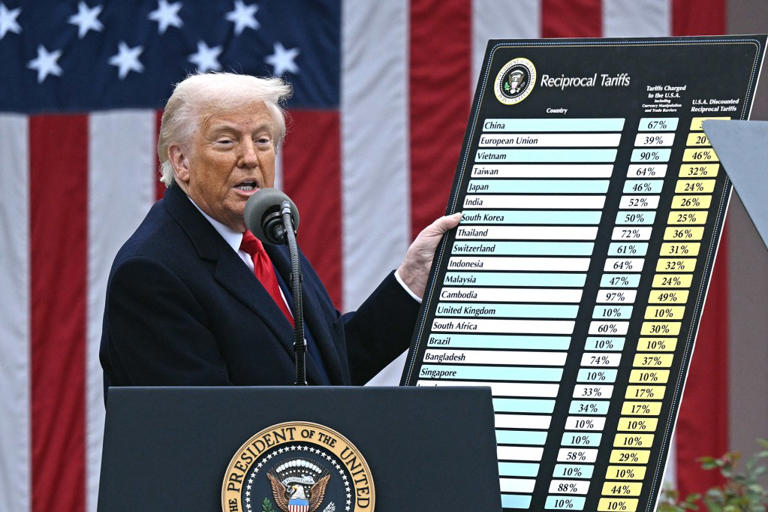
Yesterday, we learned that the Supreme Court ruled against President Trump’s use of IEEPA [the International Emergency Economic Powers Act of 1977] to impose tariffs willy-nilly on other countries, in the case of Learning Resources, Inc. v. Trump. My first thought was: Is the Supreme Court recovering its spine? Is Chief Justice John Roberts finally hearing people saying that he’s ceded his power to be a Trump toady? Is this the beginning of a return to the rule of law?

I had high hopes that this was a sign that the members of the Court had decided to not merely be a vestigial organ of our government, to embrace the legacy that John Marshall, William Howard Taft, and generations of justices had fought so hard to maintain: that we do indeed have three co-equal branches of government. And that, despite the current Congressional leaders ceding their power to Donald Trump, our government might continue to function after the Trumpians’ departure.

I heard the decision and thought, “Yes! Finally. Some of the adults in the room are standing up and telling the president ‘I think Canada’s commercial was insulting’ is NOT an international economic emergency granting the president the power to impose an outlandish tariff in response.”

But then I listened to the president’s seething response from the Briefing Room, and remembered why he truly is such a danger: because he demands that the world do what he wants, right or wrong, for good or ill, because his only goal is his own self-aggrandizement and enrichment.

No sane person could look at the Court’s decision and say, “it clarifies the fact that I as president can impose whatever tariffs I want for whatever reason I want, I just have to check a different box on the form.” But he did. He (or more likely his lickspittles) found a passage in a dissent penned by one of the justices, and decided to focus their entire argument on that, rather than the clear majority opinion which said, “No. You may not do this.”

And he is dangerous. He spews bile, invective, and lies with every breath. He accused the Supreme Court of being beholden to “foreign influences,” with no proof and no evidence. He called the justices who ruled in favor of the law and against his illegal acts “embarrassments, fools, and lapdogs.”

When asked why he doesn’t simply work with Congress to come up with a legal tariff plan, he reminded us that he is nothing more than a petulant child, saying “Because I don’t have to. I have the right to do what I want.” And showing his own vaunting intellect, he said of the decision, “it’s like it was written by not-smart people.”

And perhaps worst of all, he said, repeatedly, that the ruling means “I can destroy a country, I can embargo their goods, I can do anything I want.” The only thing this ruling says is that “I can’t charge them money. But I can do anything I want to them.” No rational president has ever threatened to “destroy” another country out of hand, simply because he wants to. But for this president, it’s simply a negotiating tactic.

No call to arms here. Sadly, frighteningly, this is nothing new. While I applaud the Supreme Court for finally having to the courage to say “No, Mr. President, you are wrong, and the laws do not permit you to do this,” I doubt it will make much difference.

(See also “The Disingenuousness: It Burns“.)

Time to Resign

The US military removed Nicolas Maduro from Venezuela.

The Abraham Lincoln carrier group is nearing Iran to support the protesters demanding regime change in that country.

I think it’s time we started considering domestic regime change. Donald Trump: you can save us all a lot of pain if you resign with dignity and grace.

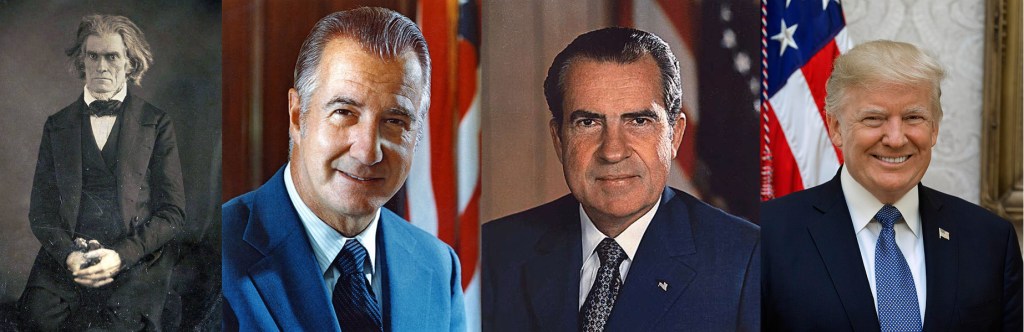
And note, the founders considered this an acceptable possibility. Article 2, Clause 6, begins: “In Case of the Removal of the President from Office, or of his Death, Resignation, or Inability to discharge the Powers and Duties of the said Office…” Resignation is acceptable. Richard Nixon did so for the good of the country, as did Vice Presidents John Calhoun and Spiro Agnew.

Trump is Using Tariffs as Extortion

Donald Trump’s tariffs are imposed due to “emergencies,” which thus grant him the power to do that which Congress is the Constitutionally empowered body to do. Or so he says. And he keeps relying on the International Emergency Economic Powers Act for the thin veil of legitimacy.

I am having a hard time finding any “emergency” in Emmanuel Macron’s decision to not pay Trump $1 billion to join his “Board of Peace,” but somehow Trump sees that decision as justification to impose a 200% tariff on French wines.

I only hope the Supreme Court wakes up to its job, that it is not subservient to the president, but a co-equal branch, and that the Court kicks Trump’s entire absurd tariffing policy to the curb.

Added January 30, 2026: His illegal threats continue apace: “Trump first off private jet threat at ally that hurt his feelings”

Trump is Pissing on the World

Donald Trump is like a dog, pissing on things to claim ownership of them.

His latest is threatening staunch American allies with tariffs if they don’t support the forceful US annexation of Greenland. “We need Greenland for security,” he says. Does that sound familiar? It should. It’s what Vladimir Putin said just before ordering Russian troops to attack Ukraine. That’s the same Ukraine war, by the way, that Donald Trump said—during the 2024 election—that he would end within 24 hours if he won the election. We’re still waiting for that.

Long ago, I wondered if Donald Trump was a stooge working for Putin. Now I realize he’s simply doing his best to emulate Putin. Indeed, Putin gets all this Trumpian love for free.

Trump’s only morality is self-aggrandizement. Everything he does as president seems to have the same goal: to put more money in his pocket, or to put his name on things. In that respect, he’s not unlike a dog, pissing on things to claim ownership. The last major US territorial acquisition was the purchase of Alaska from Russia in 1867. The US acquired Puerto Rico and Guam due to the Spanish–American War (in 1898; we also got the Philippines, which became an independent country in 1946). And the US purchased part of the Virgin Islands from Denmark in 1917.

So what happens if the US manages to “acquire” Greenland? He becomes the first president since World War II to increase the geographic size of the United States. Indeed, he also gets to claim to be the president who acquired the largest parcel of territory for the US, and if you’ve listened to any of his speeches, you know “first” and “biggest” are among his holy words. (For comparison, Alaska is about 665,000 square miles, and the Louisiana Purchase [which the US got from France in 1803] involved about 828,000 square miles, while Greenland measures about 836,000 square miles.)

Any other president would measure success in terms of national peace and prosperity; the people’s health and wealth; happiness, amity, and community. But how does Trump measure success? With crowns on his head and dollars in his pocket.

He was talking about his “Board of Peace” this week. It’s key feature? Each member has to pay $1 billion, which he as chairman gets to control. The gold decorations dripping all over the White House are not impressive; they are there to tell him he controls vast sums of wealth. But he looks at the truly wealthy—Warren Buffett, Bill Gates, Elon Musk—and he feels his inferiority complex, because his wealth is not on that level. So he keeps grifting, keeps taking what he can.

The first load of Venezuelan has recently been sold, and the proceeds of that sale wound up in a Qatari bank. Why Qatar? Why not the US? Or, for that matter, why not Venezuela? Because this way, Trump has control over that money, can disburse it as he will. It has suddenly become his money.

The Trump Kennedy Center. The Trump Ballroom. The Trump Battleship. The Trump Institute of Peace. The Trump Savings Account. The Trump Special Visa for Rich People. The Trump Southern Border Boulevard in Palm Beach. His face on the National Park pass. And on, and on…

It’s time we told Donald Trump to piss off.

Edited February 6, 2026, to add this link to an article entitled “Everything Donald Trump has tried to name after himself since his White House return.’

Shouldn’t immunity be a two-way street?

The Supreme Court’s decision in Trump v United States (2022) seems to have set the standard for presidential immunity, that the President of the United States may not be sued for anything he does while serving as President (without any comment or direction as to what a President might do during his time in office that is not within the scope of his “official acts”). It seems most current interpretations of that ruling assume the President may not be the subject of any lawsuit, period.

At the same time, however, the United States is experiencing the presidency of a person who’s first response to almost any disagreement is to sue. I’m not sure there is an exact count of the number of lawsuits he has brought. For only the latest example, see President Trump’s threat to sue JPMorgan Chase.

As much as the President needs to do things that an ordinary citizen oughtn’t be able to do, it seems manifestly unfair that while Donald Trump as the President is immune from lawsuits, Donald Trump himself has the complete freedom to file lawsuits of his own.

Added January 30, 2026: And now he is suing the Internal Revenue Service. From the linked article: “The lawsuit, filed Thursday at a federal courthouse in Miami, says Trump is suing in his personal capacity, not as president.” So he can differentiate Trump-the-person from Trump-the-president. Hmm….