The US Senate voted 57–43 in the impeachment trial of former President Donald Trump. 57 votes to convict, short of the two-thirds necessary. I’m disappointed that I’m not surprised.
I had been harboring a hope, a pipe-dream, that the Republican Party (as represented by those 50 Senators) would choose to repudiate the growing Trump Party within its ranks, and return to its role as a mature party representing rational conservative points of view. Sadly, 43 Senators said “No, we really are the Trump Party, not the Republican Party.”
The other disappointing-but-not-surprising facet of the proceedings was that so few Senators (if any) actually sat as impartial jurors, judging the trial solely on the cases presented to them (I watched it all; I found the argument for conviction to be convincing).
But after the vote, after the impeachment trial adjourned, Senator Chuck Schumer spoke (saying very little of surprise), and then Senator Mitch McConnell spoke. His speech was a surprise. McConnell spoke for probably fifteen minutes, and his words (in my mind) boil down to “Donald Trump was guilty of the crime imputed to him, but the Senate couldn’t convict because impeachment is accuse-try-convict-remove from office, and since he’s a former President, we couldn’t remove him from office. But some other court should definitely try him.” Those words resonate with me.
But Mitch McConnell has lost all credibility with me. Starting with his February 2016 statement that the Senate could not consider a Supreme Court nominee during an election year, and then completely reversing himself with his October 2020 rush to confirm a Supreme Court nominee days before an election, he has proven himself to be nothing more than a political opportunist, blowing whichever way the wind takes him. And let’s not forget, it was McConnell himself who determined the Senate could not be in session to receive the impeachment article from the House before the end of President Trump’s term. The trial lasted five days. The article of impeachment was adopted by the House on January 13. Had McConnell chosen to receive it, and held the trial in a timely manner, it would have concluded before the end of Donald Trump’s term. So McConnell “had” to vote to acquit based on a technicality, but it’s a technicality he himself caused.
So I want to believe what he said, but because he said it, I can’t. But it certainly does seem that there is emphatic evidence of Donald Trump’s guilt in inciting an insurrection.
When you’re a young bard on the road, and an 847-year-old prophecy hurls these slings and arrows of outrageous fortune at you, life is going to get very uncomfortable very quickly.
Terin Ostler was living a happily anonymous life when two squires grabbed out of a tavern and brought before the Duke of Ashbury. Told that he was the object of a prophecy—but that no one would tell him what the prophecy says—he is forced onto a quest in which his life will be threatened by the enemies of the Duke, and by the Duke’s allies. His quest is to save the world from an apocalyptic war, which started nine centuries ago, and seems to be on pause. Terin Ostler is a man on the run… if only he could figure out where he’s going.
Author Michael A. Ventrella was one of the creators of live action roleplaying, and after creating the world of Fortannis, started writing stories set within that realm. In 2008, his comic epic fantasy novel Arch Enemies was published. In 2020, he was able to rewrite it, improve it, and turn it into the two books Fantastic Books is now thrilled to be publishing: Terin Ostler and the Arch Enemies, and Terin Ostler and the War of the Words.
Terin Ostler and the Arch Enemies, Book 1 of the Tales of Fortannis
$13.99, trade paperback, 160 pages, ISBN 978-1-5154-2417-8
$5.99 ebook
The Tales of Fortannis—and all Fantastic Books publications—are distributed through Ingram, and available through all major online retailers and specialty sf shops via direct order from the publisher.
A lot of the talking heads on my television news programs are handicapping the upcoming impeachment trial of Donald Trump. The prevailing comments seem to be that the Republican Senators are going to try to avoid taking any position because they fear what Trump and the Trump Party may do to them. They’re expressing incredulity that seventeen Republican Senators could possibly vote to convict.
But what seems to be missing in these analyses are, first, that this is (or at least ought to be) a trial in which the Senators, sitting as jurors, really ought to be deciding on their vote (verdict) based on the evidence which will be presented at the trial (I was pleased to hear Senator Toomey say just that today on CNN). We didn’t get a lot of that in the last three presidential impeachment trials, and we probably won’t see much of it this time around, but just think how refreshing it would be.
The other thing that is missing is the potential for Mitch McConnell to grow a backbone. McConnell is a smart politician, who has ruled his faction in the Senate for quite a while. He appears to be the leader of the entire Republican party today (except for Trump and his insanity). The time appears to be ripe for him to wrest control of the Republican name back, and to marginalize the aberration that is the Trump Party. By convicting former President Trump of inciting an insurrection, and by barring him from ever holding office again, the Republicans in the Senate would be clearly telling their party members that the insanity is done; that it is time to go back to being members of a government, rather than a bullying, rampaging mob of divisive haters.
Donald Trump managed to grab the White House, and drew out of the woodwork a gang of passionate thugs, but even Mitch McConnell, in his more lucid moments, must realize that Donald Trump’s Presidency was bad for the country. Now, McConnell has a few days to spread the word among his forty-nine Senate colleagues that they can retake the party, that they can once again look like mature adults in the government.
Of course, it wouldn’t be so simple as casting the vote (and convincing a few other Senators to do the same). If McConnell and other rational Republicans really want to regain control of the runaway train the Trump has turned their party into, it’s going to take effort. They’re going to have to speak about what they’re doing and why. They’re going to have to educate their party members, pointing out the lies and misdirection Trump spews as naturally as breathing. In short, they’re going to have to work to get there, and it won’t be easy. But nothing worth doing ever is easy.
Mind you, while I’m expressing hope that Mitch McConnell can work for the good of the country, I really don’t repose that much trust in him. Especially not after watching his actions of the last few years. In 2016, he said the Senate could not consider a Supreme Court nominee during an election year. In 2020, he said it was fine to do so, since the same party controlled the Senate and the White House. He has shown himself to be completely untrustworthy (so I am continually amazed that anyone is willing to negotiate with him). He is apparently not a Senator serving the nation, but a political opportunist seeking out any avenue to accumulate more power for himself and his cronies. In other words, I don’t hold out much hope that he will lead his party to convict Trump and blossom as a high-minded collection of political leaders. But I can continue to hope.
I wrote the above a few days ago, but then let it sit before posting it. I still think it’s valid reasoning, and that if they want to remain relevant, the Republican Party will have to repudiate the Trump Party and Donald Trump. But I’ve also started wondering if conviction in the Senate is necessary for that, or if it even is the best possible outcome.
Consider this alternative: what if the United States Senate, sitting as the jury in the impeachment trial of now-former-President Donald Trump, determines he is not guilty by reason of mental defect or diminished capacity (or some other such synonym)? Indeed, that may be why the House managers asked him to testify. If they can get Donald Trump on the stand to publicly state that he still believes he won the election, despite all evidence to the contrary, it becomes easier to find that he is out of touch with reality. Casting his actions in that light puts the onus on Congress to strengthen the 25th Amendment, and on future Cabinets to keep a better watch on their Presidents. It gives the Republican Senators—fearful of fringe party nut-jobs—an out of not voting to convict. And it means that, even without a separate finding that Donald Trump is ineligible to hold office in the future, he’s done.
Don’t get me wrong: I think the evidence is overwhelming that he did incite a mob to insurrection that resulted in damage, death, and the disruption of the normal functioning of the United States government. The impeachment was completely warranted, because he was the President when it was voted. But now we need to temper our need for vengeance with our need to try to bring his followers back into the fold of decent human beings. Convicting Donald Trump, at this point, will not change any minds, will not convince the rest of the Trump Party that he is wrong. But recognizing his diminished capacities might be a step toward allowing them an out from their own descents into madness.
Authors working for tips. Thanks! paypal.me/ianrandalstrock .
I’ve been watching the stock market, and specifically what’s going on with the Gamestop stock (GME). The media keeps saying “small retail investors” are driving the meteoric price change. I looked through WallStreetBets, the reddit feed where those “small retail investors” came together to plan and execute this action. Several participants post screen-shots of their stock positions, and I’m seeing cost bases/initial investments of $31,000, $94,000, and $142,000. Sure, there are many small fry with a few shares, but it seems the bulk of these “small retail investors” have pumped tens of thousands of dollars each into this stock. Should we be thinking of them as “the small guy,” or are they are just individual stock manipulators?
I think I have to learn how to talk with people. That’s “with,” not “to.” “To” I’ve got down pat. I love being on stage, I can tell stories, share information, explain, describe, comment at length… But I’m wondering about the “with”.
Today, I went to the store (had to stock up on perishables before the impending storm), and wound up talking to the fellow behind me in the line to check out. He asked one or two leading questions, and I was off. I mentioned science fiction, he expressed an interest, so I said I’m a writer and publisher. He asked if I’d written anything he’d recognize, and then I asked who he liked to read. He mentioned Asimov, and that was it. I told him stories about knowing Isaac, and he only had to make a few “mm hmm”s here and there, while I held forth for probably fifteen minutes (it felt kind of like those days in the office way back when, when Isaac would talk for an hour, and I just listened).
I talked, he seemed interested, we checked out, and as I was getting into the car, I thought “Gee, that guy learned a lot about me, and listened to my stories, and I know almost nothing about him.” It can’t be because he didn’t want to talk about himself. It’s just that he asked a question or two that got me talking.
I’ve had similar sensations in the past, but they were fleeting. Writing this, however, I’m realizing it’s a common occurrence with me. I’m terrible at starting conversations, and I have trouble meeting people in crowds. But once someone asks me a good leading question, I can talk forever, and come away thinking we had a good conversation, when in fact we didn’t. I have never learned the art of asking a good leading question, of sharing that conversational spotlight. Perhaps that’s part of why I didn’t enjoy being a reporter nearly so much as being a columnist.
Now that I’ve become conscious of this failing, I’m going to try to learn from it and correct it, but I fear it won’t be easy, especially during the pandemic. But once we’ve defeated this virus, or learned to live with safely with it, and when we go back to seeing each other in person, I hope you’ll be able to help me with this. Thinking back on conversations, I know how they go: I get a question that requires more than a one-word answer, and I give it, and I keep talking. But I’m not sure how often, at the end of what turns into a monologue, I can return the favor with an equally interesting leading question. It’s not an inability to listen: I can listen as well as I talk, and take it in. It’s just being the encouraging, enthusiastic listener who asks the question to get that monologue back, that’s where the problem lies.
Want to contribute to the “teach Ian to ask questions” fund? Much appreciated, at paypal.me/ianrandalstrock
Short form: if we speak on the phone, or communicate via text message, I no longer have your phone number. However, I also don’t yet have a replacement cell phone (with, I assume, the same phone number). So I’ll need you to contact me in a few days to reconnect.
A couple days ago, my four-year-old iPhone SE stopped working. I didn’t drop it, didn’t get it wet, didn’t abuse it, didn’t damage or mistreat it. But the power button just stopped working. So I called Apple, and the guy on the phone couldn’t help me, but he was able to set up an appointment for me at a nearby Apple store. That appointment was for 4:50pm today.
I got to the store at 4:40 (trying to be on time or a little early), and stood outside in the line for half an hour. When I finally got inside and to someone to help me, he seemed surprised at the quaint notion of an appointment with a time.
He played with the phone, agreed with me that the power button was not working, and said I ought to leave it with him for two hours, so I did. I came home, ate dinner, found an email saying they had news and I ought to call the store. I called the store, and learned that, even though they had completely erased the phone, they were unable to do anything to fix it, and I would have to buy a new one. “You can have the same phone for $269, but it’s four years old, or for $399, you can get a brand new version of it. The dimensions are slightly different, but it’s otherwise the same.”
I trekked back to the store, got to a clerk, and asked “will I need a new charging cable, or a different adapter to use my Square with the phone? I know that engineers love to change things. And I think I heard they’d removed the headphone jack on some models.” She said “No, this is the same as the phone you have, just newer, so it has a better camera, things like that.”
I took it home, took it out of the box, and discovered that “slightly different” dimensions are actually completely different, to the point that the case I have for the old phone does not fit the new phone. The buttons are in different places. And there is indeed no headphone jack for the Square credit card reader to use. I also discovered a little metal clamp of some sort in the box (attached to a form-fitting card, so apparently it’s supposed to be here) with absolutely no idea what it’s for, since Apple has decided users don’t need manuals.
I’d grumble about bait-and-switch, but I think it’s much closer to “what do you mean you don’t know everything about our nifty, cool products?” For me, a cell phone is a tool I use, not a status symbol or a technological toy. Apparently, that makes me a customer the company really doesn’t care about.
So, now I have an iPhone which I have no idea how to use. No manual to tell me how to transfer the sim card from the old to the new (I gather I have to go searching online for a manual for this phone—guess I’m really lucky I have a computer, too), and none of the extras that go with a phone that I need, because all the pieces I have work just fine… just not with this phone.
Yeah, I’m not terribly happy.
And since I’m grumpy, let me share the rest of the grumpiness-causers I ran into:
While I was waiting outside of the store for half an hour, I realized why 418,000 Americans have died during this pandemic. Ten months we’ve been at it. I would think that after ten months, my fellow Americans would have learned something about queuing up (and not breathing down the neck of the person standing in front of them). I would think they would have learned something about wearing a mask (like, you don’t breathe through your chin). Heck, I’d think they’d try to do as I have, and avoid unnecessary contact with people (like, don’t go out if you don’t have to: the repair tech who told me to come back in two hours suggested I hang out in the whole foods store around the corner). No wonder we’re dying in droves, and sick, and the rest of the world wonders what kind of morons we are: we are morons.
As of today, Jimmy Carter has been a retired President of the United States for 40 years. His post-presidency is longer than any other (the previous record holder was Herbert Hoover, who died in 1964, 31 years after leaving the office). New president Joe Biden did say he’d spoken with Carter last night, but today’s was the first inauguration Carter has missed since Richard Nixon’s in 1972. Carter was inaugurated in 1976, and attended every one thereafter.
Carter is truly a man from another era, so long retired from the presidency that he is a part of history.
There is only one serving Senator who was in office when Carter was president: Vermont’s Patrick Leahy took his seat in the Senate on January 3, 1975, when he was 34 years old. Two current members of the Senate were born during Jimmy Carter’s administration, and one—Jon Ossoff of Georgia, who was sworn in today—was born six years after Carter left office.
There is also only one serving Representative who was in office when Carter was president: Alaska’s Don Young, who joined the House on March 6, 1973. The 87-year-old Young is the oldest and longest-serving member of Congress, though he is nine years younger than Carter. Thirty-one members of the House of Representatives were born after Carter left office.
The senior member of the Supreme Court is Associate Justice Clarence Thomas, who joined the Court on October 23, 1991, more than ten years after Carter retired. (Carter is the only president to serve a full term without making an appointment to the Court.)
Of the 20 people who served in Carter’s Cabinet, he has outlived 13 of them. Those still surviving include W. Michael Blumenthal (Secretary of the Treasury, 1977-79), Benjamin Civiletti (Attorney General, 1979-81), Ray Marshall (Labor, 1977-81), Joseph A. Califano, Jr. (HEW, 1977-79), Maurice Landrieu (HUD, 1979-81), Neil Goldschmidt (Transportation, 1979-81), and Charles Duncan, Jr. (Energy, 1979-81).
Born October 1, 1924, Jimmy Carter is the longest-lived President (he eclipsed George H.W. Bush’s record in March 2019). His wife, Rosalynn, was born August 18, 1927, and #3 on the list of longest-lived First Ladies (Bess Truman lived 97 years 247 days; Lady Bird Johnson was 94 years 201 days old when she died).
Jimmy and Rosalynn married on July 7, 1946, so they are the longest-married Presidential couple (they eclipsed the record set by George and Barbara Bush, which was 73 years 101 days).
Help keep the trivia flowing by dropping something in the virtual tip jar at: paypal.me/ianrandalstrock . And thank you!
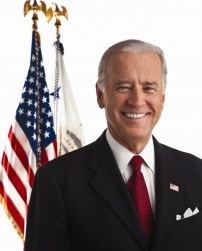
Today, we inaugurated a new president. Joseph Robinette “Joe” Biden, Jr., is now the 46th president (the 45th person to hold the office, since Grover Cleveland counts twice). With the coming of a new President (and Vice President, and First Lady) it seems a good time to look at my books and see what needs to be updated.
Joe Biden
I’ll start with the first book, The Presidential Book of Lists, and start with an oddity in that.
Chapter 7: Most Common Presidential First Names
The list starts with James, John, William, and George. The US Census Bureau lists the ten most common male first names: James, John, Robert, Michael, William, David, Richard, Charles, Joseph, Thomas. Joseph, Joe, is the ninth most common male first name. But Joe Biden is the first President to be called Joe or Joseph, first or middle name.
Chapter 8: Most Popular States Where Presidents Were Born
Joe Biden is the second President born in Pennsylvania (after James Buchanan, 1857-61). Thus, Pennsylvania is now tied for fifth place (the birth state of two Presidents) with North Carolina, Vermont, and Texas.
Chapter 13: Presidents Who Shared Birthdays
Joe Biden was born on November 20, 1942. He doesn’t share his birthday with any other Presidents, but he was born in a very busy week. James Garfield was born November 19, 1831. Franklin Pierce was born November 23, 1804, and Zachary Taylor was born November 24, 1784.
Chapter 17: Presidents Who Were Older than the Greatest Number of Their Predecessors
Ronald Reagan had held the top spot on this list solo until today. Reagan was older than four of his predecessors: John Kennedy, Richard Nixon, Gerald Ford, and Jimmy Carter. Biden, too, is older than four of his predecessors: Bill Clinton, George W. Bush, Barack Obama, and Donald Trump (who himself was tied for second on the list, being older than three of his predecessors).
Chapter 19: Presidents Who Had the Most Living Predecessors
Biden joins the top of the list, with five: Jimmy Carter, Bill Clinton, George W. Bush, Barack Obama, and Donald Trump. Already on top of that list are Abraham Lincoln, Bill Clinton, George W. Bush, and Donald Trump.
Chapter 33: The Five Presidents Who Outlived Their Wives the Longest
Joe Biden is now number one on this list. His first wife, Neilia Hunter Biden, died in a car crash in December 1972, more than 48 years ago. He remarried five years later, to the current First Lady, Dr. Jill Biden. Now #2 on the list is Thomas Jefferson, who outlived Martha (and remained unmarried) by almost 44 years. Martin Van Buren is now in third place, having outlived Hannah by 43 and a half years. And at #4 is Theodore Roosevelt, who outlived Alice by almost 35 years. Like Biden, TR remarried a few years after the death of his first wife, and had more children with her.
Chapter 34: The Six Presidents Who Had More Than One Wife
When I wrote the book, five Presidents had been widowed and remarried, and one—Ronald Reagan—was divorced and remarried. Since then, we’ve had Donald Trump, the only President to have married three times (twice divorced), and now Joe Biden is the sixth President to have been widowed once and then remarried.
Chapter 46: Presidents Who Had All Their Siblings Live to See Them Take Office
Joe Biden is now number 10 on this list. He is the eldest of four siblings, including his sister Valerie and brothers Frank and Jim.
Chapter 57: Vice Presidents Who Were Elected President
Joe Biden joins the list of now ten Vice Presidents who were elected President. He is only the second to retire from the Vice Presidency and then return to the political scene to later be elected President, after Richard Nixon (Vice President 1953-61; President 1969-74).
Chapter 75: The Five Oldest Presidents
When I wrote the book, Ronald Reagan was the oldest when counting from their age at inauguration (he was 17 days shy of his 70th birthday). Reagan was followed by William Henry Harrison, James Buchanan, and George H.W. Bush. Counting from their age when they left office, the list was Reagan, then Dwight Eisenhower, Buchanan, and Bush. When Donald Trump took office, he was nearly eight months older than Reagan had been at inauguration. He served one term, and left office at the age of 74 years and 7 months. Joe Biden takes complete control of this list: he is older on inauguration day than Reagan was when he left office: 78 years and 61 days old.
Chapter 86: Presidents Defeated In Their Bids for Re-election
To the twelve who were on this list—from John Adams to George H.W. Bush—we now add Donald Trump.
***
Jill Biden
As Joe Biden was sworn in, his wife, Dr. Jill Biden, becomes First Lady: the most consuming unpaid job in the administration.
She, too, will cause me to update Ranking the First Ladies.
Chapter 5: The Most Common Names of First Ladies
Like her husband, First Lady Dr. Jill Biden is the first First Lady to have her first name. But while her husband’s name is the ninth most common in the general population, hers is #159.
Chapter 6: The Most Popular States for First Ladies to be Born
Jill Biden is the third First Lady to be born in New Jersey, elevating that state into a three-way tie for fourth place with Missouri and Illinois.
Chapter 10: First Ladies Who Shared Birthdays
Jill Biden was born on June 3, 1951. She doesn’t share her birthday with any other First Lady, but Martha Washington and Helen Taft were both born on June 2 (1731 and 1861).
Chapter 22: First Ladies Who Were College Graduates
Dr. Jill Biden is the 14th First Lady with a college degree. But she went farther… much farther. Pat Nixon and Laura Bush continued on to earn masters degrees. Hillary Clinton and Michelle Obama earned JD degrees, and worked as lawyers. Jill Biden earned a bachelors degree, two masters, and, in 2007, a doctorate of education.
Chapter 24: The Five Oldest First Ladies
Based on their age when their husbands took office, the list was topped by Anna Harrison, who was 65 years 222 days old when William Henry Harrison became President. Based on their age when they moved out of the White House, Bess Truman was three weeks shy of her 68th birthday, followed by Barbara Bush and Nancy Reagan. Jill Biden is 69 years 231 days old today, and thus, #1.
Chapter 26: The First Ladies Who Were the Greatest Number of Years Older Than Their Predecessors
Jill Biden leaps to number 2 on this list. She is 18 years 327 days older than her predecessor, Melania Trump (President Trump’s third wife, she is 24 years younger than her husband). Caroline Harrison, in 1889, was 31 years 293 days older than France Cleveland, who married President Grover Cleveland during his first term, when she was 21.
Chapter 41: The Presidential Wives Who Missed Their Husbands’ Presidencies
Joe Biden’s first wife, Neilia Hunter Biden, who was born in 1942, died in a car crash in December 1972, six years after marrying Joe. She is the sixth woman to have died before her husband became President.
Chapter 47: The First Ladies Who Had All Their Siblings Live to See Them Become First Lady
Jill Biden is the oldest of five sisters. She is the ninth First Lady to have all her siblings alive when she became First Lady.
***
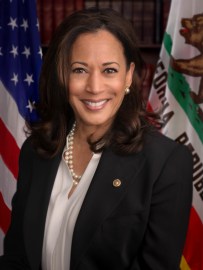
Kamala Harris
Which brings us to my third book, Ranking the Vice Presidents. And Kamala Harris.
Sure, she’s the first woman to be Vice President. Sure, she’s only the second Vice President to be in a long-term relationship with a man (see William R.D. King). Sure, she’s the second Vice President of non-European heritage (see Charles Curtis). Sure, she’s the first Vice President to use a different last name than her spouse (Douglas Craig Emhoff, who is seven days older than she is).
But those are all the obvious differences. Let’s see what her inauguration does to modify my book. (Surprisingly, the answer is “not too much.” In other words, other than physical characteristics, Kamala Harris looks pretty much like her predecessors: age, family, work experience, and so on.)
Doug Emhoff
Chapter 5. The Tallest and Shortest Vice Presidents
Kamala Harris is now the shortest Vice President. She’s 5’2″ tall. John Adams, Martin Van Buren, and Hubert Humphrey were all 5’6″.
Chapter 6. The Most Common Vice Presidential First Names
Yeah, this one’s a gimmee for anyone who has been paying attention. No previous Vice Presidents have been named Kamala. On the US Census Bureau list of most common first names, Kamala ranks #3,559, with about 1,518 people sharing that name. (For comparison, #1 on the list is Mary, which adorns 3,991,060 people.)
Chapter 7. The Most Popular States for Vice Presidents to be Born
Kamala Harris is the second Vice President born in California (joining Richard Nixon).
Chapter 11. The Vice Presidents Who Shared Birthdays
Kamala Harris was born October 20, 1964, so she doesn’t share a birthday with any of her predecessors. But she was born during a popular week. Richard M. Johnson (1837-41) was born October 17, 1780. Adlai Stevenson (1893-97) was born October 23, 1835. James Sherman (1909-12) was born October 24, 1855. And Theodore Roosevelt (1901) was born October 27, 1858.
However, October 20, 1964, was the day former President Herbert Hoover died, at the age of 90, 31 years after he retired from the Presidency.
Chapter 17. The Vice Presidents Who Had the Greatest Number of Living Predecessors
Kamala Harris joins Al Gore (1993-2001) at the top of the list, with six living former Vice Presidents: Walter Mondale (1977-81), Dan Quayle (1989-93), Al Gore (1993-2001), Dick Cheney (2001-09), Joe Biden (2009-17), and Mike Pence (2017-21).
Chapter 23. The Vice Presidents Who Had the Fewest Children
Kamala Harris is the fourth Vice President to have no natural children, joining William King, William Wheeler, and Thomas Marshall.
Help keep the trivia flowing by dropping something in the virtual tip jar: paypal.me/ianrandalstrock . And thank you!
I just gave a new talk, “Inaugurations and Installations: Presidents’ First Days on the Job,” as Kentuckiana Mensa’s monthly speaker. It went pretty well. About five percent of the group’s membership showed up for it, which strikes me as a good turn-out for 6pm on a Saturday night. Nobody logged off in the middle, and several had questions and comments after I was finished, so I guess there was some interest.
As I was talking, I noticed a few pieces that can be trimmed, but overall, I’m pleased with it.
So, that’s another topic I can offer to groups looking for speakers. I’m available; ask.
I just got an email from a regular convention customer, who notes that he always buys something from me at Arisia, and that in better times, that would be this coming weekend. He writes “since I don’t want you or your authors to lose out because we’re not conventioning in person, can I purchase some books directly from you?” I’m very touched to receive this loving offer. As I told him, I’ve been running the company at the bare minimum this year, not growing as it should, but operating cautiously enough that we’ll emerge from the pandemic in as good a shape as we entered it, having missed out only on the growth. Nevertheless, it’s a wonderful offer which I told him I’m willing to accept, only so long as it doesn’t present any hardship for him.
 He is the chosen one.
 Terin Ostler was living a happily anonymous life when two squires grabbed out of a tavern and brought before the Duke of Ashbury. Told that he was the object of a prophecy—but that no one would tell him what the prophecy says—he is forced onto a quest in which his life will be threatened by the enemies of the Duke, and by the Duke’s allies. His quest is to save the world from an apocalyptic war, which started nine centuries ago, and seems to be on pause. Terin Ostler is a man on the run… if only he could figure out where he’s going.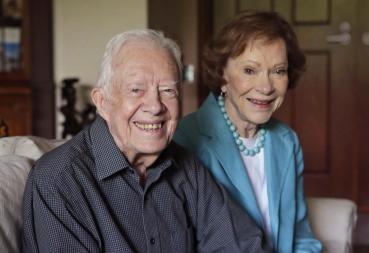


 Ian Randal Strock