Tough Trivia, 6/9/21

Today’s Tough Trivia question category is Science: A unit prefix is a specifier that gos on the front of a unit of measurement to indicate multiples (1, 10, 100, etc.) or fractions (1/10, 1/100, 1/1000) of the unit. Some of those common prefixes are kilo, milli, mega, nano, etc. So your job is to come up with as many of those prefixes as you can, and the numbers they refer to (put them in order; it’s easier that way).

***

Grant_Wood_-_American_Gothic_-_Google_Art_ProjectYesterday’s question: There are some artists who have become household names. And there are some works of art whose titles are equally famous. Given this alphabetical list of oil paintings, can you name the proper artist for each? Bonus points if you can put them in order of their creation.

The answers:

Arrangement in Grey and Black No. 1, aka Whistler’s Mother by James McNeill Whistler (1871)

The Child’s Bath by Mary Cassatt (1893)

American Gothic by Grant Wood (1930)

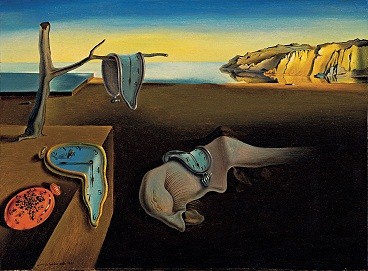
The Persistence of Memory by Salvador Dali (1931)

Horse’s Skull with Pink Rose by George

Guernica by Pablo Picasso (1937)

Self-Portrait with Thorn Necklace and Hummingbird by Frida Kahlo (1940)

Nighthawks by Edward Hopper (1942)

The Old Checkered House in Cambridge Valley by Grandma Moses (1943)

Number 17A by Jackson Pollock (1948)

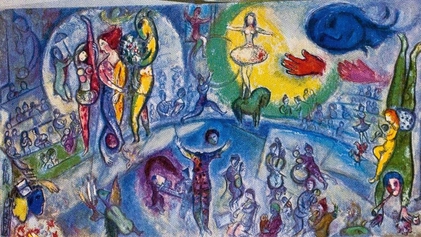
Le Grand Cirque by Marc Chagall (1956)

Le_Grand_Cirque_(1956)***

Ian’s Tough Trivia is a daily feature of this blog (Monday’s category is History; Tuesday is Arts; Wednesday is Science; Thursday is Entertainment; and Friday is Grab Bag). Each day, I post a tough question, as well as the answer to the previous day’s question. Simply comment on this post with your answer. I’ll approve the comments after the next question is posted. Sure, you can probably find the answers by searching the web, but what’s the fun in that?

And if you’ve got a favorite trivia question—or even just a topic for which you’d like to see a question—let me know! Reader participation is warmly encouraged.


Tough Trivia, 6/8/21

The_Persistence_of_MemoryToday’s Tough Trivia question is an Art question: There are some artists who have become household names. And there are some works of art whose titles are equally famous. Given this alphabetical list of oil paintings, can you name the proper artist for each? Bonus points if you can put them in order of their creation.
American Gothic

Arrangement in Grey and Black No. 1

The Child’s Bath

Le Grand Cirque

Guernica

Horses’s Skull with Pink Rose

Nighthawks

Number 17A

The Old Checkered House in Cambridge Valley

The Persistence of Memory

Self-Portrait with Thorn Necklace and Hummingbird

***

Yesterday’s question was: In Canada, it’s Canada Day. In the USA, it’s Independence Day. In France, it’s Bastille Day. Whatever the locals call it, it’s their national day of celebration. Can you list the dates these countries celebrate their national days? And the harder part: can you name the countries they’re celebrating their independence from? (They’re listed here in alphabetical order, not that that’s a hint as to which date is which.)

The answers are:

Brazil: September 7, 1822, Portugal

Canada: July 1, 1867, UK (actually, they celebrate the establishment of the Dominion of Canada)

France: July 14, 1789 (overthrow of the French monarchy)

Greece: March 25, 1821, Ottoman Empire

India: August 15, 1947, UK

Israel: Iyar 5, 1948, UK / British Mandate (since the date is set on the Hebrew calendar, it falls somewhere between April 15 and May 15 on the Gregorian calendar)

Liberia: July 26, 1847, USA

Mexico: September 16, 1810, Spain

Singapore: August 9, 1965, Malaysia

USA: July 4, 1776, UK

***

Ian’s Tough Trivia is a daily feature of this blog (Monday’s category is History; Tuesday is Arts; Wednesday is Science; Thursday is Entertainment; and Friday is Grab Bag). Each day, I post a tough question, as well as the answer to the previous day’s question. Simply comment on this post with your answer. I’ll approve the comments after the next question is posted. Sure, you can probably find the answers by searching the web, but what’s the fun in that?

And if you’ve got a favorite trivia question—or even just a topic for which you’d like to see a question—let me know! Reader participation is warmly encouraged.

Tough Trivia, 6/7/21

Today’s Tough Trivia question category is History:

In Canada, it’s Canada Day. In the USA, it’s Independence Day. In France, it’s Bastille Day. Whatever the locals call it, it’s their national day of celebration. Can you list the dates these countries celebrate their national days? And the harder part: can you name the countries they’re celebrating their independence from? (They’re listed here in alphabetical order, not that that’s a hint as to which date is which.)

Brazil

Canada

France

Greece

India

Israel

Liberia

Mexico

Singapore

USA

***

Friday’s question: The National Archives and Records Administration (NARA) administers presidential libraries, but not all presidents have libraries in the system. Actually they only start with Herbert Hoover’s Presidential Library and Museum, which was dedicated in 1962 (though two of his successors’ libraries pre-date his). Can you name the locations of the NARA presidential libraries?

The answers:

IMG_3809
Ian Randal Strock at the John F. Kennedy Presidential Library, May 8, 2016.

Herbert Hoover: West Branch, Iowa

Franklin D. Roosevelt: Hyde Park, New York

Harry S Truman: Independence, Missouri

Dwight D. Eisenhower: Abilene, Kansas

John F. Kennedy: Boston, Massachusetts

Lyndon B. Johnson: Austin, Texas

Richard Nixon: Yorba Linda, California

Gerald Ford: Ann Arbor, Michigan (though his Presidential Museum is a separate site, in Grand Rapids, Michigan)

Jimmy Carter: Atlanta, Georgia

Ronald Reagan: Simi Valley, California

George H.W. Bush: College Station, Texas

Bill Clinton: Little Rock, Arkansas

George W. Bush: Dallas, Texas

Barack Obama: Chicago, Illinois (they expect to break ground for the building this year)

***

Ian’s Tough Trivia is a daily feature of this blog (Monday’s category is History; Tuesday is Arts; Wednesday is Science; Thursday is Entertainment; and Friday is Grab Bag). Each day, I post a tough question, as well as the answer to the previous day’s question. Simply comment on this post with your answer. I’ll approve the comments after the next question is posted. Sure, you can probably find the answers by searching the web, but what’s the fun in that?

And if you’ve got a favorite trivia question—or even just a topic for which you’d like to see a question—let me know! Reader participation is warmly encouraged.

Tough Trivia, 6/4/21

2019_Macy's_Parade_-_Santa's_sleigh_and_reindeerToday’s Grab Bag question: The National Archives and Records Administration (NARA) administers presidential libraries, but not all presidents have libraries in the system. Actually they only start with Herbert Hoover’s Presidential Library and Museum, which was dedicated in 1962 (though two of his successors’ libraries pre-date his). Can you name the locations of the NARA presidential libraries?

***

Walt_Disney_Snow_white_1937_trailer_screenshot_(13)
Walt Disney with models of the seven dwarfs in 1937.

Yesterday’s question: Monomynous people: so cool that they only need one name. Some of them, however, we only know because of the groups to which they belong. So today, your challenge is to name the members of these groups: Santa’s eight (or nine) reindeer, Snow White’s seven dwarfs, the five Spice Girls, and the three Powerpuff Girls. Bonus points if you can name them in alphabetical order.

The answers are:

Reindeer: Blitzen, Comet, Cupid, Dancer, Dasher, Donder (or Donner), Prancer, Rudolph, and Vixen.

Dwarfs: Bashful, Doc, Dopey Grumpy, Happy, Sleepy, and Sneezy.

1024px-Spice_Girls_2008_01_croppedSpice Girls: Baby, Ginger, Posh, Scary, and Sporty.

Powerpuff Girls: Blossom, Bubbles, and Buttercup.

***

Ian’s Tough Trivia is a daily feature of this blog (Monday’s category is History; Tuesday is Arts; Wednesday is Science; Thursday is Entertainment; and Friday is Grab Bag). Each day, I post a tough question, as well as the answer to the previous day’s question. Simply comment on this post with your answer. I’ll approve the comments after the next question is posted. Sure, you can probably find the answers by searching the web, but what’s the fun in that?

Powerpuff_girls_charactersAnd if you’ve got a favorite trivia question—or even just a topic for which you’d like to see a question—let me know! Reader participation is warmly encouraged.

Financial support in the form of tips is very much appreciated: paypal.me/ianrandalstrock

Tough Trivia, 6/3/21

Today’s Entertainment question is about monomynous people: so cool that they only need one name. Some of them, however, we only know because of the groups to which they belong. So today, your challenge is to name the members of these groups: Santa’s eight (or nine) reindeer, Snow White’s seven dwarves, the five Spice Girls, and the three Powerpuff Girls. Bonus points if you can name them in alphabetical order.

***

Yesterday’s question: Light, or visible light, is no different from radio waves, x-rays, or any other part of the electromagnetic spectrum. The only difference is that this portion of the spectrum can be perceived by the human eye. The spectrum ranges from gamma rays, with wavelengths of 10^-16 meters (that is, ten to the negative 16th power) or frequency of 10^24 Hertz (ten to the positive 24th power), out to long radio waves (wavelengths of 10^8 meters, frequency at 1 Hertz). The colors of visible light are determined by their wavelengths (or frequencies). Can you list them from shortest to longest wavelength? Even better, can you list their wavelengths?

The answers:

Violet: 380 to 450 nanometers
Blue: 450 to 495 nm
Green: 495 to 570 nm
Yellow: 570 to 590 nm
Orange: 590 to 620 nm
Red: 620 to 750 nm

Linear_visible_spectrum.svg

***

Ian’s Tough Trivia is a daily feature of this blog (Monday’s category is History; Tuesday is Arts; Wednesday is Science; Thursday is Entertainment; and Friday is Grab Bag). Each day, I post a tough question, as well as the answer to the previous day’s question. Simply comment on this post with your answer. I’ll approve the comments after the next question is posted. Sure, you can probably find the answers by searching the web, but what’s the fun in that?

And if you’ve got a favorite trivia question—or even just a topic for which you’d like to see a question—let me know! Reader participation is warmly encouraged.

Tough Trivia, 6/2/21

Today’s Science question: Light, or visible light, is no different from radio waves, x-rays, or any other part of the electromagnetic spectrum. The only difference is that this portion of the spectrum can be perceived by the human eye. The spectrum ranges from gamma rays, with wavelengths of 10^-16 meters (that is, ten to the negative 16th power) or frequency of 10^24 Hertz (ten to the positive 24th power), out to long radio waves (wavelengths of 10^8 meters, frequency at 1 Hertz). The colors of visible light are determined by their wavelengths (or frequencies). Can you list them from shortest to longest wavelength? Even better, can you list their wavelengths?

***

Gilbert-GS-Big
W.S. GIlbert

Yesterday’s question: Gilbert and Sullivan are one of the most famous duos of theatrical creators. Dramatist W.S. Gilbert (1836–1911) wrote the libretti, and composer Arthur Sullivan (1842–1900) wrote the music. Together, they created enduring entertainment that to this day is the inspiration of theatrical companies still performing their works, fan clubs and societies worldwide, and even the International Gilbert and Sullivan Festival. But how many of their collaborations can you name? Bonus points for listing them in chronological order.

The answer:

Gilbert and Sullivan collaborated on fourteen operas:
Thespis (1871): a Christmas entertainment
Trial by Jury (1875): a short opera spoofing the law
The Sorcerer (1877): English light opera
H.M.S. Pinafore (1878): their first international hit, a satire of the Royal Navy and social status

Sir_Arthur_Seymour_Sullivan
Arthur Sullivan

The Pirates of Penzance (New Year’s Eve, 1879): a comic look at duty, obligation, and respectability
Patience (1881): a satire of the aesthetic movement
Iolanthe (1882): a satire of the law, the House of Lords, and the war between the sexes
Princess Ida (1884): a spoof of women’s education and male chauvinism, based on Tennyson’s poem The Princess: A Medley
The Mikado (1885): their longest-running hit (672 performances in its original production), a satire of English bureaucracy, thinly disguised by a Japanese setting
Ruddigore (1887): an upside look at Victorian melodrama (originally called Ruddygore)
The Yeoman of the Guard (1888): their only joint work with a serious ending, concern a pair of strolling players caught in a risky intrigue at the Tower of London in the 1500s
The Gondoliers (1889): a satire of class distinctions
Utopia, Limited (1893): a satire of business and the Joint Stock Company Act
The Grand Duke (1896): their only financial failure, and their last collaboration, it concerns a troupe of actors taking political power

***

Ian’s Tough Trivia is a daily feature of this blog (Monday’s category is History; Tuesday is Arts; Wednesday is Science; Thursday is Entertainment; and Friday is Grab Bag). Each day, I post a tough question, as well as the answer to the previous day’s question. Simply comment on this post with your answer. I’ll approve the comments after the next question is posted. Sure, you can probably find the answers by searching the web, but what’s the fun in that?

And if you’ve got a favorite trivia question—or even just a topic for which you’d like to see a question—let me know! Reader participation is warmly encouraged.

Tough Trivia, 6/1/21

Welcome back from the long weekend. I hope you had a good time. Today’s Arts question is also a bit of history: Gilbert and Sullivan are one of the most famous duos of theatrical creators. Dramatist W.S. Gilbert (1836–1911) wrote the libretti, and composer Arthur Sullivan (1842–1900) wrote the music. Together, they created enduring entertainment that to this day is the inspiration of theatrical companies still performing their works, fan clubs and societies worldwide, and even the International Gilbert and Sullivan Festival. But how many of their collaborations can you name? Bonus points for listing them in chronological order.

***

640px-Nasa-logoFriday’s question was: Acronymia. Acronyms are useful things. They make it much easier to say, for instance, SHIELD, rather than Strategic Homeland Intervention, Enforcement, and Logistics Division (though that’s a poor example, because I hate with a passion the contrived acronyms, most often used for government programs, that just happen to form words). At any rate, good acronyms are time-saving linguistic constructions, though often—through continual use—we come to forget what the letters in the acronym stand for (or that it was an acronym at all). Thus, your Tough Trivia question for today is to come up with the words from which these acronyms were formed.

The answers are:

ZIP Code: Zone Improvement Plan
NASA: National Aeronautics and Space Administration
scuba: self-contained underwater breathing apparatus
UNESCO: United Nations Educational, Scientific, and Cultural Organization
AIDS: acquired immuno-deficiency syndrome
JPEG: Joint Photographic Experts Group
laser: light amplification by stimulated emission of radiation
radar: radio detection and ranging
ATM: automated teller machine
PIN: personal identification number (so you don’t need to call it a PIN Number!)
AM and PM: ante meridiem and post meridiem

***

Ian’s Tough Trivia is a daily feature of this blog (Monday’s category is History; Tuesday is Arts; Wednesday is Science; Thursday is Entertainment; and Friday is Grab Bag). Each day, I post a tough question, as well as the answer to the previous day’s question. Simply comment on this post with your answer. I’ll approve the comments after the next question is posted. Sure, you can probably find the answers by searching the web, but what’s the fun in that?

And if you’ve got a favorite trivia question—or even just a topic for which you’d like to see a question—let me know! Reader participation is warmly encouraged.

Tough Trivia, 5/28/21

Acronymia. Acronyms are useful things. They make it much easier to say, for instance, SHIELD, rather than Strategic Homeland Intervention, Enforcement, and Logistics Division (though that’s a poor example, because I hate with a passion the contrived acronyms, most often used for government programs, that just happen to form words). At any rate, good acronyms are time-saving linguistic constructions, though often—through continual use—we come to forget what the letters in the acronym stand for (or that it was an acronym at all). Thus, your Tough Trivia question for today is to come up with the words from which these acronyms were formed:
ZIP Code
NASA
scuba
UNESCO
AIDS
JPEG
laser
radar
ATM
PIN
AM and PM

***

statuettes-Emmy-AwardYesterday’s question was: The EGOT is an entertainment awards grand-slam. To date, only 16 people have achieved an EGOT, winning at least one Emmy, Grammy, Oscar, and Tony Award in competitive categories (and only one has a double EGOT: at least two of each of the awards). How many of the EGOT winners can you name?

In answer, here is a list of the EGOT winners (in chronological order by when they accomplished the feat), along with their ages when they won the fourth award (the dates are of the winner’s first win; they may have multiples of some awards)

Richard Rogers (composer), 59 years 10 months: Emmy 1962, Grammy 1960, Oscar 1945, and Tony 1950.

Helen Hayes (actor), 76 years 4 months: Emmy 1953, Grammy 1977, Oscar 1932, and Tony 1947.

grammyRita Moreno (actor/singer), 45 years 9 months: Emmy 1977, Grammy 1972, Oscar 1961, and Tony 1975.

John Gielgud (actor/director), 87 years 4 months: Emmy 1991, Grammy 1979, Oscar 1981, and Tony 1961.

Audrey Hepburn (actor), 63 years 8 months: Emmy 1993, Grammy 1994, Oscar 1953, and Tony 1954.

Academy_Award_trophyMarvin Hamlisch (composer), 51 years 3 months: Emmy 1995, Grammy 1974, Oscar 1973, and Tony 1976.

Jonathan Tunick (composer/conductor), 59 years 1 month: Emmy 1982 Grammy 1988, Oscar 1977, and Tony 1997.

Mel Brooks (writer/composer/actor), 74 years 11 moths: Emmy 1967 ,Grammy 1998, Oscar 1968, and Tony 2001.

Mike Nichols (director), 69 years 11 months: Emmy 2001, Grammy 1961, Oscar 1967, and Tony 1964.

Whoopi Goldberg (actor), 46 years 6 months: Emmy 2002, Grammy 1986, Oscar 1991, and Tony 2002.

b_Tony_Statuette_horiz.2e16d0ba.fill-1200x800Scott Rudin (producer), 53 years 6 months: Emmy 1984, Grammy 2012, Oscar 2008, and Tony 1994.

Robert Lopez (composer), 39 years: Emmy 2008, Grammy 2012, Oscar 2014, and Tony 2004 (Lopez has two Emmys, three Grammys, two Oscars, and three Tonys).

Andrew Lloyd Webber (composer/producer), 70 years 5 months: Emmy 2018, Grammy 1980, Oscar 1997, and Tony 1980.

Tim Rice (lyricist/producer), 73 years 9 months: Emmy 2018, Grammy 1980, Oscar 1993, and Tony 1980.

John Legend (singer/composer/producer), 39 years 8 months: Emmy 2018, Grammy 2006, Oscar 2015, and Tony 2017.

Alan Menken (composer/producer), 70 years 11 months: Emmy 2020, Grammy 1992, Oscar 1990, and Tony 2012.

***

Ian’s Tough Trivia is a daily feature of this blog (Monday’s category is History; Tuesday is Arts; Wednesday is Science; Thursday is Entertainment; and Friday is Grab Bag). Each day, I post a tough question, as well as the answer to the previous day’s question. Simply comment on this post with your answer. I’ll approve the comments after the next question is posted. Sure, you can probably find the answers by searching the web, but what’s the fun in that?

And if you’ve got a favorite trivia question—or even just a topic for which you’d like to see a question—let me know! Reader participation is warmly encouraged.

Financial support in the form of tips is very much appreciated: paypal.me/ianrandalstrock

Tough Trivia, 5/27/21

Today’s Tough Trivia question: The EGOT is an entertainment awards grand-slam. To date, only 16 people have achieved an EGOT, winning at least one Emmy, Grammy, Oscar, and Tony Award in competitive categories (and only one has a double EGOT: at least two of each of the awards). How many of the EGOT winners can you name?

***

Mohssche-haerteskala_hg
Mohs hardness kit.

Yesterday’s question was: Scales: fish wear them for protection, humans step on them to fret about their diets. We love to measure, rank, and grade things. Your question for today: what do we measure with the following scales: Fujita, Mohs, Richter, Scoville. Bonus points if you know what measures on those scales are for the least intense, and for the most.

The answers are:

The Fujita scale (also called the Fujita-Pearson scale) rates tornado intensity. Introduced by Ted Fujita in 1971, it ranges from F0 (winds less than 73 miles per hour, inflicting light damage) to F5 (winds greater than 261 miles per hour, inflicting incredible damage).

The Mohs scale of mineral hardness measures just what it says it does, characterizing scratch resistance of various minerals through the ability of harder material to scratch softer material. Created by German geologist Friedrich Mohs in 1822, the scale ranges from 1 (talc) to 10 (diamond).

The Richter scale, also called the Richter magnitude scale, measures the strength of earthquakes. And though scientists now use other scales because of shortcomings in the Richter scale, it is still the most commonly known and popularly used. It’s a logarithmic scale, introduced by Charles Richter in 1935, ranging from 1.0–1.9 (microearthquakes, not or only rarely felt) up to 9.0 and greater (near total destruction).

The Scoville scale measures the pungency (spiciness, or heat) of chili peppers. Introduced by pharmacist Wilbur Scoville in 1912, it measures in Scoville Heat Units (SHU), ranging from non-pungent (0–700 SHU) to very highly pungent (above 80,000 SHU). Another way of looking at the scale ranges from bell peppers and pimentos (0–100 SHU) up to law-enforcement grade pepper spray (1,500,000 SHU and up).

***

Ian’s Tough Trivia is a daily feature of this blog (Monday’s category is History; Tuesday is Arts; Wednesday is Science; Thursday is Entertainment; and Friday is Grab Bag). Each day, I post a tough question, as well as the answer to the previous day’s question. Simply comment on this post with your answer. I’ll approve the comments after the next question is posted. Sure, you can probably find the answers by searching the web, but what’s the fun in that?

And if you’ve got a favorite trivia question—or even just a topic for which you’d like to see a question—let me know! Reader participation is warmly encouraged.