Tough Trivia, 6/3/21

Today’s Entertainment question is about monomynous people: so cool that they only need one name. Some of them, however, we only know because of the groups to which they belong. So today, your challenge is to name the members of these groups: Santa’s eight (or nine) reindeer, Snow White’s seven dwarves, the five Spice Girls, and the three Powerpuff Girls. Bonus points if you can name them in alphabetical order.

***

Yesterday’s question: Light, or visible light, is no different from radio waves, x-rays, or any other part of the electromagnetic spectrum. The only difference is that this portion of the spectrum can be perceived by the human eye. The spectrum ranges from gamma rays, with wavelengths of 10^-16 meters (that is, ten to the negative 16th power) or frequency of 10^24 Hertz (ten to the positive 24th power), out to long radio waves (wavelengths of 10^8 meters, frequency at 1 Hertz). The colors of visible light are determined by their wavelengths (or frequencies). Can you list them from shortest to longest wavelength? Even better, can you list their wavelengths?

The answers:

Violet: 380 to 450 nanometers
Blue: 450 to 495 nm
Green: 495 to 570 nm
Yellow: 570 to 590 nm
Orange: 590 to 620 nm
Red: 620 to 750 nm

Linear_visible_spectrum.svg

***

Ian’s Tough Trivia is a daily feature of this blog (Monday’s category is History; Tuesday is Arts; Wednesday is Science; Thursday is Entertainment; and Friday is Grab Bag). Each day, I post a tough question, as well as the answer to the previous day’s question. Simply comment on this post with your answer. I’ll approve the comments after the next question is posted. Sure, you can probably find the answers by searching the web, but what’s the fun in that?

And if you’ve got a favorite trivia question—or even just a topic for which you’d like to see a question—let me know! Reader participation is warmly encouraged.

Tough Trivia, 6/2/21

Today’s Science question: Light, or visible light, is no different from radio waves, x-rays, or any other part of the electromagnetic spectrum. The only difference is that this portion of the spectrum can be perceived by the human eye. The spectrum ranges from gamma rays, with wavelengths of 10^-16 meters (that is, ten to the negative 16th power) or frequency of 10^24 Hertz (ten to the positive 24th power), out to long radio waves (wavelengths of 10^8 meters, frequency at 1 Hertz). The colors of visible light are determined by their wavelengths (or frequencies). Can you list them from shortest to longest wavelength? Even better, can you list their wavelengths?

***

Gilbert-GS-Big
W.S. GIlbert

Yesterday’s question: Gilbert and Sullivan are one of the most famous duos of theatrical creators. Dramatist W.S. Gilbert (1836–1911) wrote the libretti, and composer Arthur Sullivan (1842–1900) wrote the music. Together, they created enduring entertainment that to this day is the inspiration of theatrical companies still performing their works, fan clubs and societies worldwide, and even the International Gilbert and Sullivan Festival. But how many of their collaborations can you name? Bonus points for listing them in chronological order.

The answer:

Gilbert and Sullivan collaborated on fourteen operas:
Thespis (1871): a Christmas entertainment
Trial by Jury (1875): a short opera spoofing the law
The Sorcerer (1877): English light opera
H.M.S. Pinafore (1878): their first international hit, a satire of the Royal Navy and social status

Sir_Arthur_Seymour_Sullivan
Arthur Sullivan

The Pirates of Penzance (New Year’s Eve, 1879): a comic look at duty, obligation, and respectability
Patience (1881): a satire of the aesthetic movement
Iolanthe (1882): a satire of the law, the House of Lords, and the war between the sexes
Princess Ida (1884): a spoof of women’s education and male chauvinism, based on Tennyson’s poem The Princess: A Medley
The Mikado (1885): their longest-running hit (672 performances in its original production), a satire of English bureaucracy, thinly disguised by a Japanese setting
Ruddigore (1887): an upside look at Victorian melodrama (originally called Ruddygore)
The Yeoman of the Guard (1888): their only joint work with a serious ending, concern a pair of strolling players caught in a risky intrigue at the Tower of London in the 1500s
The Gondoliers (1889): a satire of class distinctions
Utopia, Limited (1893): a satire of business and the Joint Stock Company Act
The Grand Duke (1896): their only financial failure, and their last collaboration, it concerns a troupe of actors taking political power

***

Ian’s Tough Trivia is a daily feature of this blog (Monday’s category is History; Tuesday is Arts; Wednesday is Science; Thursday is Entertainment; and Friday is Grab Bag). Each day, I post a tough question, as well as the answer to the previous day’s question. Simply comment on this post with your answer. I’ll approve the comments after the next question is posted. Sure, you can probably find the answers by searching the web, but what’s the fun in that?

And if you’ve got a favorite trivia question—or even just a topic for which you’d like to see a question—let me know! Reader participation is warmly encouraged.
Tough Trivia, 6/1/21

Welcome back from the long weekend. I hope you had a good time. Today’s Arts question is also a bit of history: Gilbert and Sullivan are one of the most famous duos of theatrical creators. Dramatist W.S. Gilbert (1836–1911) wrote the libretti, and composer Arthur Sullivan (1842–1900) wrote the music. Together, they created enduring entertainment that to this day is the inspiration of theatrical companies still performing their works, fan clubs and societies worldwide, and even the International Gilbert and Sullivan Festival. But how many of their collaborations can you name? Bonus points for listing them in chronological order.

***

640px-Nasa-logoFriday’s question was: Acronymia. Acronyms are useful things. They make it much easier to say, for instance, SHIELD, rather than Strategic Homeland Intervention, Enforcement, and Logistics Division (though that’s a poor example, because I hate with a passion the contrived acronyms, most often used for government programs, that just happen to form words). At any rate, good acronyms are time-saving linguistic constructions, though often—through continual use—we come to forget what the letters in the acronym stand for (or that it was an acronym at all). Thus, your Tough Trivia question for today is to come up with the words from which these acronyms were formed.

The answers are:

ZIP Code: Zone Improvement Plan
NASA: National Aeronautics and Space Administration
scuba: self-contained underwater breathing apparatus
UNESCO: United Nations Educational, Scientific, and Cultural Organization
AIDS: acquired immuno-deficiency syndrome
JPEG: Joint Photographic Experts Group
laser: light amplification by stimulated emission of radiation
radar: radio detection and ranging
ATM: automated teller machine
PIN: personal identification number (so you don’t need to call it a PIN Number!)
AM and PM: ante meridiem and post meridiem

***

Ian’s Tough Trivia is a daily feature of this blog (Monday’s category is History; Tuesday is Arts; Wednesday is Science; Thursday is Entertainment; and Friday is Grab Bag). Each day, I post a tough question, as well as the answer to the previous day’s question. Simply comment on this post with your answer. I’ll approve the comments after the next question is posted. Sure, you can probably find the answers by searching the web, but what’s the fun in that?

And if you’ve got a favorite trivia question—or even just a topic for which you’d like to see a question—let me know! Reader participation is warmly encouraged.

Tough Trivia, 5/28/21

Acronymia. Acronyms are useful things. They make it much easier to say, for instance, SHIELD, rather than Strategic Homeland Intervention, Enforcement, and Logistics Division (though that’s a poor example, because I hate with a passion the contrived acronyms, most often used for government programs, that just happen to form words). At any rate, good acronyms are time-saving linguistic constructions, though often—through continual use—we come to forget what the letters in the acronym stand for (or that it was an acronym at all). Thus, your Tough Trivia question for today is to come up with the words from which these acronyms were formed:
ZIP Code
NASA
scuba
UNESCO
AIDS
JPEG
laser
radar
ATM
PIN
AM and PM

***

statuettes-Emmy-AwardYesterday’s question was: The EGOT is an entertainment awards grand-slam. To date, only 16 people have achieved an EGOT, winning at least one Emmy, Grammy, Oscar, and Tony Award in competitive categories (and only one has a double EGOT: at least two of each of the awards). How many of the EGOT winners can you name?

In answer, here is a list of the EGOT winners (in chronological order by when they accomplished the feat), along with their ages when they won the fourth award (the dates are of the winner’s first win; they may have multiples of some awards)

Richard Rogers (composer), 59 years 10 months: Emmy 1962, Grammy 1960, Oscar 1945, and Tony 1950.

Helen Hayes (actor), 76 years 4 months: Emmy 1953, Grammy 1977, Oscar 1932, and Tony 1947.

grammyRita Moreno (actor/singer), 45 years 9 months: Emmy 1977, Grammy 1972, Oscar 1961, and Tony 1975.

John Gielgud (actor/director), 87 years 4 months: Emmy 1991, Grammy 1979, Oscar 1981, and Tony 1961.

Audrey Hepburn (actor), 63 years 8 months: Emmy 1993, Grammy 1994, Oscar 1953, and Tony 1954.

Academy_Award_trophyMarvin Hamlisch (composer), 51 years 3 months: Emmy 1995, Grammy 1974, Oscar 1973, and Tony 1976.

Jonathan Tunick (composer/conductor), 59 years 1 month: Emmy 1982 Grammy 1988, Oscar 1977, and Tony 1997.

Mel Brooks (writer/composer/actor), 74 years 11 moths: Emmy 1967 ,Grammy 1998, Oscar 1968, and Tony 2001.

Mike Nichols (director), 69 years 11 months: Emmy 2001, Grammy 1961, Oscar 1967, and Tony 1964.

Whoopi Goldberg (actor), 46 years 6 months: Emmy 2002, Grammy 1986, Oscar 1991, and Tony 2002.

b_Tony_Statuette_horiz.2e16d0ba.fill-1200x800Scott Rudin (producer), 53 years 6 months: Emmy 1984, Grammy 2012, Oscar 2008, and Tony 1994.
Robert Lopez (composer), 39 years: Emmy 2008, Grammy 2012, Oscar 2014, and Tony 2004 (Lopez has two Emmys, three Grammys, two Oscars, and three Tonys).

Andrew Lloyd Webber (composer/producer), 70 years 5 months: Emmy 2018, Grammy 1980, Oscar 1997, and Tony 1980.

Tim Rice (lyricist/producer), 73 years 9 months: Emmy 2018, Grammy 1980, Oscar 1993, and Tony 1980.

John Legend (singer/composer/producer), 39 years 8 months: Emmy 2018, Grammy 2006, Oscar 2015, and Tony 2017.

Alan Menken (composer/producer), 70 years 11 months: Emmy 2020, Grammy 1992, Oscar 1990, and Tony 2012.

***

Ian’s Tough Trivia is a daily feature of this blog (Monday’s category is History; Tuesday is Arts; Wednesday is Science; Thursday is Entertainment; and Friday is Grab Bag). Each day, I post a tough question, as well as the answer to the previous day’s question. Simply comment on this post with your answer. I’ll approve the comments after the next question is posted. Sure, you can probably find the answers by searching the web, but what’s the fun in that?

And if you’ve got a favorite trivia question—or even just a topic for which you’d like to see a question—let me know! Reader participation is warmly encouraged.

Financial support in the form of tips is very much appreciated: paypal.me/ianrandalstrock

Tough Trivia, 5/27/21

Today’s Tough Trivia question: The EGOT is an entertainment awards grand-slam. To date, only 16 people have achieved an EGOT, winning at least one Emmy, Grammy, Oscar, and Tony Award in competitive categories (and only one has a double EGOT: at least two of each of the awards). How many of the EGOT winners can you name?

***

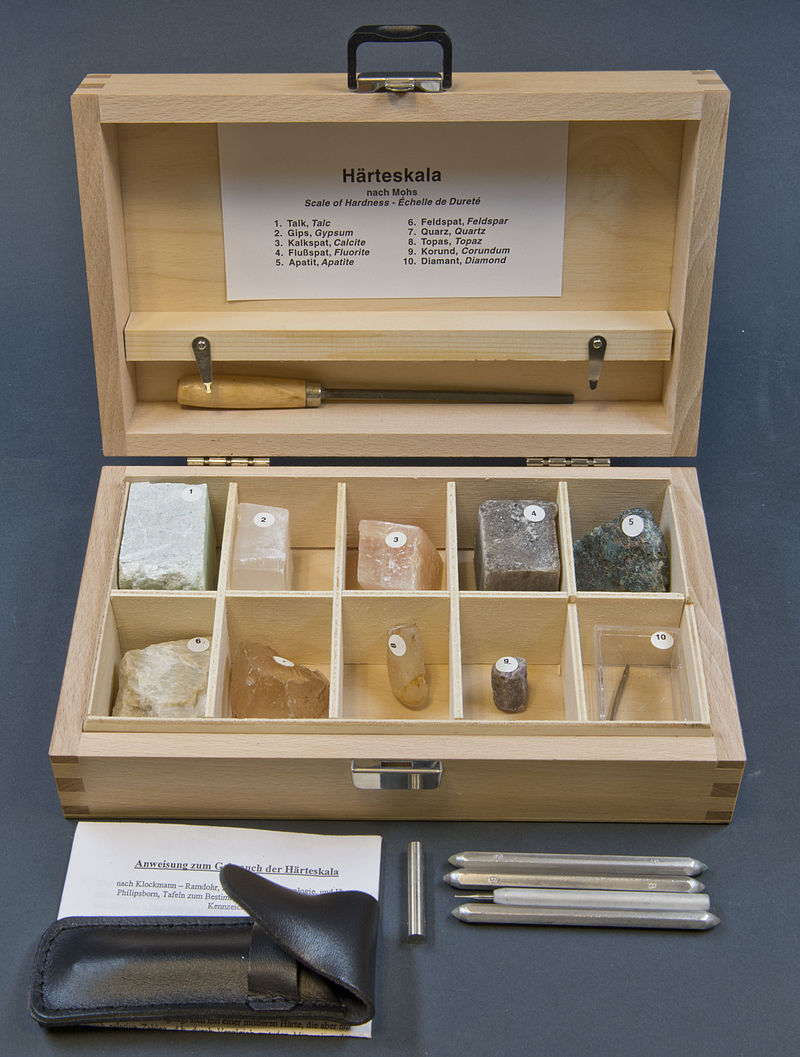
Mohssche-haerteskala_hg
Mohs hardness kit.

Yesterday’s question was: Scales: fish wear them for protection, humans step on them to fret about their diets. We love to measure, rank, and grade things. Your question for today: what do we measure with the following scales: Fujita, Mohs, Richter, Scoville. Bonus points if you know what measures on those scales are for the least intense, and for the most.

The answers are:

The Fujita scale (also called the Fujita-Pearson scale) rates tornado intensity. Introduced by Ted Fujita in 1971, it ranges from F0 (winds less than 73 miles per hour, inflicting light damage) to F5 (winds greater than 261 miles per hour, inflicting incredible damage).

The Mohs scale of mineral hardness measures just what it says it does, characterizing scratch resistance of various minerals through the ability of harder material to scratch softer material. Created by German geologist Friedrich Mohs in 1822, the scale ranges from 1 (talc) to 10 (diamond).

The Richter scale, also called the Richter magnitude scale, measures the strength of earthquakes. And though scientists now use other scales because of shortcomings in the Richter scale, it is still the most commonly known and popularly used. It’s a logarithmic scale, introduced by Charles Richter in 1935, ranging from 1.0–1.9 (microearthquakes, not or only rarely felt) up to 9.0 and greater (near total destruction).

The Scoville scale measures the pungency (spiciness, or heat) of chili peppers. Introduced by pharmacist Wilbur Scoville in 1912, it measures in Scoville Heat Units (SHU), ranging from non-pungent (0–700 SHU) to very highly pungent (above 80,000 SHU). Another way of looking at the scale ranges from bell peppers and pimentos (0–100 SHU) up to law-enforcement grade pepper spray (1,500,000 SHU and up).

***

Ian’s Tough Trivia is a daily feature of this blog (Monday’s category is History; Tuesday is Arts; Wednesday is Science; Thursday is Entertainment; and Friday is Grab Bag). Each day, I post a tough question, as well as the answer to the previous day’s question. Simply comment on this post with your answer. I’ll approve the comments after the next question is posted. Sure, you can probably find the answers by searching the web, but what’s the fun in that?

And if you’ve got a favorite trivia question—or even just a topic for which you’d like to see a question—let me know! Reader participation is warmly encouraged.

Tough Trivia, 5/26/21

Today’s Tough Trivia question: Scales: fish wear them for protection, humans step on them to fret about their diets. We love to measure, rank, and grade things. Your question for today: what do we measure with the following scales: Fujita, Mohs, Richter, Scoville. Bonus points if you know what measures on those scales are for the least intense, and for the most.

***

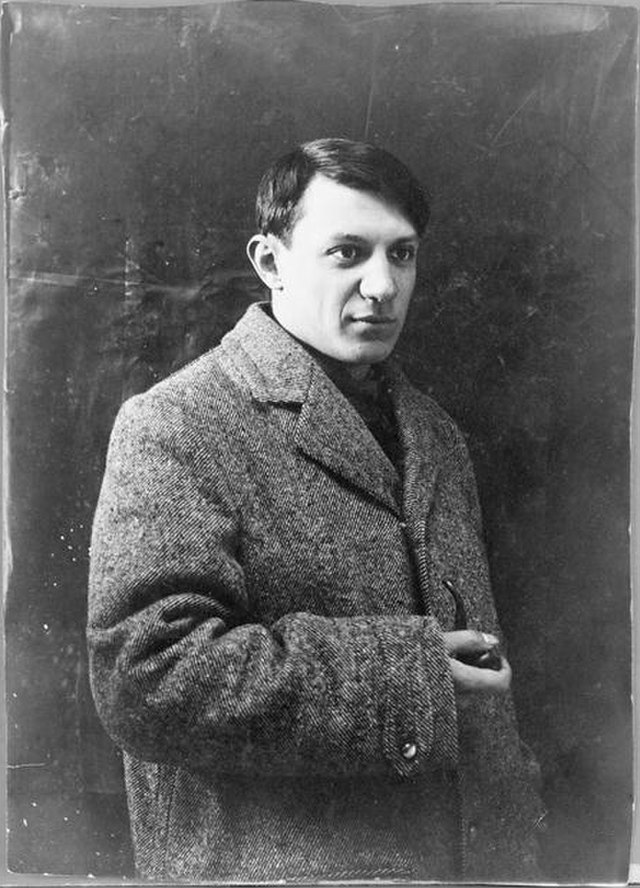
640px-Pablo_picasso_1
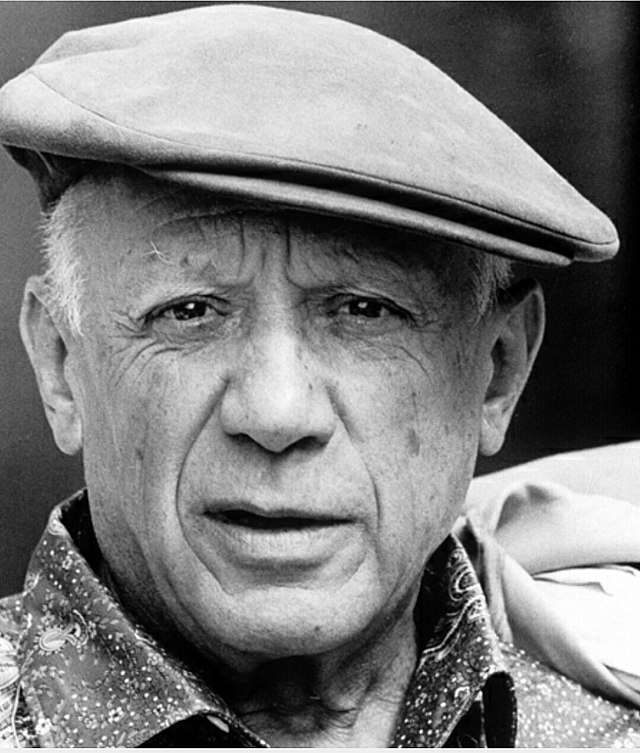
Pablo Picasso in 1962.

Yesterday’s question was: More so than most artists, Spanish artist Pablo Picasso’s (1881–1973) paintings are frequently categorized by period, during which the paintings bear striking similarities. How many of those periods can you name? Bonus point if you can name them in order.

And the answer is:

Blue Period: 1901–04
Rose Period: 1904–06
African-influenced Period: 1907–09
Analytic Cubism: 1909–12
Synthetic Cubism: 1912–19
For the next decade, most of his work is considered necoclassical and Surreal. His later work amalgamated his earlier styles.

***

Ian’s Tough Trivia is a daily feature of this blog (Monday’s category is History; Tuesday is Arts; Wednesday is Science; Thursday is Entertainment; and Friday is Grab Bag). Each day, I post a tough question, as well as the answer to the previous day’s question. Simply comment on this post with your answer. I’ll approve the comments after the next question is posted. Sure, you can probably find the answers by searching the web, but what’s the fun in that?

And if you’ve got a favorite trivia question—or even just a topic for which you’d like to see a question—let me know! Reader participation is warmly encouraged.

Tough Trivia, 5/25/21

640px-Portrait_de_Picasso,_1908
Pablo Picasso in 1908.

Today’s Tough Trivia question: More so than most artists, Spanish artist Pablo Picasso’s (1881–1973) paintings are frequently categorized by period, during which the paintings bear striking similarities. How many of those periods can you name? Bonus point if you can name them in order.

***

Yesterday’s question was: They’re not twins, but each of these political figures was born the same day as another famous person. I’ll give you the politician and a hint, you give me the other person who shares the birth day. And as another hint, I’ll list them in chronological order (bonus points if you know the actual day in each case).

Abraham Lincoln and which controversial scientist were born the same day?
Jimmy Carter and which Supreme Court justice?
Margaret Thatcher and which controversial comedian?
Lee Harvey Oswald and which famous football coach?
Joe Biden and which “spiritual” singer?
Newt Gingrich and which singer/songwriter?
George W. Bush and which action actor?
Al Gore and which Cheers actress?
Michelle Obama and which Game of Thrones actress?
Angela Merkel and which science fictional television creator?

The answers are:

Abraham Lincoln and Charles Darwin — February 12, 1809
Lee Harvey Oswald and Mike Ditka — October 18, 1939
Michelle Obama and Michelle Fairley — January 17, 1964
Al Gore and Rhea Perlman — March 31, 1948
Margaret Thatcher and Lenny Bruce — October 13, 1925
Newt Gingrich and Barry Manilow — June 17, 1943
Jimmy Carter and William Rehnquist — October 1, 1924
George W. Bush and Sylvester Stallone — July 6, 1946
Joe Biden and Norman Greenbaum — November 20, 1942
Angela Merkel and J. Michael Straczynski — July 17, 1954

***

Ian’s Tough Trivia is a daily feature of this blog (Monday’s category is History; Tuesday is Arts; Wednesday is Science; Thursday is Entertainment; and Friday is Grab Bag). Each day, I post a tough question, as well as the answer to the previous day’s question. Simply comment on this post with your answer. I’ll approve the comments after the next question is posted. Sure, you can probably find the answers by searching the web, but what’s the fun in that?

And if you’ve got a favorite trivia question—or even just a topic for which you’d like to see a question—let me know! Reader participation is warmly encouraged.

Tough Trivia, 5/24/21

Sorry for the posting delay today: we had internet access troubles.

Today’s Tough Trivia question: They’re not twins, but each of these political figures was born the same day as another famous person. I’ll give you the politician and a hint, you give me the other person who shares the birth day. And as another hint, I’ll list them in chronological order (bonus points if you know the actual day in each case).
Abraham Lincoln and which controversial scientist were born the same day?
Jimmy Carter and which Supreme Court justice?
Margaret Thatcher and which controversial comedian?
Lee Harvey Oswald and which famous football coach?
Joe Biden and which “spiritual” singer?
Newt Gingrich and which singer/songwriter?
George W. Bush and which action actor?
Al Gore and which Cheers actress?
Michelle Obama and which Game of Thrones actress?
Angela Merkel and which science fictional television creator?

***

Friday’s question was: A friend in my Facebook presidential trivia group said something today, one of those things I knew but never thought about, that made me say “Wow!”: When did the last Democratic president die? Do you know?

That’s not today’s question, it just made me decide that today is a presidential trivia question. Can you rank the political parties in order of the number of presidents they claimed? Here’s a hint: there are more than two.

The answer is:

Republican: 19 (Lincoln’s first term, Grant, Hayes, Garfield, Arthur, Benjamin Harrison, McKinley, Theodore Roosevelt, Taft, Harding, Coolidge, Hoover, Eisenhower, Nixon, Ford, Reagan, George H.W. Bush, George W. Bush, Trump)

Democrat: 15 (Jackson, Van Buren, Polk, Pierce, Buchanan, Cleveland, Wilson, Franklin Delano Roosevelt, Truman, Kennedy, Lyndon Johnson, Carter, Clinton, Obama, Biden)

Democrat-Republican: 4 (Jefferson, Madison, Monroe, and John Quincy Adams)

Whig: 4 (William Henry Harrison, Tyler, Taylor, and Fillmore). An interesting fact about the Whigs: they won two elections, both of those presidents died in office, and neither of their successors was elected a presidential term of his own. All four Whig president served within a span of 12 years.

National Union: 2 (Lincoln’s second term and Andrew Johnson)

Federalist/No Party: 2 (Washington and John Adams)

Oh, and the answer to that “Wow” moment? Lyndon Baines Johnson, who was president from 1963 to 1969, died on January 23, 1973. He was the most recent Democratic president to die. Incidentally, the year and a half from his death until Richard Nixon’s resignation marked the last time in history when there was only one living president.

***

Ian’s Tough Trivia is a daily feature of this blog (Monday’s category is History; Tuesday is Arts; Wednesday is Science; Thursday is Entertainment; and Friday is Grab Bag). Each day, I post a tough question, as well as the answer to the previous day’s question. Simply comment on this post with your answer. I’ll approve the comments after the next question is posted. Sure, you can probably find the answers by searching the web, but what’s the fun in that?

And if you’ve got a favorite trivia question—or even just a topic for which you’d like to see a question—let me know! Reader participation is warmly encouraged.

Tough Trivia, 5/21/21

A friend in my Facebook presidential trivia group said something today, one of those things I knew but never thought about, that made me say “Wow!”: When did the last Democratic president die? Do you know?

That’s not today’s question, it just made me decide that today is a presidential trivia question. Can you rank the political parties by order of the number of presidents they claimed? Here’s a hint: there are more than two.

***

Academy_Award_trophyYesterday’s question was: The entertainment industry gives a slew of awards. We have the Oscar and the Emmy for movies and television, the Tony for stage plays, the Grammy for music, the Hugo, Edgar, and Pulitzer for literature, and scores more. Do you know who (or what) those seven are named for? And which organizations, specifically, do the awarding? How about when they were first awarded?

The answers are:

Oscar: more properly known as the Academy Award of Merit, the Academy of Motion Picture Arts and Sciences began handing them out in 1929. The Academy officially adopted the nickname “Oscar” in 1939, though its origin is disputed. Claims of its origin include then-president of the Academy Bette Davis naming it after her husband, band leader Harmon Oscar Nelson. Another story claims that Academy executive secretary Margaret Herrick said it reminded her of her Uncle Oscar (Oscar Pierce).

statuettes-Emmy-AwardEmmy: The Emmy Award is presented by three related organizations: the Academy of Television Arts and Sciences, the National Academy of Television Arts and Sciences, and the International Academy of Television Arts and Sciences. They were first awarded in 1949. The name is a derivation of the word “immy,” itself a nickname for the image orthicon tube, which was a key piece of television cameras from the 1940s until the 1960s.

b_Tony_Statuette_horiz.2e16d0ba.fill-1200x800Tony: More formally known as the Antoinette Perry Awards for Excellence in Broadway Theatre, they are presented by the American Theatre Wing and the Broadway League, and have been since 1947. The awards were founded by producer and director Brock Pemberton (1885–1950) and named for Mary Antoinette “Tony” Perry (1888–1946), who was an actress, director, and co-founder of the American Theatre Wing.

grammyGrammy: Originally called the Gramophone Award (named for the early record player which the award trophy depicts), they have been presented by the Recording Academy since 1959.

hugo_smHugo: Originally and more formally known as the Science Fiction Achievement Awards (in the early 1990s, they dropped the longer title), they are awarded by vote of the members (attendees) of the World Science Fiction Convention. They were first handed out in 1953, and then every year since 1955. Their namesake, Hugo Gernsback (1884–1967), was born as Hugo Gernsbacher in Luxembourg City, Luxembourg. He emigrated to the United States in 1904, and founded the first science fiction magazine, Amazing Stories, in 1926.

edgarEdgar: More formally known as the Edgar Allan Poe Awards, they were named after the American writer (1809–1849), and have been awarded by the members of the Mystery Writers of America since 1946.
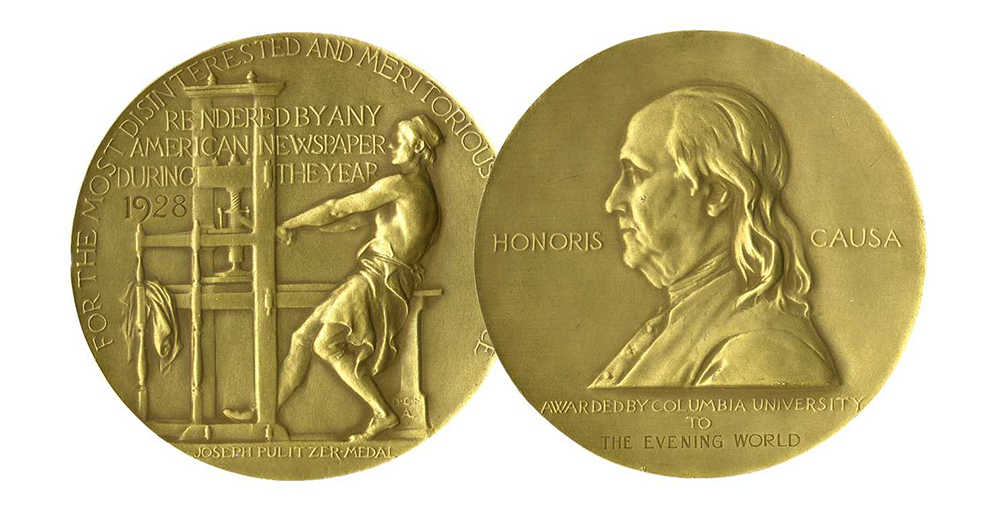
pulitzerPulitzer: The Pulitzer Prize was established in 1917 under the provisions of Joseph Pulitzer’s will. Pulitzer (1847–1911) was born in Hungary, and immigrated to the US in 1864. He is best remembered as the publisher of the St. Louis Post-Dispatch and the New York World. He also served two brief terms in the House of Representatives. The Pulitzer Prizes (for journalism, literature, and musical composition) are administered by Columbia University.
***

Ian’s Tough Trivia is a daily feature of this blog (Monday’s category is History; Tuesday is Arts; Wednesday is Science; Thursday is Entertainment; and Friday is Grab Bag). Each day, I post a tough question, as well as the answer to the previous day’s question. Simply comment on this post with your answer. I’ll approve the comments after the next question is posted. Sure, you can probably find the answers by searching the web, but what’s the fun in that?

And if you’ve got a favorite trivia question—or even just a topic for which you’d like to see a question—let me know! Reader participation is warmly encouraged.

Financial support in the form of tips is very much appreciated: paypal.me/ianrandalstrock

Tough Trivia, 5/20/21

Today’s Tough trivia question has to do with the worlds of Entertainment: The entertainment industry gives a slew of awards. We have the Oscar and the Emmy for movies and television, the Tony for stage plays, the Grammy for music, the Hugo, Edgar, and Pulitzer for literature, and scores more. Do you know who (or what) those seven are named for? And which organizations, specifically, do the awarding? How about when they were first awarded?

***

400px-Saturn_V_launches
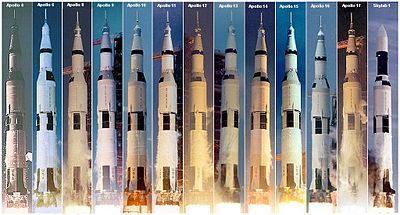
Photos of all 13 Saturn V launches.

Yesterday’s question was: The Saturn V rocket stack was the super heavy-lift launch vehicle that took the US manned space program to the Moon. It was—and remains—the tallest, heaviest, and most powerful rocket brought to operational status. It holds the records for the heaviest payload launched and largest payload capacity to low Earth orbit (310,000 pounds). It is also, still, the only launch vehicle to carry humans beyond low Earth orbit. Fifteen were built, but only thirteen were flown, all launching from Kennedy Space Center, in Florida, between November 9, 1967 (the uncrewed Apollo 4) and May 14, 1973 (Skylab). Do you know how tall it was? How heavy? And what percentage of the stack actually returned to Earth from the Apollo missions to the Moon?

The answer is:

The full Saturn V stack was 363 feet tall, and massed between 6,221,000 and 6,540,000 pounds (depending on the mission), with a maximum diameter (at the bottom) of 33 feet.

The Command Module was the only piece of the entire stack that returned to Earth. The three propulsion stages were destroyed getting to orbit. The lower portion of the Lunar Module remained on the surface of the Moon. The Ascent stage landed on the Moon, and then returned the astronauts to lunar orbit to rendezvous with the Command and Service Module. The Service Module was discarded and on the way back to Earth. The Command Module was the only piece of the entire stack that returned to Earth. It was 11 feet 5 inches tall, with a diameter of 12 feet 10 inches, and a mass of 12,250 pounds (plus the returning astronauts). In addition, the six missions that landed on the Moon brought back a total of 842 pounds of Moon rocks.

So the piece of the stack that returned was 3.1% of the height that was launched, and 0.2% of the weight that was launched.

***

Ian’s Tough Trivia is a daily feature of this blog (Monday’s category is History; Tuesday is Arts; Wednesday is Science; Thursday is Entertainment; and Friday is Grab Bag). Each day, I post a tough question, as well as the answer to the previous day’s question. Simply comment on this post with your answer. I’ll approve the comments after the next question is posted. Sure, you can probably find the answers by searching the web, but what’s the fun in that?

And if you’ve got a favorite trivia question—or even just a topic for which you’d like to see a question—let me know! Reader participation is warmly encouraged.