 Friday’s question a throw-back to the previous Friday’s question, about world cities’ former names: Let’s continue the theme a little closer to (my) home. Here are some former cities’ names. By what names are they known today: Marthasville, Georgia; Gum Pond (or Gumpond), Mississippi; Lancaster, Nebraska; Hot Springs, New Mexico; New Amsterdam, New York; Losantiville, Ohio; and Mauch Chunk, Pennsylvania.
The answers are:
Built for the Western and Atlantic Railroad, the settlement of Terminus was renamed Marthasville, Georgia, and incorporated on December 23, 1843. Two years later, the chief engineer of the Georgia Railroad suggested renaming the town Atlantica-Pacifica, which was quickly shortened to Atlanta, and the name change was approved by the Georgia General Assembly on December 26, 1845.
Settled in the 1830s and named for the tupelo trees, known as “blackgum,” Gum Pond was renamed in the 1860s, and Tupelo was incorporated in 1866.
The village of Lancaster was founded in 1856, and became the county seat of the newly created Lancaster County in 1859. On April 1, 1869, Lancaster was incorporated as the city of Lincoln, in honor of the recently assassinated president.
Hot Springs was founded in the late 1800s, due to its hot springs. In March 1950, Ralph Edwards, the host of the popular NBC Radio quiz show Truth or Consequences, announced that he would air the program on its tenth anniversary from the first town that renamed itself after the show; Hot Springs officially changed its name on March 31, 1950, and the program was broadcast from there the following evening.
New Amsterdam was a 17th century Dutch settlement at the southern tip of Manhattan island. In 1664, the English took over New Amsterdam, and renamed it New York City, after the Duke of York (who would later be King James II of England and Ireland & James VII of Scotland).
In 1788, Mathias Denman, Israel Ludlow, and Col. Robert Patterson, landed at a spot on the northern bank of the Ohio River, opposite the mouth of the Licking, and decided to settle there. Surveyor John Filson named it Losantiville. On January 4, 1790, Northwest Territory Governor Arthur St. Clair changed the name of the settlement to Cincinnati, in honor of the Society of the Cincinnati.
Mauch Chunk was founded in 1818. The name was derived from the native Munsee-Lenape Delaware language, which called it Mawsch Unk (Bear Place). Across the river, East Mauch Chunk developed. In 1953, 65-year-old Olympian Jim Thorpe died, and in 1954, the two Mauch Chunks merged, and renamed their new municipality Jim Thorpe, in honor of the athlete whose sports career had begun nearby, when he was a student at the Carlisle Indian Industrial School, in Carlisle, Pennsylvania.
***
Tough Trivia has been an interesting experiment. But, due to the whelming response, and the fact that I’m going to be traveling through the end of the month, Tough Trivia is going on hiatus. Thank you, everyone, for reading along, playing along, participating to whatever extent you did. And keep watching this blog; it may be back in some other form in the near future. But when and whether Tough Trivia returns, I will continue to be here, so keep reading (although, as I said, I’ll be traveling for the next week and a half, so I may be a bit more quiet here… or there may be a new book announcement later today). And thanks!
 Yesterday’s question was:
 The answers:
 Yesterday’s question was: The planets’ orbits around the Sun are ellipses. Nearly circular, but not quite. Nevertheless, we usually quote a single number for the distance from the Sun to, say, Earth. It’s usually quoted in miles or kilometers.
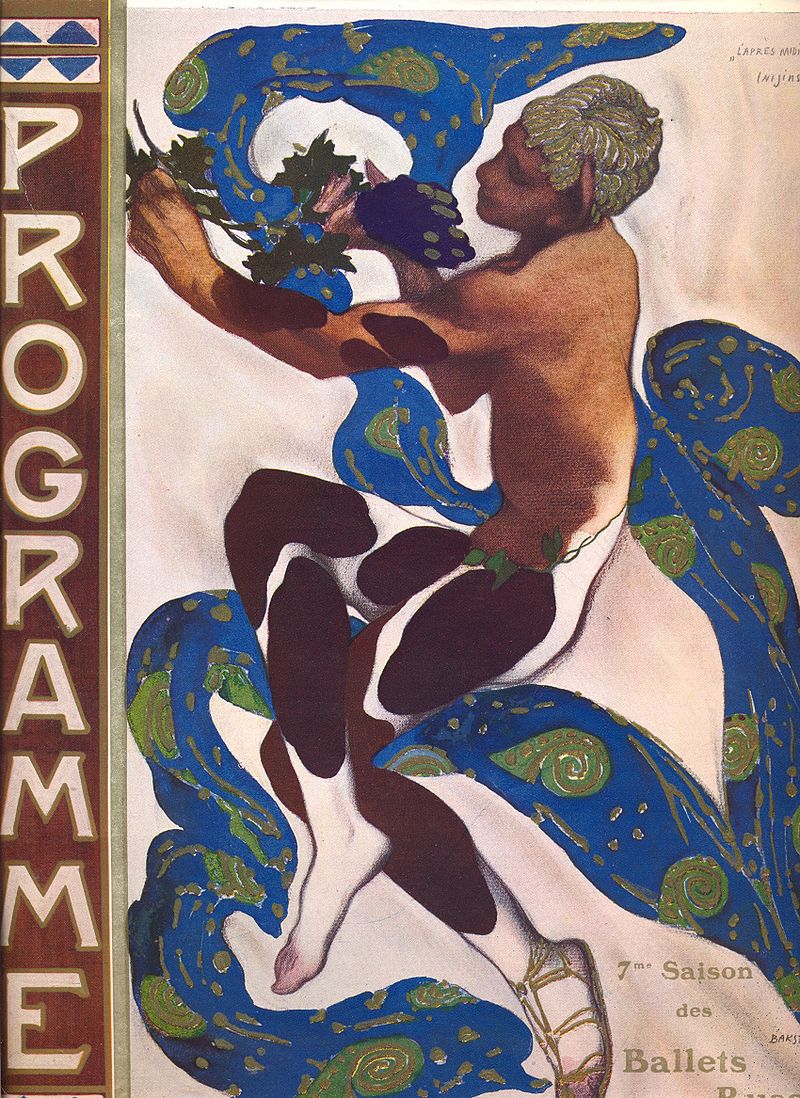 Yesterday’s question was to match the ballets with their composers. The answers are:
 ***
*** Yesterday’s question was:
 Friday’s question: On the 500th anniversary of the fall of Constantinople to the Ottomans, Jimmy Kennedy and Nat Simon wrote “Istanbul (Not Constantinople),” which was released by The Four Lads in 1953. That gives away one of the answers, but today’s question regards old names of world cities. How many of the current city names do you recall? (Some other time, we’ll do US cities.): Ikosium, Stuart, Bytown, Lutetia, Batavia, Edo, Leningrad, Byzantium, Londinium.
 Yesterday’s question was: The word game of Scrabble was created in the 1930s and 1940s, with the distribution and point values of the letter tiles determined by frequency analysis. Thus, the highest-scoring letters were those which were exceedingly difficult to use. In later years, however, with the growth of Scrabble tournaments, and the expansions of acceptable words beyond “a standard English dictionary,” those difficult-to-use letters became much easier to use, but their values were not adjusted. Today’s question: for how many of the 26 English letters do you know the Scrabble point values?
 Yesterday’s question was a two-fer: An isogram is a word in which none of the letters appears more than once. It appears that the longest possible isogram in the English language has 17 letters. Do you know this word? And do you know a longer isogram? (The longest theoretically possible isogram is, of course, 26 letters long.)
 Friday’s question was: The Star Trek series featured a veritable fleet of starships named Enterprise. Let’s pare it back a little, and just focus on the television shows and movies. On screen, how many captains of the starship Enterprise can you name? (People actually assigned as captain, not just “Mr. Scott, take the conn while I beam down to this planet to romance the alien of the week.”) Bonus points if you remember the actors who played them.
 NCC-1701 (2245–2285): Christopher Pike (Jeffrey Hunter in the unaired pilot, and Sean Kenney in “The Menagerie”); James Tiberius Kirk (William Shatner) [Star Trek the Original Series (1966–1969)]; Willard Decker (Stephen Collins), Admiral James Kirk (William Shatner) [Star Trek the Motion Picture (1979)]; Spock (Leonard Nimoy) [Star Trek II: the Wrath of Khan (1982)]; commandeered and commanded by, and then destroyed by, Admiral James Kirk (William Shatner) [Star Trek III: the Search for Spock (1984)]
 NCC-1701-C (2332-2344): Rachel Garrett (Tricia O’Neil) [Star Trek the Next Generation episode “Yesterday’s Enterprise” (1990)]
 Ian Randal Strock