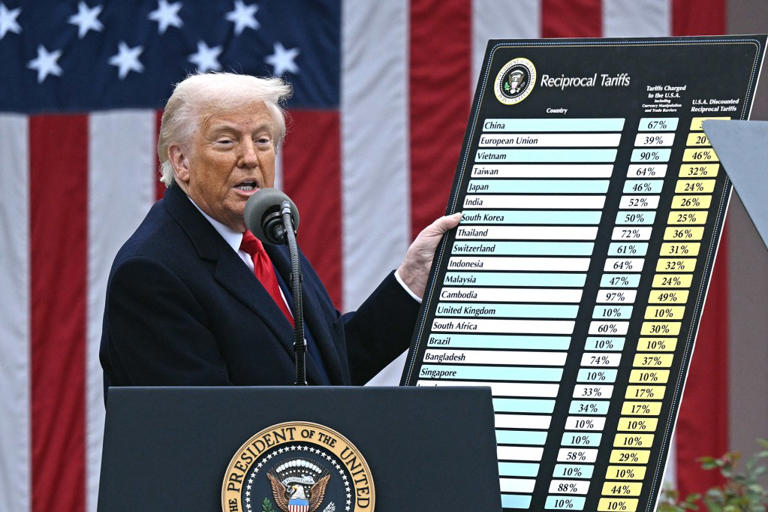
This morning on Face the Nation, US Trade Representative Jamieson Greer tried to convince us that when President Trump said on Friday that the Supreme Court has been “swayed by foreign influences,” he meant that foreign governments and foreign-owned companies hoped the Court would rule against the Trump IEEPA tariffs, and that the Court did so. That was the “influence” the president was decrying.
What a load of crap.
Indeed, the only part of today’s interview that was even more disingenuous was, before repeating that absurd twist on “foreign influence,” Greer said “I don’t speak for the president.” Think about that for a moment: Jamieson Greer is the United States Trade Representative, nominated by the president in November 2024 and confirmed by the Senate on February 27, 2025. The web site of the Office of the United States Trade Representative (https://ustr.gov/about-us/about-ustr) says “The head of USTR is the U.S. Trade Representative, a Cabinet member who serves as the president’s principal trade advisor, negotiator, and spokesperson on trade issues.” His job is to be the spokesperson for the president on trade issues, but he wasn’t speaking for the president when he tried to tell us the president only meant that the Supreme Court ruled on an issue that foreign powers favored, not that they were beholden to any foreign influences.
The message from the administration is fairly clear: “Don’t pay attention to what the president said yesterday. And there’s no reason to pay attention to what I—as his spokesperson—am telling you he meant. Just be outraged along with us that nobody can see the president is right about everything.” Oy.
Yesterday, we learned that the Supreme Court ruled against President Trump’s use of IEEPA [the International Emergency Economic Powers Act of 1977] to impose tariffs willy-nilly on other countries, in the case of Learning Resources, Inc. v. Trump. My first thought was: Is the Supreme Court recovering its spine? Is Chief Justice John Roberts finally hearing people saying that he’s ceded his power to be a Trump toady? Is this the beginning of a return to the rule of law?
I had high hopes that this was a sign that the members of the Court had decided to not merely be a vestigial organ of our government, to embrace the legacy that John Marshall, William Howard Taft, and generations of justices had fought so hard to maintain: that we do indeed have three co-equal branches of government. And that, despite the current Congressional leaders ceding their power to Donald Trump, our government might continue to function after the Trumpians’ departure.
I heard the decision and thought, “Yes! Finally. Some of the adults in the room are standing up and telling the president ‘I think Canada’s commercial was insulting’ is NOT an international economic emergency granting the president the power to impose an outlandish tariff in response.”
But then I listened to the president’s seething response from the Briefing Room, and remembered why he truly is such a danger: because he demands that the world do what he wants, right or wrong, for good or ill, because his only goal is his own self-aggrandizement and enrichment.
No sane person could look at the Court’s decision and say, “it clarifies the fact that I as president can impose whatever tariffs I want for whatever reason I want, I just have to check a different box on the form.” But he did. He (or more likely his lickspittles) found a passage in a dissent penned by one of the justices, and decided to focus their entire argument on that, rather than the clear majority opinion which said, “No. You may not do this.”
And he is dangerous. He spews bile, invective, and lies with every breath. He accused the Supreme Court of being beholden to “foreign influences,” with no proof and no evidence. He called the justices who ruled in favor of the law and against his illegal acts “embarrassments, fools, and lapdogs.”
When asked why he doesn’t simply work with Congress to come up with a legal tariff plan, he reminded us that he is nothing more than a petulant child, saying “Because I don’t have to. I have the right to do what I want.” And showing his own vaunting intellect, he said of the decision, “it’s like it was written by not-smart people.”
And perhaps worst of all, he said, repeatedly, that the ruling means “I can destroy a country, I can embargo their goods, I can do anything I want.” The only thing this ruling says is that “I can’t charge them money. But I can do anything I want to them.” No rational president has ever threatened to “destroy” another country out of hand, simply because he wants to. But for this president, it’s simply a negotiating tactic.
No call to arms here. Sadly, frighteningly, this is nothing new. While I applaud the Supreme Court for finally having to the courage to say “No, Mr. President, you are wrong, and the laws do not permit you to do this,” I doubt it will make much difference.
The Supreme Court’s decision in Trump v United States (2022) seems to have set the standard for presidential immunity, that the President of the United States may not be sued for anything he does while serving as President (without any comment or direction as to what a President might do during his time in office that is not within the scope of his “official acts”). It seems most current interpretations of that ruling assume the President may not be the subject of any lawsuit, period.
At the same time, however, the United States is experiencing the presidency of a person who’s first response to almost any disagreement is to sue. I’m not sure there is an exact count of the number of lawsuits he has brought. For only the latest example, see President Trump’s threat to sue JPMorgan Chase.
As much as the President needs to do things that an ordinary citizen oughtn’t be able to do, it seems manifestly unfair that while Donald Trump as the President is immune from lawsuits, Donald Trump himself has the complete freedom to file lawsuits of his own.
Added January 30, 2026: And now he is suing the Internal Revenue Service. From the linked article: “The lawsuit, filed Thursday at a federal courthouse in Miami, says Trump is suing in his personal capacity, not as president.” So he can differentiate Trump-the-person from Trump-the-president. Hmm….
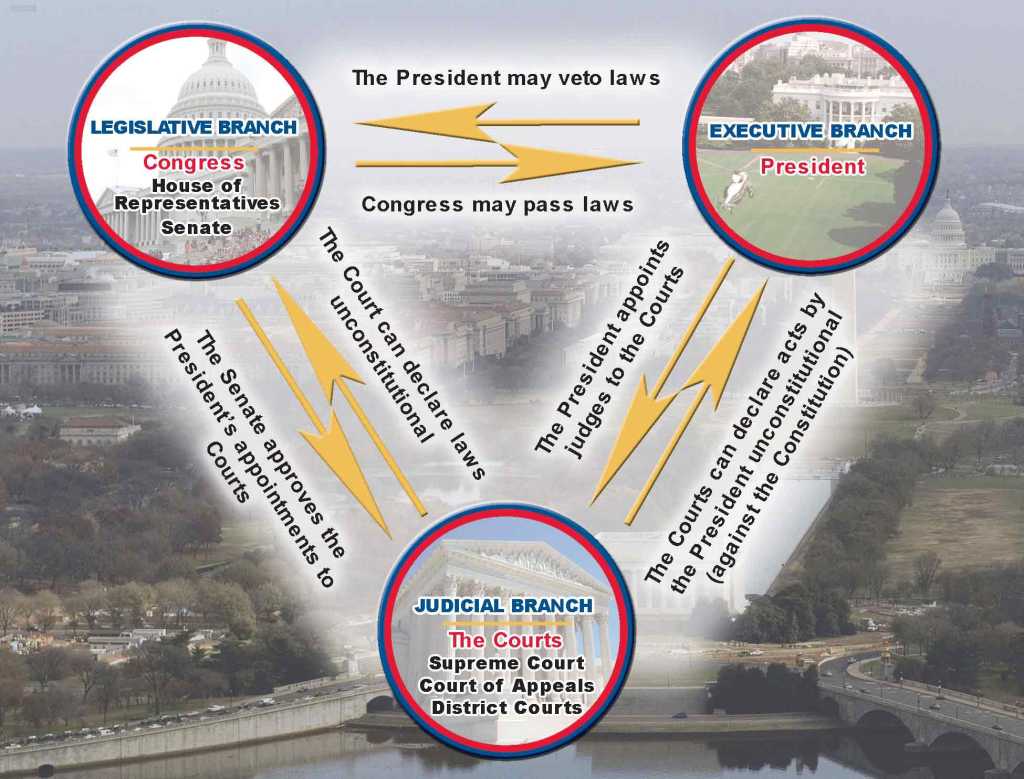
As angry as I am with many of President Trump’s statements and actions—some of which are immoral and unworthy of the presidency, and some of which are demonstrably criminal—my ire today is reserved for Congress and the Supreme Court. Part of the genius of our Constitution is that it organized a government that is not dictated solely by one person or one body, but rather has three co-equal branches, each of which has certain powers over the other two, and other responsibilities to the other two. As we learned in elementary school: the Legislative branch (Congress) makes the laws, the Executive branch (the President and his departments) enforces the laws, and the Judicial branch (the Supreme Court) interprets the laws (tells us what they mean, and if they are in keeping with the Constitution).
The President appoints the members of the Supreme Court, but the Senate has to agree. The President spends the money, but only according to the budget that Congress creates. Congress writes the laws that the President can veto or accept, but the Supreme Court can say “no, that law is not Constitutional.” Congress can remove the President and the members of the Supreme Court for “high crimes and misdemeanors.”
According to Article I of the Constitution, Section 8, the powers of Congress include the power to lay and collect taxes, duties, imposts and excises; to regulate commerce with foreign nations; to declare war; “to provide for calling forth the Militia to execute the Laws of the Union, suppress Insurrections and repel Invasions”; and a slew of others.
Article II, Section 2, lists the powers of the President, including serving as the Commander in Chief of the Army, Navy, and Militia, “when called into the actual Service of the United States”; making treaties, appointing ambassadors, Supreme Court judges, “and all other Officers of the United States,” all “by and with the Advice and Consent of the Senate”; and other things.
Article III vests “the judicial Power of the United States” in the Supreme Court and other inferior courts. Section 3, interestingly reads “Treason against the United States, shall consist only in levying War against them, or in adhering to their Enemies, giving them Aid and Comfort.”
This system of checks and balances among the three co-equal sections of the United States government worked pretty well for a long time. The relative power of the executive and legislative branches waxed and waned over the decades, but all three branches maintained their shared powers through the strength of their leaders over the years. Congressional leaders have worked with and against presidents, the Supreme Court has allowed and denied laws over the years, but always, the holders of those offices upheld the power of their position, the importance of their branch, and kept the tripod standing.
Lately, the tripod has collapsed, because two of those legs have been allowed to weaken before the onslaught of the third. Obviously, this collapse has been going on for longer than just the last decade, but no one looking at Ronald Reagan’s relationship with Tip O’Neill ever thought either one of them was subservient to the other. Since that time, however, we’ve been stuck with a series of ideologues who realized that the way to enforce their partisan will long beyond their service would be to enable a collapse of the system of checks and balances. Thus, Mitch McConnell’s lies and machinations have unbalanced the Supreme Court: in early 2016, he told us the Senate could not appoint a new Supreme Court justice during an election year, and kept Antonin Scalia’s seat vacant for 11 months, until Donald Trump’s election. Four years later, McConnell told us to ignore his four-year-old words, and that the Senate had to fill a vacant Supreme Court seat when Ruth Bader Ginsburg died a month and a half before the election of 2020. That’s the same Mitch McConnell who, on January 6, 2021, called Donald Trump “practically and morally responsible” for the attack on the Capitol, but then voted to acquit Trump of those charges at his second impeachment. McConnell is no longer the leader of the Senate, but his successor, John Thune, has not shown himself to be any more of a leader. His every utterance proclaims his subservience to the office of the President.
Chief Justice John Roberts has used his ideological majority of the Court to grant the president nearly complete immunity for anything he may do during his term of office, since the president in question supports his views. He also can’t imagine any of our recent or potential presidents hailing from the Democratic party ever running so far beyond the pale as Donald Trump has, so he’s not worried about karma coming back.
And now we have the Speaker of the House, Mike Johnson, who has completely subsumed his authority to Donald Trump’s will. He has decided the House shouldn’t actually be conducting any business, because the president is happier to have the government shut down, so he can rampage however he wants.
The Supreme Court, unfortunately, is beyond our power to correct in the near term. The way the Justices are chosen requires waiting for those currently in office to leave in order to replace them. And let’s face it, there doesn’t appear to be anyone even on the horizon with the strength of John Marshall or the moral fiber of David Davis.
The make-up Congress, however, is—at least, theoretically (but see my several previous pieces on Gerrymandering)—something we can affect. I say it is time to elect Senators and Representatives who will stand up, not necessarily for me and my views, but for the strength of the Congress. Congress needs to restore itself to its role as a co-equal branch of the government.
Far too often, among the Republicans and Trumpians in the Congress, we see people who are far more interested in doing what Trump wants so that he won’t attack them. Can they possibly be proud of their service? Or are they merely keeping their seats warm? Liz Cheney stood up for right over party, and was punished for it by losing her seat. But as much as I disagree with many of her views, she earned my respect. The problem was, she was one voice in a vast sea of the voiceless, and thus, easy to target. The other members of Congress need to find their voices, to stand up, not to keep knuckling under.
I may not have agreed with their policies or their actions, but did anyone ever doubt the Congressional allegiance, the strength, the patriotism, of prior Senate Majority Leaders such as Robert Byrd, Mike Mansfield, Everett Dirksen, Lyndon Baines Johnson, or Henry Cabot Lodge? Similarly, will the House of Representatives ever feel the need to remember the service of Mike Johnson as it does Tip O’Neill, Carl Albert, Sam Rayburn, or Nicholas Longworth?
Donald Trump has gone off the rails. He cares nothing for the Constitution, law, or tradition, and is interested only in lining his own pockets and glorifying his own name. But if the rest of the government was functioning as it should, the damage Trump could inflict would be minimized. But with the Supreme Court saying only “Yes, sir,” while Congress’s leaders say “We’ll do whatever Trump wants,” our government, our nation, is in danger.
And yes, I know I’ve not mentioned the Democratic leaders. Chuck Schumer and Hakeem Jeffries, too, are falling down on their jobs. They’re doing what they can in their minorities, but it sure feels like they could be doing, could be saying, more. And their younger colleagues, the flaming liberal branch of the party who don’t recognize that good government is negotiation, compromise, and not getting everything? They, too, are not doing us any favors.
Term limits are not, and never have been, the answer. But whether you vote Republican or Democratic, I urge you—in the strongest terms possible—to vote for someone who wants to serve in Congress, not someone who wants only to kowtow to or attack the president.
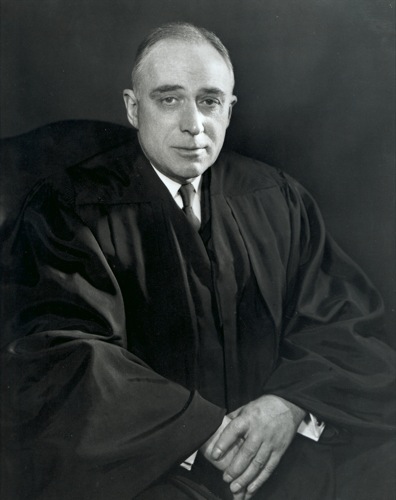
Associate Justice (retired) David Souter has died at the age of 85. Appointed to the Supreme Court by the first President Bush in 1990, he retired in 2009.
He was often understated in his opinions. In a 2009 concurrence in a case involving Navajo Nation mineral rights, Souter put down only two sentences.
“I am not through regretting that my position” in an early case “did not carry the day,” he wrote. “But it did not, and I agree that the precedent of that case calls for the result reached here.”
That comment is resonating with me because of an internal Mensa discussion we’re currently experiencing. Several people in the discussion seem to have difficulty understanding the fact that leaving an office does not absolve one of promises made when taking that office. Specifically, that a promise to respect the confidentiality of certain discussions must survive beyond the end of one’s term of office.
In that quote, Souter is saying that joining the Court obligated him to follow the precedents set by the Court before and during his tenure. Just as any other board of directors may debate an issue, with strong proponents on both sides, but once the body reaches a decision, it is the duty of all the members of that body to support it, or at the very least not publicly disagree with it.
The word game of Scrabble was created in the 1930s and 1940s, with the distribution and point values of the letter tiles determined by frequency analysis. Thus, the highest-scoring letters were those which were exceedingly difficult to use. In later years, however, with the growth of Scrabble tournaments, and the expansions of acceptable words beyond “a standard English dictionary,” those difficult-to-use letters became much easier to use, but their values were not adjusted. Today’s question: for how many of the 26 English letters do you know the Scrabble point values?
***
John Jay, painted by Gilbert Stuart in 1794.
Yesterday’s question was: The US Constitution set up the government with three co-equal branches: the Legislative, the Executive, and the Judicial. The leader of the Executive branch is the President. The leaders of the Legislative branch are the Speaker of the House of Representatives and the President of the Senate. The leader of the Judicial is the Chief Justice. Over the years, we’ve had 45 presidents and 52 speakers, but only a scant 17 chief justices. How many of those chief justices can you name?
The answers:
1. John Jay (served from October 1789 until he resigned in June 1795)
2. John Rutledge (his nomination was not approved by the Senate, so he served only from August to December of 1795)
3. Oliver Ellsworth (March 1796–December 1800 [resigned])
4. John Marshall (February 1801–July 1835 [died in office])
5. Roger B. Taney (March 1836–October 1864 [died])
6. Salmon P. Chase (December 1864–May 1873 [died])
7. Morrison Waite (March 1874–March 1888 [died])
8. Melville Fuller (October 1888–July 1910 [died])
9. Edward Douglass White (December 1910–May 1921 [died])
10. William Howard Taft (July 1921–February 1930 [retired])
11. Charles Evans Hughes (February 1930–June 1941 [retired])
12. Harlan F. Stone (July 1941–April 1946 [died])
13. Fred M. Vinson (June 1946–September 1953 [died])
14. Earl Warren (October 1953–June 1969 [retired])
15. Warren E. Burger (June 1969–September 1986 [retired])
16. William Rehnquist (September 1986–September 2005 [died])
17. John Roberts (September 2005– )
***
Ian’s Tough Trivia is a daily feature of this blog (Monday’s category is History; Tuesday is Arts; Wednesday is Science; Thursday is Entertainment; and Friday is Grab Bag). Each day, I post a tough question, as well as the answer to the previous day’s question. Simply comment on this post with your answer. I’ll approve the comments after the next question is posted. Sure, you can probably find the answers by searching the web, but what’s the fun in that?
And if you’ve got a favorite trivia question—or even just a topic for which you’d like to see a question—let me know! Reader participation is warmly encouraged.
The US Constitution set up the government with three co-equal branches: the Legislative, the Executive, and the Judicial. The leader of the Executive branch is the President. The leaders of the Legislative branch are the Speaker of the House of Representatives and the President of the Senate. The leader of the Judicial is the Chief Justice. Over the years, we’ve had 45 presidents and 52 speakers, but only a scant 17 chief justices. How many of those chief justices can you name?
***
Yesterday’s question was a two-fer: An isogram is a word in which none of the letters appears more than once. It appears that the longest possible isogram in the English language has 17 letters. Do you know this word? And do you know a longer isogram? (The longest theoretically possible isogram is, of course, 26 letters long.)
What is the shortest word in the English language that uses all five vowels?
The answers:
Subdermatoglyphic — an underlying skin matrix that determines the pattern of arches, whorls, and ridges that make up our fingerprints.
Eunoia — a feeling of good will, especially one that exists between a speaker and an audience.
***
Ian’s Tough Trivia is a daily feature of this blog (Monday’s category is History; Tuesday is Arts; Wednesday is Science; Thursday is Entertainment; and Friday is Grab Bag). Each day, I post a tough question, as well as the answer to the previous day’s question. Simply comment on this post with your answer. I’ll approve the comments after the next question is posted. Sure, you can probably find the answers by searching the web, but what’s the fun in that?
And if you’ve got a favorite trivia question—or even just a topic for which you’d like to see a question—let me know! Reader participation is warmly encouraged.
Today’s Tough Trivia question is: Boeing makes a huge number of the passenger airplanes upon which we fly. They’re iconic for their model numbers: the 707, 727, 737, 747, 757, 767, 777, and 787. (Nobody remembers the 717.) In which decade did each of those model numbers enter commercial service? Bonus question: one 747 holds the record for carrying the most people on a single flight. How many people was it?
***
Yesterday’s question was: Two men named John Marshall Harlan served on the Supreme Court. How were they related, and who appointed them?
The answer is:
John Marshall Harlan
John Marshall Harlan was born June 1, 1833, in Frankfort, Kentucky. His father, James Harlan, represented Kentucky in the House of Representatives (1835–39), and then served as Kentucky’s Secretary of State (1840–44) and Kentucky’s Attorney General (1851–19). John was named for Chief Justice John Marshall, and attended law school at Transylvania University. He was admitted to the Kentucky Bar in 1853. He was appointed adjutant general of Kentucky (1851–59), and elected county judge for Franklin County in 1858. He worked against secession, and then served in the Kentucky militia as a colonel in the first years of the Civil War. He resigned his commission when his father died in 1863. Later that year, he was elected Attorney General of Kentucky, and served for four years. After losing his bid for re-election, he worked as a lawyer while remaining active in politics. When David Davis resigned from the Supreme Court to join the Senate, President Rutherford Hayes appointed Harlan, and he was unanimously confirmed by the Senate on November 29, 1877. Harlan was the lone dissenting vote in Plessy v. Ferguson (1896), which established the doctrine of “separate but equal.” He served until his death on October 14, 1911.
John Marshall Harlan II
John Marshall Harlan’s youngest son (he had six children), John Maynard Harlan, was a lawyer and alderman in Chicago. John Maynard’s only son (of four children), John Marshall Harlan II, was born in Chicago on May 20, 1899. He graduated from Princeton University, and won a Rhodes Scholarship. Later, he attended New York Law School, and was admitted to the New York Bar in 1925. From 1925 to 1927, he served as Assistant US Attorney for the Southern District of New York, and then moved into private practice. During World War II, he was a colonel in the US Army Air Force, serving as chief of the Operational Analysis Section of the Eighth Air Force in England. He was awarded the US Legion of Merit and the Croix de guerre from both France and Belgium. After the war, he returned to private practice. In 1951, he moved into the public sector, serving as Chief Counsel to the New York State Crime Commission. In January 1954, President Dwight Eisenhower appointed Harlan to the US Court of Appeals for the Second Circuit, and in March 1955, Eisenhower appointed him to the Supreme Court (he was the first Rhodes Scholar to sit on the Supreme Court). Throughout his adulthood, John II carried his grandfather’s gold watch, and when he joined the Supreme Court, he used the same furniture which had previously been in his grandfather’s chambers. He retired from the Court on September 23, 1971, and died of spinal cancer three months later, on December 29.
***
Ian’s Tough Trivia is a daily feature of this blog. Each day, I post a tough question, as well as the answer to the previous day’s question. At some point, I’ll offer a prize for whoever has the most correct answers, and another for whoever participates most often (I’ll take into account people coming in after the start: regular participation starting later is just as good as regular participation starting earlier). There may also be a prize for the funniest or most amusing wrong answer. Simply comment on this post with your answer. I’ll approve the comments after the next question is posted. Sure, you can probably find the answers by searching the web, but what’s the fun in that?
Financial support in the form of tips is very much appreciated: paypal.me/ianrandalstrock
Today’s Tough Trivia question is: Two men named John Marshall Harlan served on the Supreme Court. How were they related, and who appointed them?
***
Friday’s question was: In which categories are Nobel Prizes awarded? And when was each first awarded? Bonus if you can name the people (not groups or organizations) who won more than one.
The answer is:
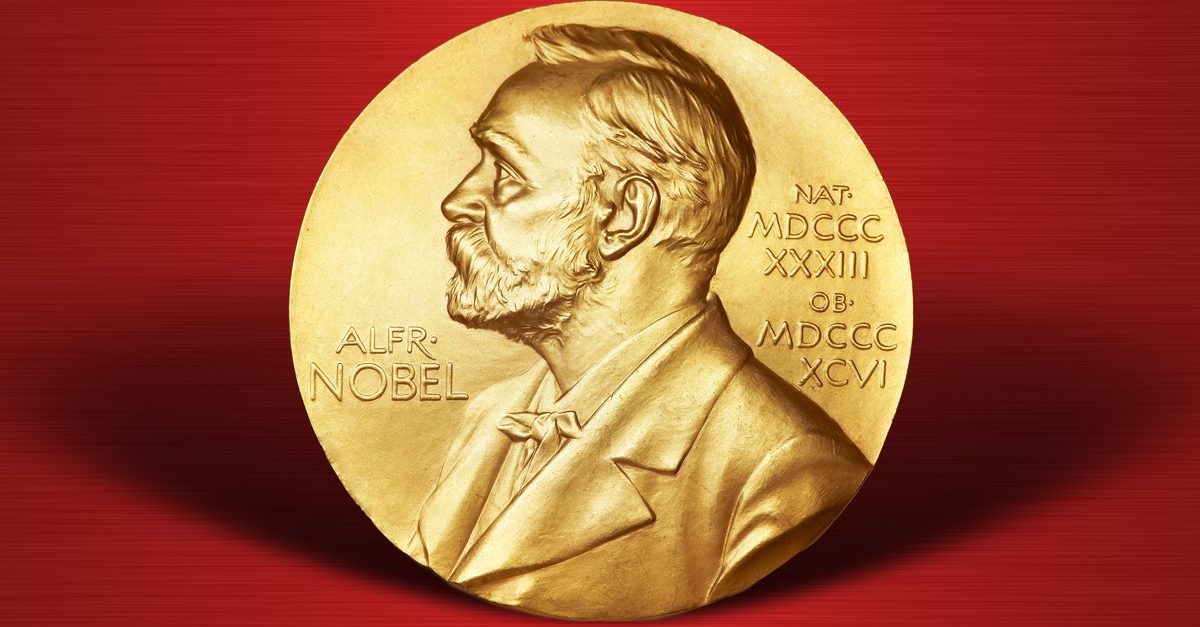
Swedish chemist Alfred Bernhard Nobel (1833–1896) is known for inventing dynamite, and for endowing the Nobel Prizes in his will. The first Nobel Prizes were awarded in 1901, in the fields of Chemistry, Literature, Peace, Physics, and Physiology or Medicine. In 1969, a sixth category was added: Economics. The “prize” consists of a gold medal, a diploma, and a monetary award (currently worth about $1.1 million).
Four people have each won two prizes:
Marie Curie, Polish-born French physicist and chemist (1867–1934), won the Physics prize in 1903 and the Chemistry prize in 1911.
Linus Pauling, US chemist (1901–1994), won the Chemistry prize in 1954 and the Peace Prize in 1962.
John Bardeen, US physicist (1908–1991), won the Physics prize in 1956 and 1972.
Frederick Sanger, British biochemist (1918–2013) won the Chemistry prize in 1958 and 1980.
***
Ian’s Tough Trivia is a daily feature of this blog. Each day, I post a tough question, as well as the answer to the previous day’s question. At some point, I’ll offer a prize for whoever has the most correct answers, and another for whoever participates most often (I’ll take into account people coming in after the start: regular participation starting later is just as good as regular participation starting earlier). There may also be a prize for the funniest or most amusing wrong answer. Simply comment on this post with your answer. I’ll approve the comments after the next question is posted. Sure, you can probably find the answers by searching the web, but what’s the fun in that?
Financial support in the form of tips is very much appreciated: paypal.me/ianrandalstrock
Today’s Tough Trivia question: Ignoring the conspiracy theorists and science deniers, we know that twelve people have so far walked on Earth’s Moon. How many of them can you name? (Bonus: which of the Apollo missions did not land on the Moon?)
***
Yesterday’s question was: In this history of the Supreme Court, only one person has resigned from the Court, and then later been reappointed to it. Who was it, and why did he resign the first time?
The answer is:
Chief Justice Charles Evans Hughes.
Charles Evans Hughes, Sr. Born April 11, 1862, he was a lawyer, and the governor of New York (1907–1910). In 1910, President Taft appointed Hughes to the Supreme Court (he was unanimously confirmed by the Senate). In 1916, trying to reunify the Republican Party after the Theodore Roosevelt–William Howard Taft schism (which split the party and gave the presidential election of 1912 to Woodrow Wilson), party leaders asked Hughes to accept the nomination for president, and on June 10, 1916, he resigned from the court to campaign for the presidency (he is the only member of the Supreme Court to become a presidential candidate).
Hughes lost the election of 1916 in a fairly close vote, 49.2% to 46.1% (in the electoral college, the vote was 277 for Wilson, and 254 for Hughes). And then he went back to practicing law. In March 1921, new President Warren Harding appointed Hughes the 44th Secretary of State (he served for four years), and then once again returned to his old law firm.
On February 3, 1930, with Chief Justice Taft gravely ill, President Hoover nominated Hughes to be the next Chief Justice. The Senate confirmed Hughes by a vote of 52–26, and he took his oath of office on February 24, 1930. (Hughes’ son, Charles Jr., resigned as Solicitor General when his father became Chief Justice.)
On June 30, 1941, Hughes retired from the Supreme Court for the second time. He died on August 27, 1948.
***
Ian’s Tough Trivia is a daily feature of this blog. Each day, I post a tough question, as well as the answer to the previous day’s question. At some point, I’ll offer a prize for whoever has the most correct answers, and another for whoever participates most often (I’ll take into account people coming in after the start: regular participation starting later is just as good as regular participation starting earlier). There may also be a prize for the funniest or most amusing wrong answer. Simply comment on this post with your answer. I’ll approve the comments after the next question is posted. Sure, you can probably find the answers by searching the web, but what’s the fun in that?
Financial support in the form of tips is very much appreciated: paypal.me/ianrandalstrock


 Yesterday’s question was a two-fer: An isogram is a word in which none of the letters appears more than once. It appears that the longest possible isogram in the English language has 17 letters. Do you know this word? And do you know a longer isogram? (The longest theoretically possible isogram is, of course, 26 letters long.)
 Friday’s question was: In which categories are Nobel Prizes awarded? And when was each first awarded? Bonus if you can name the people (not groups or organizations) who won more than one.
 Ian Randal Strock