Saul Rubinek playing Saul Rubinek playing Shylock

I had an odd theatrical experience this past Tuesday. I went to a show, and while I’m still not sure if I liked it, I am still thinking about it, so in that respect, it was good.

The show is Playing Shylock, starring Saul Rubinek (the original version was written by Mark Leiren-Young; this was apparently an updated, modified script). It was in the Polonsky Shakespeare Center, a little theatre in Brooklyn, and the show is closing tomorrow, so at this point, I can’t really urge you to see it yourself.

The conceit is that the audience is actually there to see a production of William Shakespeare’s The Merchant of Venice. [Aside: I’d never read the play before, though I knew bits of the story, so Monday night, I watched a film version from 2004.] A voice-over tells us the second act will be delayed due to technical difficulties, and eventually, Saul Rubinek comes on stage—in costume as Shylock—to tell the audience that they will not be performing the second half of the play, because the cast accidentally learned during this intermission that the theatre has cancelled the remainder of the run, making tonight’s performance the last.

What follows is a nearly two hour-long monologue/discussion of artistic freedom, antisemitism, and virtue signaling. But also, the concepts of freedom, security, and memory; the Jewish experience in surviving (or not) the Concentration Camps in Nazi Germany; and honoring our parents as we live the better lives they worked for us to have. Thrown in are digressions about the nature of representation, artistry and artistic credit, and the never-ending debate over who actually wrote the plays of William Shakespeare. As with all of the best questions, there were no hard-and-fast answers. It was all there to make us think.

Playing on nothing more than his own memories, the script, and the all-too-limited audience reactions, Rubinek is wonderfully emotive, and incredibly moving. And with such heavy concepts and weighty thoughts, there is just the right touch of levity to keep the show from being crushingly depressing… even though he and we know that the depression has a very strong foundation, and holding back the tide of the antisemitism, the repression, and the outright hatred may not be possible.

One of the unintended sources of discomfort, for me, was his interactions with the audience. I’ve been in theatres my whole life, sometimes on the stage, more often in the audience. And in all that time, I’ve learned that the audience’s role is to watch, but not to interact. (There is, of course, the allowed interaction during lectures, which are a different animal, perhaps because the “actor” is not playing some fictitious character, but is merely himself.) But in Playing Shylock, Rubinek is playing himself—or an alternate universe version of himself—in which he is still in costume from the interrupted performance of The Merchant of Venice, except that there was no actual interrupted performance of the play, so is he actually just Saul Rubinek, or is he a fictitious Saul Rubinek? At any rate, several times he asked the audience for commentary, for responses, and I truly didn’t know if I was supposed to supply the other side of that conversation, or if those were rhetorical questions, part of the script. I suppose that added discomfort may actually have been intended, to show that the comfortable world we hope we live in is not really so scripted and easy.

Yes, I guess I did like it. Not in the “that was a lot of fun; I want to do it again” way of liking something, but in the “that made me think” way. Yes, it was an evening well spent. Bravo, Saul Rubinek, and playwright Mark Leiren-Young.

 

Publishers Weekly Makes a Mistake

In response to Publishers Weekly’s new policy, which they announced in a letter stating:

“Publishers Weekly’s reviews editors handle a huge number of submissions and produce roughly 7,000 editorially chosen, prepublication reviews each year. Rest assured that our process and standards for how titles are selected for review is not changing.

We are making a change in the submission process. In order to effectively manage the growing number of submissions we receive, as of March 24, 2025, titles submitted for PW review consideration incur a $25 fee.

I’ve just sent the following letter to the editor of PW:

I’m disappointed to learn of Publishers Weekly‘s new pay-for-reviews policy. Reading the FAQ on the web page, I see

Does the $25 submission fee apply to BookLife Reviews, which are different than PW reviews?

No, the submission fee does not apply to BookLife Reviews. BookLife Reviews are an entirely different process; BookLife Reviews are paid reviews.

As a publisher, I find this disingenuous. And as a reader, I don’t see the difference. Pay for a guaranteed paid review, or pay for a chance for a regular review. Either way, it’s paying for a review, whether you call it a submission fee or a paid review.

How long will it be before PW goes to a free distribution model, just to keep your circulation numbers up to justify the review fees?

With regrets,

Review: “The Prize” (1964)

I moved inside from my first day sitting on the deck because the sun was in my eyes. Turned on the television, and stumbled across a movie that was just starting: The Prize, from 1964, starring Paul Newman, Edward G. Robinson, and Elke Sommer.

It caught and held my attention. It’s a combination of a mystery and a romantic comedy.

It’s set in Stockholm, Sweden. Newman, Robinson, and a few others have all come to town as this year’s Nobel laureates. Paul Clark (Newman), winning the prize for literature (though his career has turned from important books to detective novels) is a misanthropic alcoholic who is only there for the money. He meets Max Stratman (Robinson), physics, who was one of the scientists brought to the US in Operation Paperclip). The next day, however, Stratman doesn’t know Clark, and then at a press conference, Clark makes up a plot for a mystery novel in which a Nobel laureate is kidnapped. (Remember, this is 1964; not everyone has their photo available on the internet.) Inge Lisa Andersen (Sommer) is the official delegated to watch over Clark, make sure he gets to his appointments on time.

Interactions with the other laureates provide some of the comic relief, along with some drama, but the main thrust is Clark’s investigation of the mystery he thought he’d created on the spot. That, and the meet-cute romcom of Clark and Andersen’s relationship.

Overall, it’s an enjoyable and engaging movie from an era when car chases and battle scenes weren’t ubiquitous.

Reviews!

The new issue of True Review has just been posted. In this one, they’ve reviewed two Fantastic Books titles: one six years old, the other still two months from being published.

Of Susan Casper’s The Red Carnival, reviewer Andrew Andrews writes “I love Casper’s style. It is truly gritty, edgy, compelling, dark and emotional. In this case, there is a stark and sinister force at this carny in the town of Somerset that makes all the festival lights turn red. There is a ride that appears out of nowhere, not attested to by the carny operators, called ‘Golgotha, Place of Skulls,’ and there comes a frenzy of violence by the carnygo’ers and carny staff. There is an impulsivity to this narrative that is disturbing, yet almost amusing.”

That’s a good review of a very good book, and I don’t want to take anything away from it.

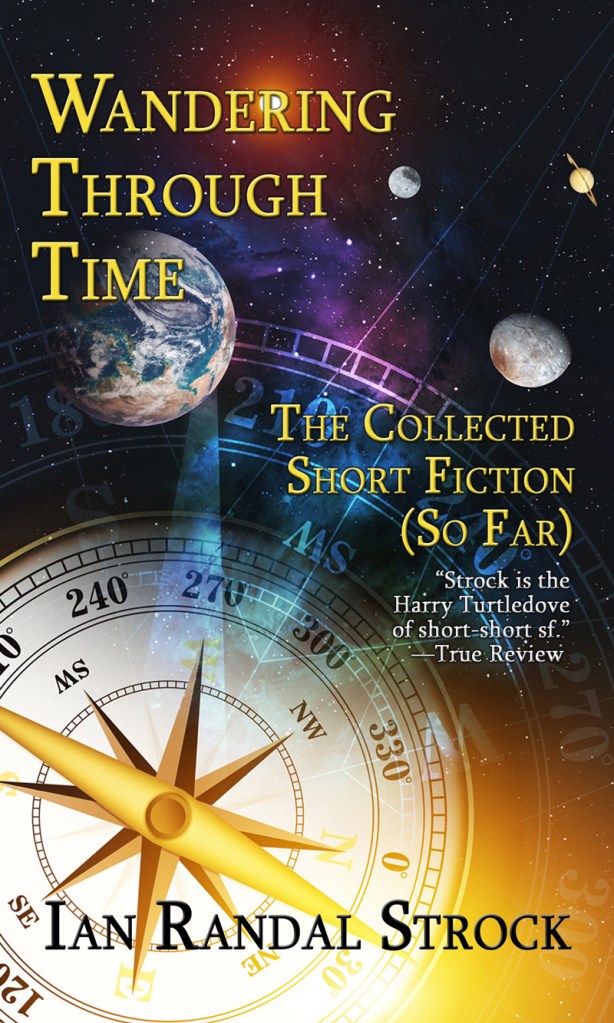
But of far more personal import is his review of my forthcoming collection, Wandering Through Time. He writes: “Ian Randal Strock is the Harry Turtledove of short-short SF. His alternate-history stories have punch. The take on a geographically divided America in the time of the Civil War rings strongly in ‘Shall Not Perish from the Earth.’ I think it’s Strock’s best tale. In ‘The Necessary Enemy,’ it’s always wars, it seems, that drive humankind’s progress and destiny. ‘Rockefeller on the Rocks’ proves that unique tales, true or not, of U.S. vice presidents could perhaps work, with sufficiently advanced technology. Why can’t we replace veeps with robots? Who would know?”

I’m thrilled, honored, and a humbled to be compared to Harry Turtledove. My book is being released on December 3.

Asimov’s reviews two, and mentions me

The January/February issue of Asimov’s Science Fiction provides commentary on two recent Fantastic Books publications.

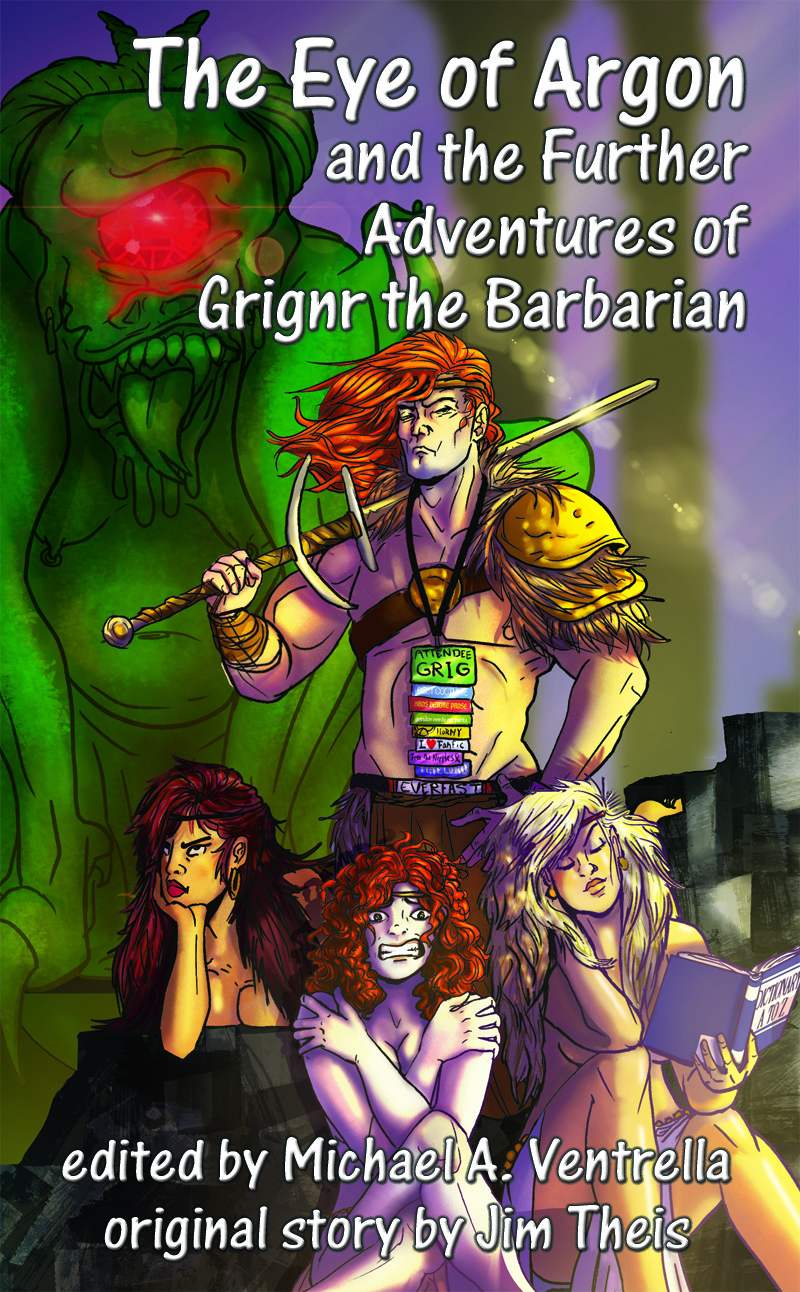
Untitled-41212Up at the front of the magazine, in his Reflections column “I Didn’t Write It,” Robert Silverberg goes in depth with Jim Theis classic fantasy story “The Eye of Argon,” and also talks a bit about The Eye of Argon and the Futher Adventures of Grignr the Barbarian, edited by Michael A. Ventrella, and—surprisingly—mentions me. Silverberg writes:

It has been reprinted time and again, most recently in 2022 in a handsome paperback edition published by Fantastic Books of Brooklyn, New York, under the title of The Eye of Argon and the Further Adventures of Grignr the Barbarian.… The Eye of Argon is an extraordinary work, which connoisseurs of fantasy fiction have almost unanimously agreed is the worst work of its genre ever written. I’ve recently re-read it and I can concur with that dark accolade—adding the proviso that I found it, once again, immensely entertaining in its strange way. I commend it to you now.… Ian Randal Strock, the publisher of the recent Fantastic Books edition, has provided interleaving pages that attempt to correct the multitude of grammatical and lexical errors of the story, telling us that “swlived” should actually have been “swiveled” and “ulations” is really “ululations,” but even he is defeated by such Theisian verbal novelties as “expunisively,” “scozscetic,” and “appiesed.”… Grignr is in fact an interesting character, a ruthless barbarian through and through in the authentic Conan manner, and in a weird way we care about him as he navigates one peril after another on his path to his rendezvous with the deadly Eye of Argon. It’s easy to laugh at the comedy of errors that Theis produced, back there in 1970, but underneath all the absurdities lies a real story, silly but strangely compelling.… It is possible to see that in the new edition by reading the various Argon pastiches that have been appended to it. One of them is the real thing, Hildy Silverman’s “The Return of the Eye of Argon,” which is a perfectly good little fantasy story that replicates Theis’s innumerable errors with remarkable accuracy, but which also deftly catches the music of his imagination. Another, “Oanna’s Rock” by Jean Marie Ward, is likewise a nicely plotted heroic fantasy, but unlike Hildy Silverman she was unable to make herself strew her tale with spelling errors and goofy grammatical absurdities, so it is essentially Theis played straight, somewhat of a different kettle of fish.

9781515447856Later in the issue, Peter Heck’s review column On Books looks at, among others, Alan Dean Foster’s If You Shoot the Breeze, Are You Murdering the Weather?: 100 Musings on Art and Science. Heck writes:
While each of the essays is short, Foster manages to pack a good amount of interesting information into them.… These short articles are ideal for subway, bathroom, and waiting-for-family-members-to-get-ready reading.… As the collection’s title indicates, the author’s sense of play is fully engaged here—and the fun is contagious. While it’s not strictly SF or fantasy, it gives an intriguing insight into how one of SF’s most prolific writers looks at our daily world.

These quotes are, of course, brief excerpts from much longer essays, the entireties of which I recommend to you, available in the magazine.

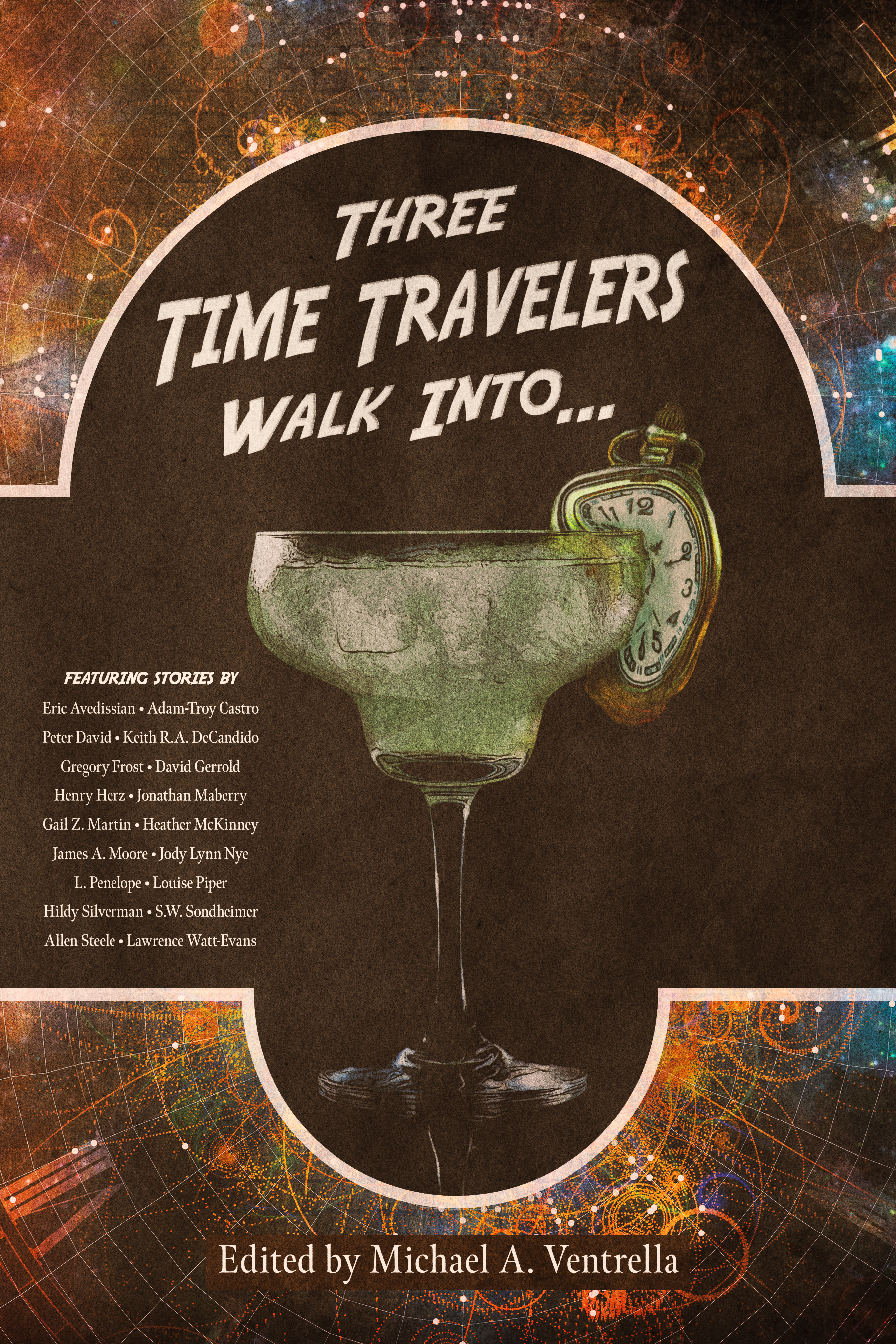
Asimov’s reviews Three Time Travelers Walk Into…

ThreeTimeTravelers_FrontIn his review in Asimov’s Science Fiction magazine, Peter Heck recommends Three Time Travelers Walk Into… (edited by Michael A. Ventrella, published by Fantastic Books in May), calling it “highly entertaining” and “thoroughly readable.” He also includes specific mentions of Gail Martin’s “The Mystic Lamb,” Peter David’s “A Christmas Prelude,” Jonathan Maberry’s “The Adventure of the Confounded Writer,” and says “one writer—no spoilers here—gives a younger version of himself a chance to alter history after meeting two of his mentors and the version of himself who has lived through our history—a tour de force of time-travel twists and turns.”