Mensa Convention Weekend

This weekend, I’ll be attending Chicago Area Mensa’s HalloWeeM regional gathering, in Wheeling, Illinois. Unlike science fiction conventions, I won’t have a dealer table, and I won’t be on a slew of panels. Instead, I’ll be giving a solo presentation, “Punctilious Punctuation,” on Friday at 3:00pm Michigan A. I’ll have some books available for sale after, at one of the vendor tables, for an hour or so.

Beyond that one scheduled appearance, I’ll be around, enjoying the RG just like everyone else (Costume Contest, Meet the AMC, Trivia, Pretentious Drinking, hanging out in Hospitality, you know…).

My flight is scheduled to land at O’Hare at 12:40pm on Thursday (assuming no massive flight delays), so if anyone else is getting in about that time, and wants to share a ride to the hotel, that’d be great. Similarly, my return-home flight is Monday, leaving O’Hare at 4:00pm, so again, I’m happy to share a ride.

Also, since the RG wraps up mid-afternoon on Sunday, if any of my friends in the area who won’t be at the RG want to get together, I may be free late Sunday and early Monday. Looking forward to seeing many people!

National Punctuation Day

I’m told today is… wait for it… National Punctuation Day! I had no idea — when I published Punctilious Punctuation — that such a day even existed on the calendar; now I’m ashamed that I didn’t, or that I didn’t tie last week’s publication day to today’s celebration. Nevertheless, if you (like I) love punctuation, then you know that it shouldn’t be one scant day out of 365, but *every* day that we use punctuation, use it well, use it properly.

The book, by the way, was very well received this past weekend at Capclave. I am gratified and humbled by the response. Thank you all!

Punctilious Punctuation: a press release and a request for suggestions

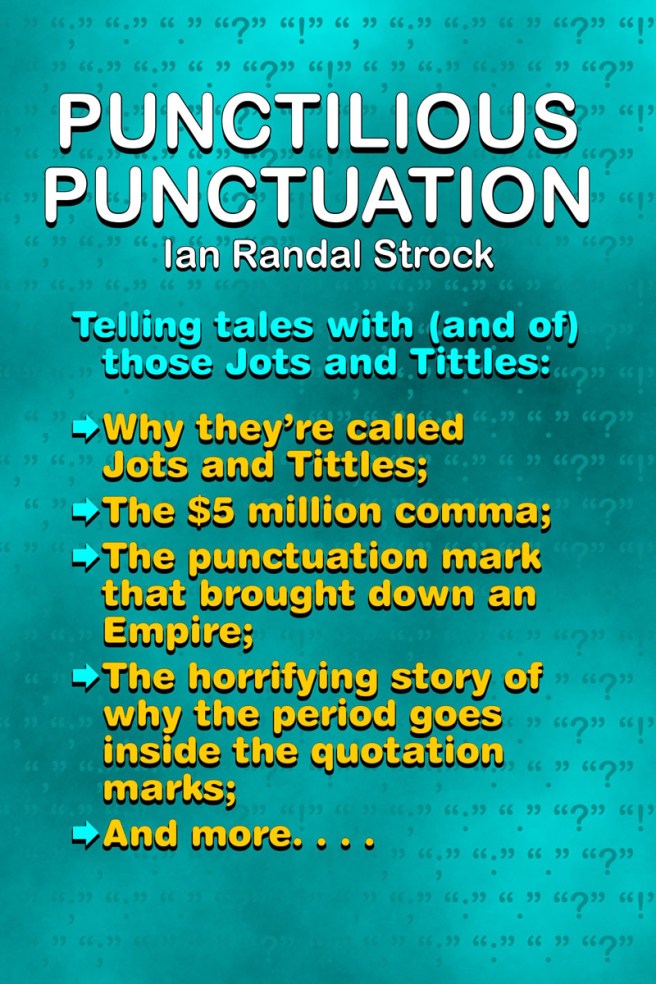
It started—as the biggest arguments do—over the smallest of things: the placement of a comma. That turned into an anecdote, and thence into a speech. And now author, editor, and punctuation lover Ian Randal Strock has turned it into a book. Punctilious Punctuation allows each and every one of those little spots and squiggles on the page to shine, with its own chapter covering the history, usage, misusage, and ancillary information of the punctuation marks. Punctuated with stories and anecdotes on the huge impact those tiny marks can have (the $5 million lawsuit, the Russian revolution, and more), Punctilious Punctuation is fully researched, footnoted, illustrated, and—of course—punctuated.

Ian Randal Strock’s three books on presidential history and trivia were published by Random House and Carrel Books. His award-winning science fiction has appeared in Analog, Nature, Amazing, and several anthologies, and some of it has recently been collected in Wandering Through Time. He has presented talks on punctuation, the presidents, and a variety of other topics to Mensa, writers’ groups, science fiction societies, the 99s, university classes, and more. He is the recipient of the 2025 Edward E. Smith Memorial “Skylark” Award, and firmly believes in the utility and necessity of the serial comma.

Punctilious Punctuation: Telling tales with (and of) those jots and tittles, including why they’re called jots and tittles, and the horrifying story of why the period goes inside the quotation marks
by Ian Randal Strock
148 pages, fully illustrated
September 15, 2025
Trade Paperback: ISBN: 978-1-5154-5834-0, $15.99
Case Laminate (library binding): ISBN: 978-1-5154-5837-1, $27.99

Punctilious Punctuation—and all Gray Rabbit Publications books—are distributed via Ingram. Review copies are available upon request.

And the request: where do you find reviews of such non-fiction titles that you appreciate? In the realm of science fiction, I know where to send galleys, but I’m trying to improve my game in non-fiction. Thanks!

Italicized punctuation: ugh!

I know it’s a tiny thing, and based on the number of times it crops up in manuscripts I receive, I imagine I’m one of the very few to notice it, but the comma or period after an italicized word should not, as a rule, be italicized, because yes, there is a difference. Similarly, neither should the space (again, there actually is a difference between an italicized space and a non-italicized space), nor, for that matter, any other punctuation mark. So why do some word processing programs seem to want to include the following space or punctuation mark when italicizing the word?

And a slightly bigger part of it: the possessive of an italicized proper noun shouldn’t be italicized (for example, when talking about the USS Enterprise’s anchor chain).

Mensa appearance this weekend

This coming weekend, March 3-5, I’ll be at Central New Jersey Mensa’s Snowball Regional Gathering. It’s one of the longest-running RGs in American Mensa, and always a good time. This time, I’m not just attending, but actually on the program. On Friday, at 7:30pm, I’ll be giving a talk on “Punctilious Punctuation,” and I know all of you who are going to be at the RG will want to see my talk (mind you, I’ve got some stiff competition in that time slot: Lesley Schierenbeck talking about “Dark & Dirty New Jersey History,” and John Devotti’s always wonderful “Monster Trivia.”

After I’m off stage, stick around in the same room for the Mensa Foundation and RVC2 Meet and Greet. And at 2:30pm Saturday, RVC2 Trebor Lefebvre will be running “Everything You Didn’t Know You Didn’t Know About Mensa.” I’ll be there, too.

But the other program item I’m really urging you to attend is Saturday at 10:30am. One of my authors, Michael A. Ventrella, will be talking about “How to Argue the Constitution with a Conservative.” Michael is a wonderful speaker, talking about a topic on which he is very knowledgeable, and it’s an especially timely topic. We’ll also have copies of his book, How to Argue the Constitution with a Conservative, available for sale (and possibly a few other of his titles that I’ve published).

Should be a great weekend. Hope to see y’all there!

Presidential Offspring and Punctuation

Two completely unrelated links that are both part of my working life and fascinating.

First, from a presidential trivia group on Facebook, I got the link to this article, about the new Society of Presidential Descendants. https://www.washingtonpost.com/lifestyle/2021/10/28/president-descendant-society/?fbclid=IwAR17JJL5QR-J3BsKO4dOo1uPQ8bd-Tnzx4gkRsd6t9si8X4L2ErImrLt57k

We frequently talk about their ancestors, though I also made an attempt to discuss some of their descendants in my books. But this article talks about the fact that all those descendants are actually people who, through no action of their own, have to deal with being living connections to history. Some interesting stories in that article.

The other link, from an editors’ group on Facebook, talks about punctuation.
https://medium.com/creators-hub/what-i-learned-about-my-writing-by-seeing-only-the-punctuation-efd5334060b1

This is of specific interest to me, because last weekend I debuted my new talk, “Punctilious Punctuation,” at Boston Mensa’s Regional Gathering. Now I’m in the process of polishing that talk a bit more, based on the audience’s reaction and my own sense “hearing” it live. But anyway, this linked article talks about punctuation when the words infesting it have been removed. There are a couple of links in the article—including one to an app the author cobbled together, which will remove the words from a block of text to show you the punctuation—which I also recommend exploring after you’ve read the main text. Fascinating stuff there.

Tough Trivia, 5/17/21

New week, new questions (and answers). Today’s Tough Trivia question is a History question: Lanes, roads, streets, avenues, boulevards, turnpikes, highways: the American road system is one of the iconic representations of the country. But it wasn’t always so; they were a creation of the automobile, which itself is barely more than a century old. Before the coming of our modern interstate highway system (about which there will be a question in the future), the two most famous roadways were the Lincoln Highway and Route 66. The Lincoln Highway was conceived in 1912, and formally dedicated on October 31, 1913. Route 66—also known as the Will Rogers Highway—was one of the original highways in the US Highway System. It was established on November 11, 1926, with road signs erected in 1927. Which states were crossed by the Lincoln Highway, and which by Route 66? (Bonus points if you know which states hosted both highways.) Further bonus if you know which of the two was longer (and can guess how many miles they covered).

***

Friday’s question was: As a writer, I’ve been having a disagreement with one of my editors about punctuation. I disagree—emphatically—with his blind adherence to the AP’s drive toward punctuational minimalism. To my mind, the AP is trying to kill the comma for the sake of saving precious column inches in newspapers, but doing so is removing a feature of the written word that adds nuance and meaning. For example, I see a significant difference when the comma is removed from the sentence “We laughed, and were friends for three years.” The editor I’m dealing with says the comma should not be there, but I think removing the comma means we laughed for three years, while using the comma means we laughed briefly, and that laughter made us friends.

Be that as it may, your Tough Trivia question for today is: name the 15 generally accepted punctuation marks in the English language (assuming you’re not the AP or my editor).

The answer is: 

apostrophe ‘ ’
braces { }
brackets [ ]
colon :
comma ,
ellpisis …
em dash —
en dash –
exclamation point !
hyphen –
parantheses ( )
period .
question mark ?
quotation mark “ ”
semicolon ;

***

Ian’s Tough Trivia is a daily feature of this blog (Monday’s category is History; Tuesday is Arts; Wednesday is Science; Thursday is Entertainment; and Friday is Grab Bag). Each day, I post a tough question, as well as the answer to the previous day’s question. Simply comment on this post with your answer. I’ll approve the comments after the next question is posted. Sure, you can probably find the answers by searching the web, but what’s the fun in that?

And if you’ve got a favorite trivia question—or even just a topic for which you’d like to see a question—let me know! Reader participation is warmly encouraged.
Tough Trivia, 5/14/21

As a writer, I’ve been having a disagreement with one of my editors about punctuation. I disagree—emphatically—with his blind adherence to the AP’s drive toward punctuational minimalism. To my mind, the AP is trying to kill the comma for the sake of saving precious column inches in newspapers, but doing so is removing a feature of the written word that adds nuance and meaning. For example, I see a significant difference when the comma is removed from the sentence “We laughed, and were friends for three years.” The editor I’m dealing with says the comma should not be there, but I think removing the comma means we laughed for three years, while using the comma means we laughed briefly, and that laughter made us friends.

Be that as it may, your Tough Trivia question for today is: name the 15 generally accepted punctuation marks in the English language (assuming you’re not the AP or my editor).

***

South_Park_main_charactersYesterday’s question was: Trey Parker and Matt Stone are a creative duo known for several long-running comic projects. Two of their best-known award-winners—in widely divergent media—were both subjects of concern due to religious protests. Can you name them?

The answer is:

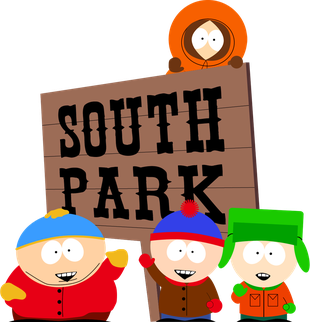
The animated television series South Park debuted in 1997. More than 300 episodes have been broadcast to date, and the series has garnered five Primetime Emmy Awards. Isaac Hayes, who played the character Chef, left the show in protest of a 2005 episode denouncing Scientology.

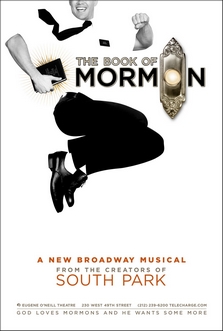
The_Book_of_Mormon_posterThe Book of Mormon is a musical comedy satirizing its eponymous religion. It debuted on Broadway, in the Eugene O’Neill Theatre, on March 24, 2011. It won nine Tony Awards and one Grammy, spawned several national tours and a London production, and only stopped running when the Covid pandemic shut down all Broadway productions.

***

Ian’s Tough Trivia is a daily feature of this blog (Monday’s category is History; Tuesday is Arts; Wednesday is Science; Thursday is Entertainment; and Friday is Grab Bag). Each day, I post a tough question, as well as the answer to the previous day’s question. Simply comment on this post with your answer. I’ll approve the comments after the next question is posted. Sure, you can probably find the answers by searching the web, but what’s the fun in that?

And if you’ve got a favorite trivia question—or even just a topic for which you’d like to see a question—let me know! Reader participation is warmly encouraged.
The anti-ellipsis?

Having a texting conversation with a new friend, and one of the topics is grammar and punctuation (don’t laugh; some of us find it interesting). I gave a brief disquisition on the ellipsis. The next day (after thinking about it), she said “The ellipsis seems to be about leaving: leaving things off, leaving things out… Is there a mark about coming back?” I didn’t have an answer for that. Do you?