Regardless of who, why, or how the Trump Iran War started, one thing is certain: we are going to be fighting it and paying for it for a long time to come.
In the first three weeks of the war, 13 US service members have lost their lives, at least four US airplanes have been destroyed, and the US has spent tens of billions of dollars on this fight. In other countries, hundreds or thousands of people have already been killed, the global energy trade has been disrupted, prices have skyrocketed, and the total cost will never be known.
Rational Americans are—quite correctly—demanding to know why President Trump felt the burning need to launch a hot war when he did, and without consultation with our allies (those same allies, by the way, of whom he is now demanding help to keep the Strait of Hormuz open). Equally important is when and how he sees this war ending: the best comment we have on that so far is that he’ll “feel it in his bones.”
And yet, his opinion of such things has proven—time and again—to be absolutely meaningless. His actions scream that he is operating according to his dreams and his view of “look at me, I’m strong and powerful,” with only barest nod at reality. But even if Donald Trump were to suddenly embrace altruistic, rational thought, and realize that we should no longer be fighting this war, that will not end it.
We’ve kicked over the hornets’ nest that was the religious dictatorship in Iran, but we have not destroyed all the hornets in it. Those with access to weapons in Iran have no reason to stop fighting, even if we do. They’ll keep threatening shipping through the Strait. They’ll keep dropping explosive-laden drones on their neighbors. They’ll keep urging their “proxies” to kill and disrupt as much as possible.
And we’re stuck with it.
Even if a new president took office next week, we’d still have to deal with the insanity launched by Donald Trump’s war of “don’t look at the Trump Epstein files.” Just as he came to office saying “no more forever wars,” such as what we did to Iraq and Afghanistan in the aftermath of the 2001 terror attacks, we’ll be dealing with the Trump Iran War for years to come. Even if Congress somehow manages to cut off funding for this “excursion” of Donald Trump’s, that will only prevent us from inflicting more damage on Iran; it won’t stop the Iranians from a rampaging campaign of revenge for what we’ve done to them in the last few weeks.
So now is the time to figure out—as Arthur Wellesley, the first Duke of Wellington taught us—how to get over this heavy ground as lightly as we can. I fear the only answer is indeed a land war in Asia, in which we send in thousands of ground troops to root out every last adherent of the ruling clique in Iran, and then—as we did in Japan after World War II—set up a US-run government to enable the country to eventually transition into a freedom-loving democracy. It was long and hard in Japan, but we see the results when we don’t do everything necessary: Taliban-run Afghanistan, and the headache that is still Iraq.
And this is the point where I wish I was smarter. Actually I wish our political leaders were even smarter than that, that they could figure out an easy way out of this morass Donald Trump has dumped us into. I fear there isn’t one, and the only way out is through; a long, bloody, soul-rending struggle that Trump has thrown us into for no reason but to soothe his own ego.
Last year, President Donald Trump was railing against wind power, urging the UK to shut down their wind power farms in favor “cheap and reliable” oil. His Big Beautiful Bill (which seems much more like a Frankenbill) cancelled tax breaks for solar and wind power in the US.
Three weeks ago, he launched a hot war against Iran.
In response—a response any first-year political science student could have predicted—Iran threatened the safety of shipping through the Strait of Hormuz, sending the cost of oil skyrocketing and imperiling the global flow of oil. And now Trump is calling for other countries to pledge military support to secure the Strait, in effect, demanding they clean up after his mistake.
The United States, which is nearly self-sufficient in terms of oil, is not threatened by that bottleneck. Prices, however, skyrocketed. And last week, Trump reminded the world “when oil prices go up, we make a lot of money.”
Who benefits?
The “we” in that Trump quote is not the average American; it’s the oil companies in the US. And quite possibly Trump himself and his close advisors. The US oil companies, for whom the cost of producing and distributing oil and gasoline have not changed, now get to sell their product for more money.
Global instability also leads to lower values for national currencies, increasing interest in those media which are not tied to any nation, such as cryptocurrencies. In October 2025, Bitcoin peaked at a value around $126,000 per coin. It then plummeted to about $62,000 in February. Since Trump launched this war, it is back up to $74,000, a 20% increase. Ethereum—one of the cryptocurrencies in the president’s personal portfolio—has followed a similar trajectory.
Saudi Arabia is almost the undisputed power in the Gulf region. Indeed, the only country that can threaten them is Iran, which is lead by people who are unpredictable and dangerous. Reports March 16 say that the crown prince of Saudi Arabia, Mohammed Bin Salman, is speaking regularly with Trump, urging him to continue attacking Iran harshly.
Meanwhile, since the onset of this war, you haven’t thought about the Trump-Epstein Files, have you?
The US military removed Nicolas Maduro from Venezuela.
The Abraham Lincoln carrier group is nearing Iran to support the protesters demanding regime change in that country.
I think it’s time we started considering domestic regime change. Donald Trump: you can save us all a lot of pain if you resign with dignity and grace.
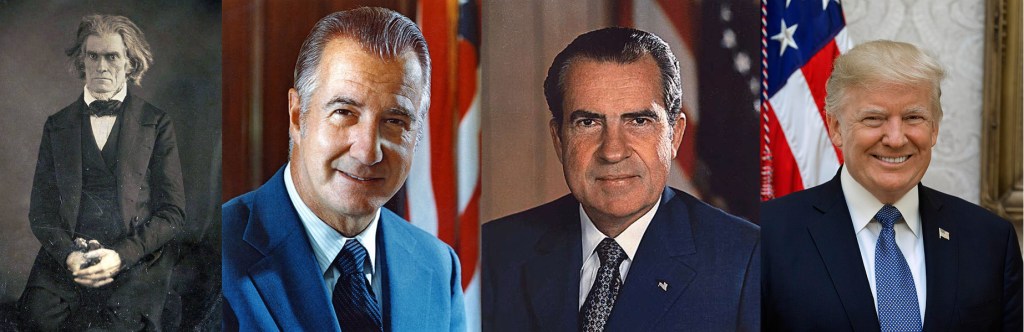
And note, the founders considered this an acceptable possibility. Article 2, Clause 6, begins: “In Case of the Removal of the President from Office, or of his Death, Resignation, or Inability to discharge the Powers and Duties of the said Office…” Resignation is acceptable. Richard Nixon did so for the good of the country, as did Vice Presidents John Calhoun and Spiro Agnew.
Donald Trump is like a dog, pissing on things to claim ownership of them.
His latest is threatening staunch American allies with tariffs if they don’t support the forceful US annexation of Greenland. “We need Greenland for security,” he says. Does that sound familiar? It should. It’s what Vladimir Putin said just before ordering Russian troops to attack Ukraine. That’s the same Ukraine war, by the way, that Donald Trump said—during the 2024 election—that he would end within 24 hours if he won the election. We’re still waiting for that.
Long ago, I wondered if Donald Trump was a stooge working for Putin. Now I realize he’s simply doing his best to emulate Putin. Indeed, Putin gets all this Trumpian love for free.
Trump’s only morality is self-aggrandizement. Everything he does as president seems to have the same goal: to put more money in his pocket, or to put his name on things. In that respect, he’s not unlike a dog, pissing on things to claim ownership. The last major US territorial acquisition was the purchase of Alaska from Russia in 1867. The US acquired Puerto Rico and Guam due to the Spanish–American War (in 1898; we also got the Philippines, which became an independent country in 1946). And the US purchased part of the Virgin Islands from Denmark in 1917.
So what happens if the US manages to “acquire” Greenland? He becomes the first president since World War II to increase the geographic size of the United States. Indeed, he also gets to claim to be the president who acquired the largest parcel of territory for the US, and if you’ve listened to any of his speeches, you know “first” and “biggest” are among his holy words. (For comparison, Alaska is about 665,000 square miles, and the Louisiana Purchase [which the US got from France in 1803] involved about 828,000 square miles, while Greenland measures about 836,000 square miles.)
Any other president would measure success in terms of national peace and prosperity; the people’s health and wealth; happiness, amity, and community. But how does Trump measure success? With crowns on his head and dollars in his pocket.
He was talking about his “Board of Peace” this week. It’s key feature? Each member has to pay $1 billion, which he as chairman gets to control. The gold decorations dripping all over the White House are not impressive; they are there to tell him he controls vast sums of wealth. But he looks at the truly wealthy—Warren Buffett, Bill Gates, Elon Musk—and he feels his inferiority complex, because his wealth is not on that level. So he keeps grifting, keeps taking what he can.
The first load of Venezuelan has recently been sold, and the proceeds of that sale wound up in a Qatari bank. Why Qatar? Why not the US? Or, for that matter, why not Venezuela? Because this way, Trump has control over that money, can disburse it as he will. It has suddenly become his money.
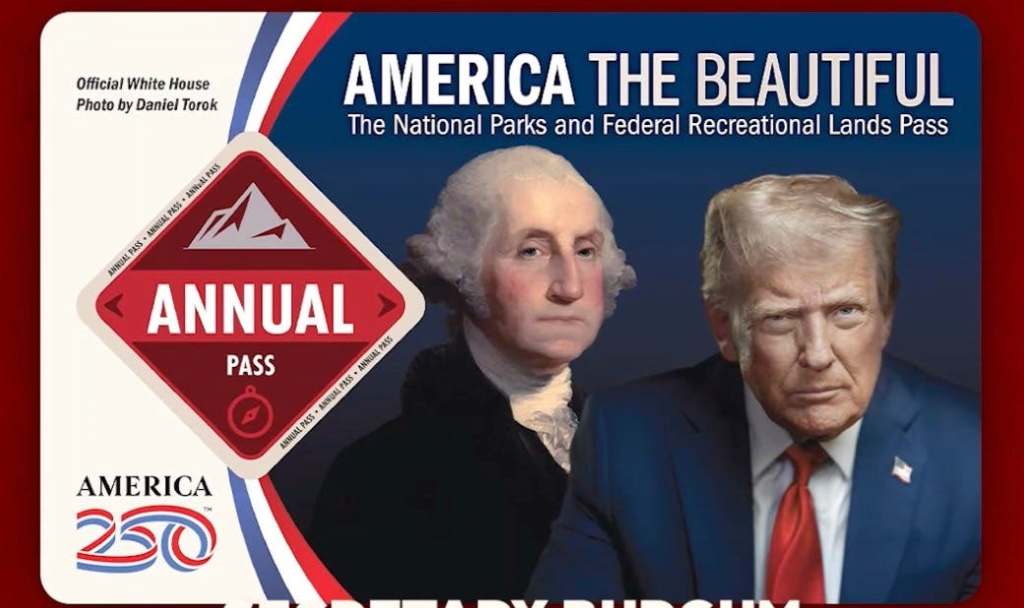
The Trump Kennedy Center. The Trump Ballroom. The Trump Battleship. The Trump Institute of Peace. The Trump Savings Account. The Trump Special Visa for Rich People. The Trump Southern Border Boulevard in Palm Beach. His face on the National Park pass. And on, and on…
The Supreme Court’s decision in Trump v United States (2022) seems to have set the standard for presidential immunity, that the President of the United States may not be sued for anything he does while serving as President (without any comment or direction as to what a President might do during his time in office that is not within the scope of his “official acts”). It seems most current interpretations of that ruling assume the President may not be the subject of any lawsuit, period.
At the same time, however, the United States is experiencing the presidency of a person who’s first response to almost any disagreement is to sue. I’m not sure there is an exact count of the number of lawsuits he has brought. For only the latest example, see President Trump’s threat to sue JPMorgan Chase.
As much as the President needs to do things that an ordinary citizen oughtn’t be able to do, it seems manifestly unfair that while Donald Trump as the President is immune from lawsuits, Donald Trump himself has the complete freedom to file lawsuits of his own.
Added January 30, 2026: And now he is suing the Internal Revenue Service. From the linked article: “The lawsuit, filed Thursday at a federal courthouse in Miami, says Trump is suing in his personal capacity, not as president.” So he can differentiate Trump-the-person from Trump-the-president. Hmm….
One of the big topics related to the government right now is the ongoing debate over “health care.” Specifically, allowing the Affordable Care Act subsidies to expire, finding a better way to pay for health care, and blaming the other side for the mess we’re in (well, that last is pretty standard for every issue at the federal level). As a person who tries to use words precisely, to best communicate my thoughts to you, I cringe every time a politician or pundit says “health care,” because that’s never what they mean.
Health care is when I go to the doctor and say “this hurts.” The doctor checks me out, diagnoses what is causing the hurt, and treats it (or tells me what to do) so that it stops hurting. That’s health care. And in that respect, health care in the United States is great. We have excellent doctors and nurses and physician assistants and therapists and… a whole slew of people who do remarkable things to make us feel better and keep us healthy, along with the equipment and medications and more. And none of that is what they mean when the politicians and reporters talk about health care.
No, what they’re talking about is “health insurance”: a system of paying for the health care we get that keeps us going. And health insurance in the United States is a disaster, falling apart and falling fast. And none of the tweaks they keep proposing at each other are going to fix the health insurance industry, because we’ve been misusing it and expecting far more from it than it can ever possibly provide.
The thing is, health insurance isn’t some unending pool of money which pays for our every smallest medical need. Health insurance—indeed, any form of “insurance” (except the half-wager when you’re playing blackjack and the dealer has an ace showing)—is a collection of people betting on something they hope won’t happen.
Start with something slightly less controversial: car insurance. You pay a small amount every year to someone managing the money (the insurance company), against the (hopefully very small) chance of being in a crash and requiring a lot of money to repair your car (or one your actions damaged). This only works if there are a lot of people paying in for this insurance and very few of them actually get in crashes requiring large pay outs. In the ideal world, if you had enough money to cover those potential expenses, you wouldn’t bother buying insurance; you’d just pay the repair/replacement costs yourself if you ever needed to (I’m ignoring your responsibility for the other guy’s car, and why states require car insurance). What this all means is that most people pay for car insurance and don’t ever get any money from it, because the entire group of people is funding the expenses of the one or two people who will wind up actually needing it. It only works because relatively few people need it, and no one knows if they are going to be that one person who does. So everybody pays a little, and most never get anything but peace of mind from it.
Health insurance is similar to car insurance. At least, it used to be. You would pay a small amount every year against the (statistically) small chance of having a catastrophic illness or injury that would be very expensive to treat. And the few people who did have such needs would have their expenses paid for by the insurance company (again, in an ideal world), while everyone else in the insurance pool would wipe the sweat from their brows and say “I’m glad I wasn’t the one who needed the money.”
But health care has evolved. Most people used to only see a doctor when they had a major injury or illness. As we’ve developed more of the concept of wellness care, more and more of us go for regular check-ups, low-level medical treatments to prevent (or earlier detect) major problems, and so forth.
And while these are (theoretically) inexpensive health care events, we now expect “insurance” to pay for them all. (Admittedly, the costs of those inexpensive events have been rising, too. And if our politicians were serious about this whole debate, that is where they would be focusing: why does it cost hundreds of dollars for a regular check-up?) But as we expect most people to have those regular check-ups and those preventative treatments, we’re over-stressing the ability of health insurance to cover the catastrophic costs it was designed for. That’s not a fault of insurance; it isn’t a money-multiplier. Way back when, if everyone paid $100 a month for insurance, it was against the fear that one person in a hundred would have a medical problem this year that might cost $100,000 to treat. At those numbers, the insurance pool was sufficient.
But today, we’ve gotten to the stage where, instead of everyone paying in against the rare major need, everyone is paying in their $100 a month… and everyone is expecting insurance to pay the doctor $400 for our “see me in six months” regular check-ups, and we’re expecting insurance to pay for the $25-a-month prescription medicine, and suddenly there’s no money in the insurance pool for the $5,000 the emergency room is going to charge to treat your broken leg, and that $100,000 expense will be enough to bankrupt the insurance company.
The failure is that we’ve spent a couple of generations teaching people that medical treatment is health care, and it’s not just for emergencies, but that everyone should seek it out continually as a preventative. Medically, that’s a good thing. But financially, it may be ruinous. Our methods of paying for it have not kept up.
The recently signed discharge petition means the House of Representatives is going to vote on an extension of the Affordable Care Act subsidies sometime in January. Even if it passes, it’s not going to fix anything, because the entire concept of health insurance is broken. I readily admit that I don’t have the solution, either. But someone smarter than all of us is going to have to figure it out. Because if it’s something we expect most people to use, then the only way to pay for it is individually. And the costs have risen so far so fast that most people simply can not afford to pay for it.
The president’s proposed fix—“we’ll just give everyone $2,000, rather than paying the insurance companies”—is naive at best. Where is the government getting the money to give everyone $2,000? The same place the government gets all its money: from the people. It’s a non-starter.
Indeed, the whole debate has become the Second Law of Thermodynamics for finance: if everyone is paying for insurance, but everyone expects to use it, then insurance is nothing more than a drain on everyone’s wallet.
Is this all far-fetched, doom-and-gloom, dystopian theorizing? Probably. I hope certainly. Nevertheless, it is a topic of conversation which keeps cropping up, so…
I know how Donald Trump is going to attempt to stay in office beyond the end of his term. It’s Section 3 of the 20th Amendment. Section 3 talks about who shall become President or act as President (two different things) if there is no President elect or if the President elect is not qualified to serve as President. The final clause of that Section reads “the Congress may by law provide for the case wherein neither a President elect nor a Vice President elect shall have qualified, declaring who shall then act as President, or the manner in which one who is to act shall be selected, and such person shall act accordingly until a President or Vice President shall have qualified.” In other words, if the election is somehow prevented from occurring—and despite Article II, Section 1, and Amendment 20, Section 1—I think Donald Trump’s sycophants are relying on this phrase to enable the Congress to “select” him to “act” as President “until a President or Vice President shall have qualified” (by being elected).
This revelation came while I was researching the essay I thought I was going to write, noting that, regardless of what Trump and the Trumpians try to do to the election of 2028, a lack of an incoming President does not enable the current President to remain in office.
I was going to quote Article II, Section 1 of the Constitution, which says the President “shall hold his office during the Term of four Years”—thus limiting the time the President serves to four years, whether a successor has been elected or not.
I was going to go on to the 12th Amendment, which says “…no person constitutionally ineligible to the office of President shall be eligible to that of Vice-President of the United States.” Thus preventing the President from becoming Vice President, only to succeed to the Presidency with the removal of the new President.
Then comes the first Section of the 20th Amendment: “The terms of the President and the Vice President shall end at noon on the 20th day of January, and the terms of Senators and Representatives at noon on the 3d day of January, of the years in which such terms would have ended if this article had not been ratified; and the terms of their successors shall then begin.” Repeating and emphasizing the Article II quote above: the President’s term ends, regardless of whether or not there is a successor waiting.
And, of course, the first Section of the 22nd Amendment: “No person shall be elected to the office of the President more than twice, and no person who has held the office of President, or acted as President, for more than two years of a term to which some other person was elected President shall be elected to the office of the President more than once.”
But then I stumbled upon Section 3 of the 20th Amendment, as I said above. That’s the “well, there may be a way around the Constitution” that the most ardent Trumpians have been hinting at. It’s fairly simple, if we assume they can somehow prevent the next Presidential election. And one doesn’t have to be too creative to figure out ways to do that: declare a state of emergency, ban gatherings “for public safety” during the first week in November, so that an election cannot be held (that’s why they keep pushing to get rid of mail-in ballots and early voting; so that there will be no ballots to count). Or, perhaps easier, would be to look at the fifth paragraph of Article II, Section 1: “The Congress may determine the Time of chusing the Electors, and the Day on which they shall give their Votes; which Day shall be the same throughout the United States.” Such an emergency declaration could simply prevent the Electors from gathering to cast their votes in December. No electoral votes, therefore nothing to count on January 6, and no President elect. Blocking that, rather than the general election, would mean that there would still be a new Congress elected who would then be charged with selecting that person who shall act as President.
Therefore, Congress needs to adopt a new law, by a veto-proof margin, saying “No person who is ineligible to be elected President may act as President.”
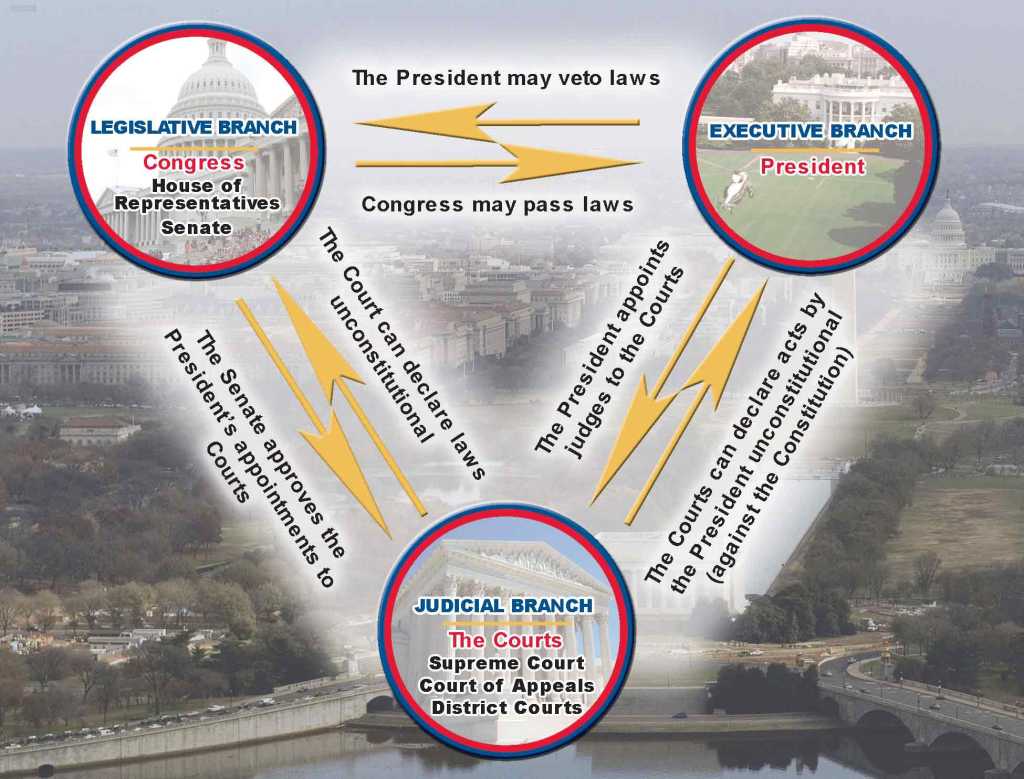
As angry as I am with many of President Trump’s statements and actions—some of which are immoral and unworthy of the presidency, and some of which are demonstrably criminal—my ire today is reserved for Congress and the Supreme Court. Part of the genius of our Constitution is that it organized a government that is not dictated solely by one person or one body, but rather has three co-equal branches, each of which has certain powers over the other two, and other responsibilities to the other two. As we learned in elementary school: the Legislative branch (Congress) makes the laws, the Executive branch (the President and his departments) enforces the laws, and the Judicial branch (the Supreme Court) interprets the laws (tells us what they mean, and if they are in keeping with the Constitution).
The President appoints the members of the Supreme Court, but the Senate has to agree. The President spends the money, but only according to the budget that Congress creates. Congress writes the laws that the President can veto or accept, but the Supreme Court can say “no, that law is not Constitutional.” Congress can remove the President and the members of the Supreme Court for “high crimes and misdemeanors.”
According to Article I of the Constitution, Section 8, the powers of Congress include the power to lay and collect taxes, duties, imposts and excises; to regulate commerce with foreign nations; to declare war; “to provide for calling forth the Militia to execute the Laws of the Union, suppress Insurrections and repel Invasions”; and a slew of others.
Article II, Section 2, lists the powers of the President, including serving as the Commander in Chief of the Army, Navy, and Militia, “when called into the actual Service of the United States”; making treaties, appointing ambassadors, Supreme Court judges, “and all other Officers of the United States,” all “by and with the Advice and Consent of the Senate”; and other things.
Article III vests “the judicial Power of the United States” in the Supreme Court and other inferior courts. Section 3, interestingly reads “Treason against the United States, shall consist only in levying War against them, or in adhering to their Enemies, giving them Aid and Comfort.”
This system of checks and balances among the three co-equal sections of the United States government worked pretty well for a long time. The relative power of the executive and legislative branches waxed and waned over the decades, but all three branches maintained their shared powers through the strength of their leaders over the years. Congressional leaders have worked with and against presidents, the Supreme Court has allowed and denied laws over the years, but always, the holders of those offices upheld the power of their position, the importance of their branch, and kept the tripod standing.
Lately, the tripod has collapsed, because two of those legs have been allowed to weaken before the onslaught of the third. Obviously, this collapse has been going on for longer than just the last decade, but no one looking at Ronald Reagan’s relationship with Tip O’Neill ever thought either one of them was subservient to the other. Since that time, however, we’ve been stuck with a series of ideologues who realized that the way to enforce their partisan will long beyond their service would be to enable a collapse of the system of checks and balances. Thus, Mitch McConnell’s lies and machinations have unbalanced the Supreme Court: in early 2016, he told us the Senate could not appoint a new Supreme Court justice during an election year, and kept Antonin Scalia’s seat vacant for 11 months, until Donald Trump’s election. Four years later, McConnell told us to ignore his four-year-old words, and that the Senate had to fill a vacant Supreme Court seat when Ruth Bader Ginsburg died a month and a half before the election of 2020. That’s the same Mitch McConnell who, on January 6, 2021, called Donald Trump “practically and morally responsible” for the attack on the Capitol, but then voted to acquit Trump of those charges at his second impeachment. McConnell is no longer the leader of the Senate, but his successor, John Thune, has not shown himself to be any more of a leader. His every utterance proclaims his subservience to the office of the President.
Chief Justice John Roberts has used his ideological majority of the Court to grant the president nearly complete immunity for anything he may do during his term of office, since the president in question supports his views. He also can’t imagine any of our recent or potential presidents hailing from the Democratic party ever running so far beyond the pale as Donald Trump has, so he’s not worried about karma coming back.
And now we have the Speaker of the House, Mike Johnson, who has completely subsumed his authority to Donald Trump’s will. He has decided the House shouldn’t actually be conducting any business, because the president is happier to have the government shut down, so he can rampage however he wants.
The Supreme Court, unfortunately, is beyond our power to correct in the near term. The way the Justices are chosen requires waiting for those currently in office to leave in order to replace them. And let’s face it, there doesn’t appear to be anyone even on the horizon with the strength of John Marshall or the moral fiber of David Davis.
The make-up Congress, however, is—at least, theoretically (but see my several previous pieces on Gerrymandering)—something we can affect. I say it is time to elect Senators and Representatives who will stand up, not necessarily for me and my views, but for the strength of the Congress. Congress needs to restore itself to its role as a co-equal branch of the government.
Far too often, among the Republicans and Trumpians in the Congress, we see people who are far more interested in doing what Trump wants so that he won’t attack them. Can they possibly be proud of their service? Or are they merely keeping their seats warm? Liz Cheney stood up for right over party, and was punished for it by losing her seat. But as much as I disagree with many of her views, she earned my respect. The problem was, she was one voice in a vast sea of the voiceless, and thus, easy to target. The other members of Congress need to find their voices, to stand up, not to keep knuckling under.
I may not have agreed with their policies or their actions, but did anyone ever doubt the Congressional allegiance, the strength, the patriotism, of prior Senate Majority Leaders such as Robert Byrd, Mike Mansfield, Everett Dirksen, Lyndon Baines Johnson, or Henry Cabot Lodge? Similarly, will the House of Representatives ever feel the need to remember the service of Mike Johnson as it does Tip O’Neill, Carl Albert, Sam Rayburn, or Nicholas Longworth?
Donald Trump has gone off the rails. He cares nothing for the Constitution, law, or tradition, and is interested only in lining his own pockets and glorifying his own name. But if the rest of the government was functioning as it should, the damage Trump could inflict would be minimized. But with the Supreme Court saying only “Yes, sir,” while Congress’s leaders say “We’ll do whatever Trump wants,” our government, our nation, is in danger.
And yes, I know I’ve not mentioned the Democratic leaders. Chuck Schumer and Hakeem Jeffries, too, are falling down on their jobs. They’re doing what they can in their minorities, but it sure feels like they could be doing, could be saying, more. And their younger colleagues, the flaming liberal branch of the party who don’t recognize that good government is negotiation, compromise, and not getting everything? They, too, are not doing us any favors.
Term limits are not, and never have been, the answer. But whether you vote Republican or Democratic, I urge you—in the strongest terms possible—to vote for someone who wants to serve in Congress, not someone who wants only to kowtow to or attack the president.
I’m starting to feel like the frog in the slowly heating pot of water.
National Guard troops patrolling Los Angeles. A judge just ruled it’s a violation of the Posse Comitatus Act, but that ruling doesn’t change much.
The military take-over of the federal district. “Crime is out of control,” according to the White House, though the city’s administration says those figures are a lie. No matter who’s right, we’re becoming inured to seeing troops in the streets.
Talk of next sending the troops into Chicago or some other major city. We’ll survive that, won’t we? After all, New Yorkers have gotten used to heavily armed people in fatigues at major events and gatherings. Those troops may not have chosen to be here, but we still have to thank them for their service.
Pair that increasing military presence at home with the spate of national emergencies the president is in love with declaring: the national emergency over immigration that the administration is using to justify increasing number of deportations. And the national emergency over international trade that was the justification for illegally imposed tariffs. And now there’s talk of the president declaring a national emergency over housing, because people in their 20s and 30s can’t afford to buy houses, because not enough new houses are being built.
Add in the president’s continual whining about that elections aren’t “secure,” that we can’t trust the mail-in paper ballots, or the electronic voting machines, or any other facet of the system, and that the federal government is going to have to take over the machinery of elections, just to ensure that they’re fair.
Do you see where this is going? This is all in the first seven months of this presidential administration. We are being inculcated to the steady stream of major emergencies demanding extraordinary governmental intervention. We are being taught to distrust the institutions of free and open government that have served us so well for two centuries. And we are growing desensitized to the elements of control such as the Army patrolling our cities.
It isn’t very much of a leap of reasoning to imagine we’ll be told we have to respond to some emergency in the summer of 2028, while the government is trying to make our electoral system “safe,” which will require a delay in election day, perhaps “just a few months.”
I think we’re in trouble. I feel the temperature of this water rising, but will we be smart enough to turn off the gas before it starts boiling?
President Trump on Monday tweeted about his dismissal of Federal Reserve Governor Lisa Cook. His “reasoning” is that he claims Cook made false statements on mortgage documents, which was evidence of “gross negligence” and “potentially criminal.”
The evidence he is basing this decision on? Federal Housing Finance Agency Director Bill Pulte sent a letter to Attorney General Pam Bondi accusing Cook of taking out mortgages for homes in Michigan and Georgia in 2021, and telling banks in both cases that she planned to use the homes as her primary residences. Pulte alleges that was a fraudulent attempt to gain more favorable lending terms. Cook has not been convicted of anything, not even been indicted. But Caesar’s wife must be above reproach.
Sound familiar?
In the case commonly known as New York v Trump (2023–2024), the judge ruled that “In order to borrow more and at lower rates, defendants submitted blatantly false financial data to the accountants, resulting in fraudulent financial statements.”
The pot calling the kettle back? It takes one to know one? The crime he’s accusing Cook of committing is the smaller version of the crime of which he was convicted. He says it’s a disqualifying crime (mind you, the accusation; there has been no trial) to serve on the Fed’s Board of Governors, but that the much larger version (which was adjudicated) is not disqualifying for him to serve as president.
I’m embarrassed that he’s the president, and I’m scared of what he’ll do next.

 Ian Randal Strock
