 The current state of political strife in the United States is something we should all fear. It is dangerous to our continued mutual welfare and well-being, as well as dangerous to our hoped-for future.
But it is not something that simply arose, not a natural outgrowth of our thinking and feeling. It is a result, carefully built, that points to an incredibly successful, decades-long campaign. It is something from which we can recover, but that will take a lot of effort.
When I was in college, in the 1980s, one of my political science professors described the political spectra here and in the European parliamentary systems. Here, he said, the difference between the liberals and the conservatives is that the liberals want to set Social Security at $3.00, while the conservatives want to set it at $2.00. In Europe, the difference is that the liberals want to set Social Security at $5.00, while the conservatives want to set it at zero. He was teaching us that, though (at the time) we saw vast gulfs of difference between our liberals and conservatives, in comparison to the rest of the world, our extreme wings were so close to the middle of the road as made no real difference.
The reason for that very narrow, very central political spectrum was our electoral system. In the parliaments—and he was thinking more of countries such as Israel and the Netherlands, where members are elected at large from the whole country—a political party only needs to win two or three percent of the vote to earn a seat in the governing body. People can vote for a party that aligns precisely with their views, knowing that they can be represented, even if only by a small party. And in the no-party-with-a-majority outcomes of those elections, even the smallest parties have a chance to be important in the formation of a coalition government.
In the US system, however, our governmental representatives are elected by small geographic districts, each one a winner-take-all election. In such a system, if you don’t get the plurality of the votes, you don’t get a seat in the government. Such a system will naturally and instantaneously devolve into a two-party system. Each election, one wins and one loses. And the way to win elections in such a system is to get as close to the middle as possible. A candidate knows he has the support of the extreme wing of his party, because there’s no chance they’d ever vote for the other party, so he doesn’t have to convince them to vote for him. The votes that are up for grabs are the independents, the undecideds, the middle-of-the-road voters who see some good in each party. In that system, being extreme is a losing strategy. And so, for many years, we had a mostly middle-of-the-road government: perhaps not awe-inspiring, but comfortable.
But there was a snake in that grass: gerrymandering. In the early days of gerrymandering—the first decades of the 1800s—it was a blunt instrument, used to separate towns and communities, or group them together. But in the last two decades, with the growth of ever more powerful computing capabilities and incredibly precise polling data, the people redrawing voting district lines can map them to include and exclude specific houses. And the political parties have taken that ability so far beyond the bounds of reason. A phrase that’s been thrown around the news of late is “the politicians picking their voters, rather than the other way around,” and that really is what’s happening. In a district that is drawn to be “safe” for one party, the general election is a formality, a waste of time. In my own district, for instance, the closest election the incumbent Democrat has fought was in 2020, when she took only 83.1% of the vote. In the past 30 years in my district, there were only two other elections in which the incumbent got less than 90% of the vote. There is no point in a Republican even running in my district, though they usually put up a token sacrificial lamb for appearances’ sake. But that means my Representative doesn’t have to do anything to win except be a loyal Democrat.
U.S. congressional districts covering Travis County, Texas (outlined in red) in 2002, left, and 2004, right. In 2003, the majority of Republicans in the Texas legislature redistricted the state, diluting the voting power of the heavily Democratic county by parceling its residents out to more Republican districts. In 2004 the orange district 25 was intended to elect a Democrat while the yellow and pink district 21 and district 10 were intended to elect Republicans. District 25 was redrawn as the result of a 2006 Supreme Court decision. In the 2011 redistricting, Republicans divided Travis County between five districts, only one of which, extending to San Antonio, elects a Democrat.

It also means that the real election—if there ever is one (which doesn’t happen in my district)—is the primary election, when the Democratic party decides who is going to be their candidate. That’s what we had last year when New York City elected a new mayor. There was no discussion of the general election; everyone knew the Democratic primary was choosing the next mayor; Republicans need not apply.
But this shift means that the electorate a candidate has to convince is no longer the middle-of-the-road, could-vote-Democratic-or-Republican independent voters; they don’t matter, because the stalwart party members are the majority of the district. That means the middle-of-the-road, I-welcome-everyone type of candidate is an automatic loser. Because when the primary is the election, the way to win the primary is to appeal to the most ardent, strident, non-centrist members of the party. The candidate has to convince them that he will represent only their views, and screw the other party. When it’s the primary that matters, running to the extreme is a winning strategy. Because whatever level the election is (primary or general), money talks. And those most willing to donate to a campaign are always the farthest-out fringe members, because they see not just bad ideas, but actual evil in the other party.
In the days when it was the general election that mattered, party leaders were smart enough to know that the way to win was to run to the middle. But now that the general election doesn’t matter, because the party leaders have already rigged the districts to be “safe” for the party, the way to win is to run to the outermost edges to get the funding to win the primary.
And that results in a Congress full of politicians who aren’t working for the common good, but for the party’s good. That’s what gives us a Mitch McConnell, who won’t allow a Supreme Court nominee to be considered because it’s an election year (2016), but will rush through a Supreme Court nominee because it’s an election year (2020), based solely on who put forth the nomination. And that’s what gives us an Alexandria Ocasio-Cortez, who won’t vote for the Bipartisan Infrastructure Bill because it does everything she wants, but she also wants Build Back Better right now at the same time, because she wants what she wants and she wants it all right now. It’s what gives us a country in which the continued health of our democratic republic truly is in jeopardy. It turns a deliberative, thoughtful body of legislators into a raucous madhouse of children trying to score points with “the folks back home” by being as nasty and uncooperative with their fellow members as possible.
I lay these problems squarely at the foot of gerrymandering. But we’ve gerrymandered ourselves into such a deep hole, and the two parties that won have so entrenched themselves in the system, that I fear we’ll never be able to get out of it. Ballotpedia, for instance, shows that in the election of 2020, only 41 of the 435 House districts were “battlegrounds.” That is, 394 of the Representatives knew they were winners as soon as the primary was over, and only 41 had to bother with the general election. (See https://ballotpedia.org/U.S._House_battlegrounds,_2020)
So how do we get out of our gerrymandered quagmire? It’ll take a true statesman. Actually, we’ll need two. Because to get out of it, each of the parties will have to say (of their own polities) “we currently have the majority, and we can redraw the districts to ensure that we always have the majority, but that would be bad. So we’re going to redraw the districts to ensure competition, for the good of the country.” If only one party does it, the other will swoop in and kill them as quickly as possible. Both parties have to do it, and they have to do it together.
And we’re all stuck in it like insects in a pitcher plant, because it feels good to be winning, to be on top, to be a supporter of the candidate and the party that wins. But we have to put aside that good feeling, and adopt a longer-term view that, though we feel good about winning today, if we break the system, we sure won’t feel good in the future.
 In New York City today, the big news is that we’re using Ranked Choice Voting for Primary Election Day (of which, more anon). Ranked Choice Voting: every media outlet, every government official, and 90% of the television and radio commercials, have been harping on it for the last two months, reminding voters that we can rank our top five choices. The problem with Ranked Choice Voting is that we still have the same mediocre candidates. It doesn’t improve the candidate pool, and doesn’t give our votes any more power: it just means that, if the first mediocre candidate I choose has no other support, my second mediocre choice might have a shot, and so on down to my fifth choice. Meh.







 In 1796, George Washington announced he was retiring from the presidency, not running for a third term. His vice president, John Adams, was the heir apparent, and won the election of 1796 to become the second president. At that time, whoever came in second in the electoral college balloting was declared the vice president, which is how Thomas Jefferson wound up as Adams’ vice president. In 1800, Jefferson beat Adams to be elected the third president, and we stopped electing vice presidents to the presidency for quite a while (we also changed the method of choosing the vice president, because Aaron Burr put up a fuss).
 In 1832, Martin Van Buren was elected vice president for Andrew Jackson’s second term. Midway through that term, Jackson had some thoughts about resigning so Van Buren could become president immediately, but he didn’t. In the election of 1836, Vice President Van Buren was elected to succeed Jackson in the presidency. And that’s the last time we elected a current Vice President to be President until George H.W. Bush (who was serving his second term under Ronald Reagan) won the top job in 1988.
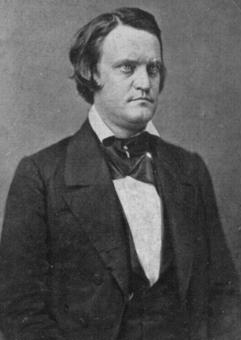
 John C. Breckinridge was the 14th Vice President, from 1857 to 1861 (serving under James Buchanan). Born in January 1821, he was the youngest vice president, taking office 47 days after his 36th birthday. In the election of 1860, Breckinridge was the presidential nominee of the Democratic party. He came in third in the popular vote in the severely divided country (he got about 18% of the vote), but second in the electoral college (which voted 180 for Abraham Lincoln, 72 for Breckinridge, 39 for John Bell, and 12 for Stephen Douglas). At the same time, his home state of Kentucky elected Brecknridge to the Senate. Breckinridge swore in his successor as vice president, Hannibal Hamlin, and then Hamlin turned around and swore in the new senators, including Breckinridge, on March 4, 1861. With the commencement of Civil War hostilities, Breckinridge—a southern sympathizer—returned home, and eventually joined the fighting on the Confederate side. The Senate declared him a traitor, and expelled him on December 4, 1861. In February 1865, Breckinridge was appointed the fifth, and last, Secretary of War of the Confederacy. The post was abolished in May 1865. After the war, Breckenridge went into exile in Europe and Canada, and returned to the US in 1869. He worked in insurance and as a lawyer, and died in 1875.

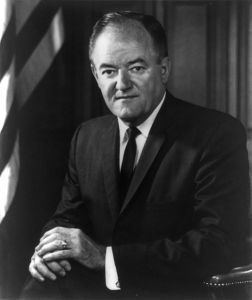 Hubert Humphrey was born in 1911 in South Dakota, but is remembered for his relationship with Minnesota. He represented Minnesota in the Senate from 1949 to 1964. In 1952, he vied for the Democratic presidential nomination, but lost out to Adlai Stevenson. In 1960, he tried again, and lost to John Kennedy. In 1956, Stevenson was the presidential nominee for the second time, but at the convention, he decided to create some excitement, and made a surprise announcement that the convention’s delegates would choose his running mate. This set off a one-day free-for-all scramble to win the nomination. The candidates included eventual nominee Senator Estes Kefauver, relative unknown freshman Massachusetts Senator John F. Kennedy (who came in a strong second), Tennessee Senator Albert Gore, Sr. (whose son and namesake would be Vice President under Bill Clinton), and Humphrey, who received 134 votes out of the 600-plus necessary to win the nomination. (That donnybrook was the last time any presidential or vice presidential nomination of either the Democratic or Republican parties, went past the first ballot.) After losing the 1960 nomination race, Humphrey thought he was unlikely to ever become President unless he served as Vice President first, as that, he felt, was the only path he could follow to raise the money and build the nationwide organization and visibility he would need to win the nomination. (Though, as we’ve seen, excepting succession upon death, the vice presidency is a far less certain path to the presidency than a seat in the Senate or a governorship.) So he angled for the vice presidency in 1964 with President Lyndon Johnson (who had no vice president because John Kennedy died in office, and the 25th Amendment hadn’t been adopted yet), was chosen, and won that election. Humphrey resigned from his Senate seat, and was replaced by Walter Mondale (who would serve as Vice President from 1977 to 1981). On March 31, 1968, a week before the Wisconsin primary, President Johnson surprised everyone when he announced he was not going to run for a second full term. Humphrey announced his candidacy on April 27, won the nomination, and went on to lose the election to Richard Nixon. In 1970, Senator Eugene McCarthy also made a surprise announcement, declining to seek re-election, and Humphrey, who hadn’t planned to return to politics, jumped into the race, won the nomination, and then was elected to the Senate. He again represented Minnesota in the Senate, from 1971 until his death in 1978 (his wife, Muriel, was appointed to his seat until a special election was held to replace him).
 Walter Mondale was born in Minnesota in 1928, and was appointed to the Senate when Humphrey resigned to become Vice President. Mondale kept the Senate seat until his own election as Vice President in 1976 on Jimmy Carter’s ticket. In 1980, Carter and Mondale lost to Ronald Reagan’s overwhelming election victory. In 1984, Mondale was the Democratic nominee for president (and the first major party nominee to choose a female running mate: New York Representative Geraldine Ferraro). Mondale lost to Reagan’s landslide re-election. Mondale then return to the practice of law. In 1993, President Bill Clinton appointed Mondale Ambassador to Japan (he served in that post until 1996). In 2002, Mondale stepped up to run for his old Senate seat as a last-minute replacement for Paul Wellstone, who had been killed in an airplane crash during the final two weeks of his re-election campaign. Mondale lost a close election to Saint Paul Mayor Norm Coleman. He is the oldest former Vice President, since George H.W. Bush’s death in 2018. The longest-lived Vice President was John Nance Garner, who died two weeks before his 99th birthday.
 James Danforth “Dan” Quayle was born in 1947 in Indiana, represented Indiana in the House of Representatives from 1977 to 1981, and in the Senate from 1981 until he was elected Vice President on George H.W. Bush’s ticket in 1988. Following their one term in the White House, Quayle opted out of running for the Republican nomination for President in 1996, but challenged George W. Bush for the nomination in 2000. He came in a distant eighth in the Ames Straw Poll of August 1999, and withdrew from the race in September. Dan Quayle lives in Arizona, and his son, Benjamin, represented Arizona in the House of Representatives from 2011 to 2013.
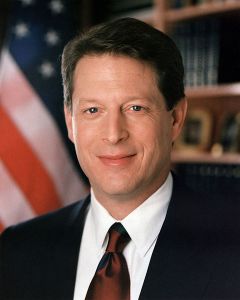 Al Gore is the only president or vice president to have been born in Washington, DC (in 1948). His father, Albert Gore, Sr., represented Tennessee in the House of Representatives (1939 to 1953) and the Senate (1953 to 1971). Al, Junior, represented Tennessee in the House of Representatives (1977 to 1985) and the Senate (1985 to 1993). In 1988, he ran for the presidential nomination, winning seven states and coming in third. In 1992, he was Bill Clinton’s running mate; at the ages of 45 and 44, they were the youngest presidential-vice presidential duo to be elected. In the election of 2000, Gore was the Democratic nominee for President, and won the popular vote by just over 500,000 votes (out of 105 million votes cast), but lost the Electoral College vote, 271-to-266 (with one abstention), to George W. Bush. Gore’s 266 electoral votes is the highest total for a losing candidate. Gore was the first person since Grover Cleveland in 1888 to win the popular vote but lose the Electoral College (Cleveland won in 1884 and 1892). The other two were Rutherford Hayes in 1876, and John Quincy Adams in 1824. Gore was also the the first major-party presidential candidate to lose his home state (Tennessee) since George McGovern lost South Dakota in 1972.
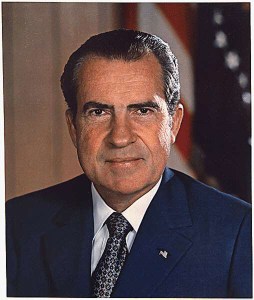 And then there was Richard Milhous Nixon. Born in 1913 in California, the second of five brothers, he graduated from Whittier College and Duke University School of Law. He practiced law in California, and met his wife, Pat, in a community theatre group. In 1942, the Nixons moved to Washington, DC, and Richard got a job in the Office of Price Administration, which he did not enjoy. Later in the year, he enlisted in the Navy as a lieutenant junior grade. He served in logistics and administration during World War II, and was discharged as a lieutenant commander in March 1946. After the war, he returned to California, and was elected to the House of Representatives in the election of 1946. He was re-elected in 1948, and then elected to the Senate in 1950. At the age of 39, the Republican party nominated Nixon for Vice President on Dwight Eisenhower’s ticket, and they won re-election in 1956. In 1960, Nixon ran (with Eisenhower’s tepid support) for the presidency against Massachusetts Senator John Kennedy. Kennedy won by fewer than 112,000 votes (out of 68.8 million), and won the electoral vote 303-to-219 (with 15 for Robert Byrd). In 1962, Nixon ran for the governorship of California against incumbent Pat Brown, but lost by 5%. In an impromptu concession speech the morning after the election, Nixon blamed the media, saying, “You won’t have Nixon to kick around anymore because, gentlemen, this is my last press conference.” In 1964, he supported Barry Goldwater’s losing campaign against Lyndon Johnson, and in 1966, he campaigned for many Republicans running for Congress. In late 1967, he decided to run for President again, won the Republican nomination of 1968, and ran against sitting Vice President Hubert Humphrey. He won the popular vote by 500,000 votes (0.7% in a three-way race, with George Wallace a distant third), and the electoral college 301–191–46. His 1972 re-election was one of the largest electoral landslides in American politics (he beat George McGovern in the popular vote count, 47.2 million to 29.2 million, 60.7 to 37.5%; and in the Electoral College, 520-to-17). Nixon resigned the presidency in August 1974, and died in 1993.
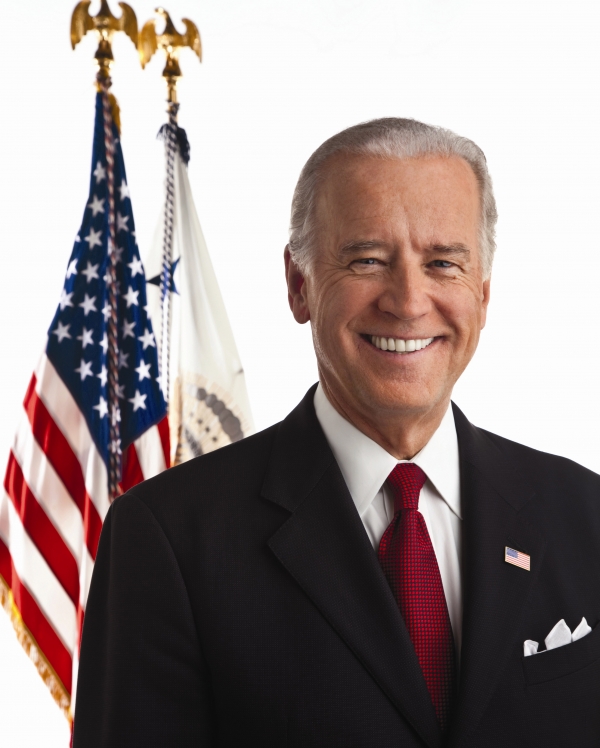
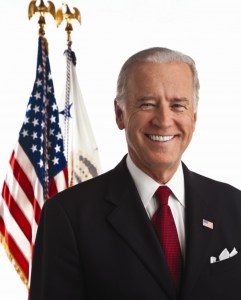 Which brings us to Joseph Robinette Biden, Junior. Born in Pennsylvania on November 20, 1942, he earned his law degree from Syracuse University in 1969, and started practicing in Delaware that same year. In 1970, he was elected to the New Castle County Council, and in 1972, before his 30th birthday, he was elected to the Senate. His birthday came before he took his seat, and he became the sixth youngest US Senator ever. On December 18, 1972, his wife and daughter were killed in a car crash (his two sons were injured), and he considered resigning from the Senate to care for his sons, but Senate Majority Leader Mike Mansfield convinced him not to. Biden served in the Senate from 1973 until 2009. He sought the Democratic nomination for president in both 1988 and 2008. In 2008, Barack Obama won the nomination, and chose Biden as his running mate. In 2015, following the death of his son, Biden opted to not seek the presidential nomination. But in 2019, he chose to run for the third time, and is now poised to run for the presidency.
