I was listening to a conversation between my mother and my niece. My mother was trying to be a teacher, while my niece was trying to be obstinate. I don’t think either one came away from the conversation satisfied.
During their conversation, my mother used the proverb “Give a man a fish and you feed him for a day; teach a man to fish and you feed him for a lifetime.” It got me thinking and wondering: would the proverb have nearly as much currency if the noun for the creature and the verb for acquiring the creature were different words? For instance, if it was “give a man a chicken…” or “give a man a vegetable…”? Or if the verb were “reel” or “cast”?
I’m not questioning the concept, but wondering if anyone would ever think or say it if the word fish weren’t both a noun and the verb one uses to acquire the noun.
“(G)et rid of the ballots and you’ll have a very … there won’t be a transfer, frankly. There’ll be a continuation.” —Donald Trump, announcing the end of American democracy on September 23, 2020.
If there were no ballots, we wouldn’t have to worry about a transfer of power, because we wouldn’t be changing presidents. We wouldn’t be voting, apparently in Donald Trump’s America, ever again. That is an incredibly clear statement of how little he values the Constitution he laughingly swore to “preserve, protect, and defend.” Donald Trump is a clear and present danger to the United States of America. He is forcing me to vote a straight Democratic ticket for the first time in my life. I urge you to do the same, to protect our Constitution, our system of government, our way of life.
On Tuesday, September 29, the two oldest people ever are going to square off in a debate as candidates for President of the United States of American.
Donald Trump
Before Donald Trump, Ronald Reagan was the only person to pass his 70th birthday before being inaugurated as president, and at that, it was Reagan’s re-election (he first took office 17 days before his 70th birthday, in 1981). But now, we’re looking at an election in which whoever wins (ignoring the chance of a third-party candidate winning),
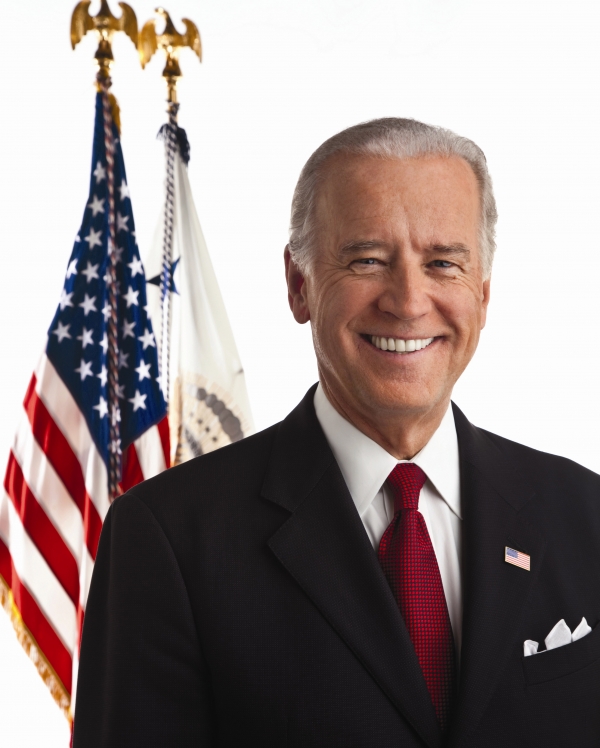
Joe Biden
we’ll be inaugurating the oldest person ever to take the oath of office. On Inauguration Day 2021, Donald Trump will be 74 years 220 days old. That same day, Joe Biden will be 78 years 61 days old. And yes, Reagan is—at the moment—still the oldest president ever, having retired at the age of 77 years 348 days.
Hillary Clinton
And the combined ages of the major party candidates so far outstrips any other election that it’s truly remarkable. Before 2020, the oldest combined ages of a two-candidate race was… well, in 2016, when 70-year-old Donald Trump defeated 69-year-old Hillary Clinton. But before that, we have to go back to 1984, when 73-year-old Reagan defeated 57-year-old Walter Mondale, and 1848, when 64-year-old Zachary Taylor (who died in office) defeated 66-year-old Lewis Cass.
John McCain
In fact, the only candidates who’ve run for the presidency in their seventies were Trump, Reagan, Bob Dole (who lost the election of 1996 at the age of 73), and John McCain (who lost the election of 2008 at the age of 72). That’s it. Out of 57 elections, more than 75 major party candidates, and only four (now five) candidates more than 70 years old.
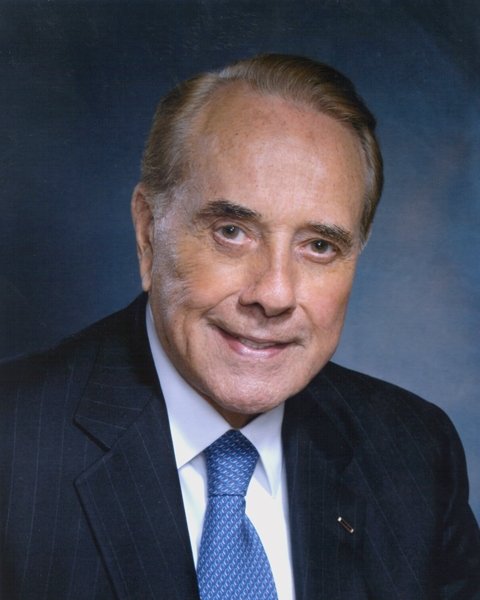
Bob Dole
At the other end of the scale, everyone remembers that John Kennedy was the youngest president to be elected (he took office at the age of 43 in 1960), and all you trivia mavens also remember to correct that record, because Theodore Roosevelt succeeded to the presidency at the age of 42, upon William McKinley’s death in 1901.
William Jennings Bryan
But how many of you remember that the youngest major party candidate was actually 36 years old? Had William Jennings Bryan won the election of 1896 (the first of three in which he was the Democratic nominee), he would have taken office 15 days before his 37th birthday (he was born March 19, 1860). Instead, he lost to William McKinley, who was born January 29, 1843, and took office 34 days after his 54th birthday. (McKinley won the popular vote, 51.0% to 46.7%, and the electoral vote, 271 to 176.) So the election of 1896 was the youngest campaign in history. Bryan went on to run again in 1900, again losing to McKinley, and then suffering a further defeat, against William Howard Taft in 1908. Bryan died at the age of 65, in 1925.
George B. McClellan
The second youngest candidate was West Point graduate George B. McClellan, who was the commanding general of the Union Army early in the Civil War, and governor of New Jersey from 1878 to 1881. But when he lost to Abraham Lincoln’s re-election campaign of 1864, he was only 38 years old (he was born December 3, 1826). McClellan died at the age of 58, in late 1885.
The youngest campaigns were the elections of 1896, 1960, and 1860. In 1896, as I said, 54-year-old William McKinley defeated 36-year-old William Jennings Bryan. In 1960, it was the youngster John Kennedy defeating Vice President Richard Nixon, who was four years older than Kennedy.
On March 4, 1861 (Inauguration Day was March 4th, until the 20th Amendment changed it to January 20th, effective in 1937), Abraham Lincoln was 22 days past his 52nd birthday. In the election of 1860, he had defeated Vice President John C. Breckinridge (and also 64-year-old John Bell and 47-year-old Stephen Douglas—all four received electoral votes).
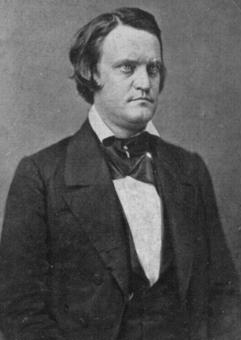
John Cabell Breckinridge
Breckinridge accomplished a great deal very early in life. Born January 16, 1821, he represented Kentucky in the House of Representatives from 1851 to 1855. In 1855, President Franklin Pierce appointed Breckinridge US Minister to Spain (and the Senate confirmed him), but he declined the appointment, and returned home to resume his law practice. In 1856, he was elected the youngest Vice President in US history, on James Buchanan’s ticket (he took office just after his 36th birthday). He lost the election of 1860 to Lincoln, but was elected to the Senate at the same time. He took his seat on March 4, 1861, but that summer, Kentucky seceded from the Union, and Breckinridge went with it. He was declared a traitor and expelled from the Senate on December 4, 1861. He served as a general in the Confederate army, and was the fifth (and final) Secretary of War of the Confederacy for a few months in 1865. After the war, he went into exile in Europe and Canada, and returned home in 1869, following President Johnson’s proclamation of amnesty. He died May 17, 1875.
Richard Nixon
The second youngest vice president to take office was Richard Nixon (he celebrated his 40th birthday 11 days before taking the oath of office). After serving two terms as Dwight Eisenhower’s vice president, Nixon lost the very close presidential election to John Kennedy in 1960, and then became the only former vice president to be elected president in 1968 (and the only president to resign, in 1974).
The Five Oldest Presidents
Considered by age at inauguration, the list runs as follows:
1. Donald Trump was 70 years 220 days old when he was inaugurated on January 20, 2017. If Joe Biden wins this year’s election, he will break that record at the age of 78 years 61 days.
2. Ronald Reagan was 17 days shy of his 70th birthday when he was inaugurated on January 20, 1989, and 17 days shy of his 78th birthday when he retired eight years later.
3. William Henry Harrison was 68 years 23 days old when he was inaugurated on March 4, 1841. The president who served the shortest term (31 days), he was the first to die in office, so he was only 68 years 54 days old when he left office.
4. James Buchanan was 65 years 315 days old when he was inaugurated in 1857, and 69 years 315 days old when he retired from office.
5. George H.W. Bush was 64 years 222 days old when he succeeded Reagan, in 1989, and 68 years 222 days old when he left office.
Considering age at the time the President left office, Dwight David Eisenhower moves into third place. He was only 62 years 98 days old when he was inaugurated in 1953, putting him seventh on the list, but serving two full terms (he and Reagan are the only two on this list to have served eight years as president), he was 70 years 98 days old when he retired.
The Five Youngest Presidents:
Article II, Section 1 of the Constitution requires a president to be at least 35 years old.
1. Theodore Roosevelt. Born on October 27, 1858, he was 42 years 322 days old when he was inaugurated on September 14, 1901, after William McKinley was assassinated. To beat Roosevelt’s record as the youngest president in the election of 2024, the newly elected president will have to have been born after March 4, 1982.
2. John F. Kennedy. Born on May 29, 1917, he was 43 years 236 days old when he took the oath of office on January 20, 1961, after winning the election of 1960. To beat Kennedy’s record as the youngest president elected, the winner of the election of 2008 will have to have been born after May 29, 1981.
3. Bill Clinton. Born on August 19, 1946, he was 46 years 154 days old when he was inaugurated on January 20, 1993.
4. Ulysses S. Grant. Born on April 27, 1822, he was 46 years 311 days old when he was inaugurated on March 4, 1869.
5. Barack Obama. Born August 4, 1961, he was 47 years 169 days old when he was inaugurated on January 20, 2009.
In order to join this list (and knock Obama off), the president who wins the election of 2024 will have to have been born after August 4, 1977.
Tip Jar
If you found this article interesting, gratuities are very much appreciated.
In the days of LiveJournal, it was “three things make a blog post.” Well, today it was more than three, but it was very productive science fictionally, and felt quite good.
First, there was a productive session of editing a novel Fantastic Books will soon be publishing.
Then I took a very nice walk in the woods. Found an interesting group of green acorns on a fallen piece of branch, and saw a rabbit on the way back.
Then I looked at my email, and found a contract! It’s a story the editor had told me he was buying three months ago, but it didn’t feel “official.” Now, reading the contract, it feels much better, almost official. My next appearance in Analog will be a short-short story called “On the Rocks”!
Then I checked the other email account, and found two messages. One, telling me the panel I’d recorded for ConTinual way back when will finally be posted tomorrow morning, about 9:30. You can access ConTinual at Facebook.com/groups/ConTinual, and I’ll add in a link to the panel when it’s available. The panel was about the enduring and growing legacy of “The Eye of Argon,” with Keith R.A. DeCandido, Hildy Silverman, and Michael A. Ventrella. [Edited: here’s the link for the Facebook-hosted video: https://www.facebook.com/groups/ConTinual/permalink/690968394849069/ ]
The other message gave me my schedule for virtual Capclave (online on October 17). At 3:00pm Eastern time, I’ll be talking about “Writing Time Travel and Paradoxes” with Iver P. Cooper, A.T. Greenblatt, and James Morrow. And then, at 4:30, it will be “Centennial Superstars” with Walter H. Hunt and Barbara Krasnoff.
So, yes, it was a pretty good day.
P.S. – I still hate this new “blocks” editor for blog posts. I’ve read several articles, but still can’t figure out how to put the image in a paragraph of text and run the text around it (like I used to be able to). Instead (as you can see above), all I’ve been able to figure out is to post the picture as its own paragraph (“block”), which is just ugly.
We all strive for the big happinesses in life—winning awards, achieving financial success, finding mutual lust—but the little ones are no less sweet, though they are much easier to come by. There are a lot of little things which bring me joy that I rarely think about when I’m not actually experiencing them in the moment:
Going back to bed for another hour.
Using my back scratcher to get just the right spot.
That moment when I’m mixing the dough, and it suddenly turns from a variegated pile of ingredients—a lump of this, a splash of that—into a smooth, homogenous mixture that’s all the same color and texture, just like I need it to be.
When the swimming pool is precisely the right temperature.
Taking an extra little slice of pie, an extra cookie, or a just little bit more dessert.
Lying down in bed, and pulling the top sheet over me, and it billows and slowly settles onto me, lightly touching me here and then there…
Sneezing.
The last hiccup (if only I knew it was going to be the last).
When I go outside in the morning, and I look down the sidewalk, and my vision (even though I wear glasses) is absolutely, totally sharp and clear. I feel like I can see forever: every individual leaf on each tree, separate blades of grass, all the way down past the intersection, and past the next intersection… the most perfect vision possible, it almost feels hyper-real, and I don’t want to blink because then my vision will go back to normal.
A nice, cleansing rain, and the smell of petrichor.
Learning a nifty new word, like petrichor.
When I wear shorts and no shoes, it’s normal. When I wear pants and socks and shoes, that, too, is an unremarkable feeling. But there’s an uncommon feeling of comfort, of being at home and relaxed, when I wear long pants and no socks or shoes, like if my socks got wet, so I took them off.
Wearing that super comfortable sweater or sweatshirt the first day it really feels like autumn.
Arriving precisely on time without really trying.
Seeing a few dollars in the tip jar at the end of the day.
So, what surprising little things bring you that frisson of joy?
Tip Jar
If you found this article interesting, gratuities are very much appreciated.
The last few days, I’ve spent working at the computer inside until about 5:00pm, when the sun dips far enough that the place where I sit outside to carve is no longer in direct sunlight. Then I go outside and carve for a while (it’s relaxing; using the hands instead of the brain, and being creative). Today, after two straight hours of Zooming, I realized the back of the deck was already in shadow, and it’s a very nice day, so I dragged the computer outside to surf and work. Now it’s 6:30, and I’ve just realized I didn’t do any carving. So, a nice day outside, but because I was outside, I didn’t think to come outside. <moue of irony>
I had the television on in the background while I was working today, and eventually realized I was listening to CNN talking about the article in The Atlantic which claims President Donald Trump said nasty things about American soldiers. They spent half an hour talking about it. Half an hour wasting their time and efforts, talking about something absolutely meaningless. Then I heard similar discussions on other news programs, read headlines pointing to several articles on line, and even my mother mentioned it to me on the phone.
If he said those things the article claims, no one’s opinion of him is going to change. No staunch Trump supporter is going to read that and say “Oh, well, that changed my mind. I can’t support him.” Neither will it change the mind of anyone who disagrees with him. And it’s doubtful such a comment—reportedly from an anonymous source—will have any effect on those who are undecided.
But what all that half hour of talk, all those articles, Joe Biden’s commentary in today’s speech, as well as every other pundit talking about it… what all of that did was make the Trump re-election campaign chortle with glee. Now, all they have to do is say “no, he didn’t say that.” They don’t have to say anything about what Donald Trump is actually doing, don’t have to talk about the fact that he is not only a bad president, but is actually malfeasant in office. They don’t have to talk about the fact that rather than uniting the United States of America, he is actively trying to divide us. They don’t have to talk about the fact that rather than leading the drive to minimize the damage of the pandemic, he’s leading the drive to ignore it and let it run rampant. Heck, they don’t have to do anything positive for as long as this distracting story lasts.
It’s part of an ongoing theme, Donald Trump’s entire presidential strategy: “What can I do to distract people from reality, so they’ll waste all their time and effort on irrelevancies?” It’s just the latest irrelevancy.
I can’t really fault the news media: their job is to sell advertising, and they do it by attracting viewers and readers. And we are weak-willed enough to truly lap up this nonsense, each time it appears.
But we, the consumers, the citizens, the people who truly matter in this country: we are failing. We are failing by allowing ourselves to be distracted by this nonsense. I came to this realization, and I turned the channel. I didn’t bother reading those news articles. I tried to point out this campaign of diversion to my mother.
Donald Trump babbles. He talks and talks, throwing out whatever nonsense he can in a never-ending attempt to distract and appall his viewers. The more appalled we are, the more we’ll watch. And the more distracted we are, the less we’ll pay attention to the things that matter.
What matters? Treating each other with dignity, the way we wanted to be treated.
What matters? Working together to keep each other safe from a deadly virus, while our scientists work to find a cure and a vaccine.
What matters? Treating the environment with the same dignity with which we should treat each other, so that our children have a healthy world in which to live.
What doesn’t matter? Whether or not Donald Trump said something that insulted some people. Take it as a given: he insults people. How many other adults continue to use insulting nicknames for people they don’t like, after they leave high school?
What matters? Voting in this year’s election. Not just for president, but also for Congress.
I’m not a big fan of Joe Biden, but you can bet your ass I’m going to vote for him. Because I think he understands what it truly means to be the President of the United States of America, rather than Donald Trump’s position as president of doing whatever he wants for the people he likes and flipping off everyone else.
I live in New York’s ninth Congressional district, so my vote matters not at all. The straight Democratic ticket is going to take far more than 50% of the votes in this district. The votes that matter are the votes of the people who live in Florida, in Pennsylvania, in Ohio, Virginia, Minnesota, Michigan, North Carolina, Wisconsin… Are you one of those voters? Seriously consider your options. Do you know someone who lives in one of those states? Tell them why their vote is important.
But stop falling for the sleight-of-hand that is Donald Trump’s way of life. Stop being distracted by his theatre meant to grab your attention. Instead, keep your attention where it needs to be: on his never-ending campaign to divide and conquer his own country, his never-ending campaign to enrich himself and his friends, his blatant incompetence, and his villainy in the face of a major crisis that would have caused any other president to rise to the challenge.
Random memory while opening a can of tuna for dinner (I just did not feel like cooking):
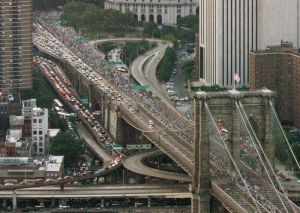
During the blackout of 2003, I walked from my office on Wall Street, over the Brooklyn Bridge (don’t think you can see me in this picture), through Brooklyn, along Flatbush Avenue past the zoo (where a couple of volunteers had a hose out through the gates to the sidewalk, refilling water bottles for those of us walking by), and along Ocean Avenue. It took just over five hours. I got to the apartment building about an hour after sunset, just after full dark.
Walked up to the third floor apartment, I took a shower in the dark, and then went into the kitchen. I opened a can of tuna, and ate it straight from the can, standing in the kitchen.
Then it was a long night of trying to make contact with the family (fortunately, we had a rotary phone plugged directly into a wall jack—in this era of all digital, internet-based telephony, I doubt there would have been any contact), trying to figure out what happened, sleeping with the windows open, and then spending a fairly lazy day (until the power came back).
Tonight’s can of tuna was significantly different. I paired it with the left-over vegetables from last night, microwaved, and followed it up with a piece of the pie I made yesterday (after a day in the refrigerator, the formerly crumbly crust has stiffened up a bit to flaky, which is good). And now I’m sitting here comfortably with the lights on. Though once again, I’m here alone.
Ah, differences… and memories.
Tip Jar
If you found this article interesting, gratuities are very much appreciated.
During the era of Covid-19, I haven’t announced many new book publications, because the bulk of Fantastic Books‘s publicity engine runs through in-person science fiction conventions (where we also make a significant percentage of our sales), so I’ve taken the company into semi-hibernation: still doing business, but cutting back to maintain the company’s health.
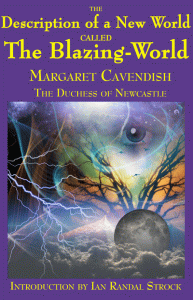
But now, as the pandemic drags on, I’m looking for ways to get the business going again in this new (and hopefully temporary) world. We’ve got a couple of reprint novels lined up, and I’m planning how to release a couple of original titles that I put on hold back in March. Today, I’m pleased to announce our republication of Margaret Cavendish’s classic novel The Description of a New World called The Blazing-World. This proto-science fiction novel—by one of the first female authors to write under her own name—is set in a utopian world. The Blazing-World is parallel to the Earth we know, entered via a passage at the North Pole. The story tells of the invasion of our world led by the empress of the Blazing-World, a refugee from our own.
Originally published in 1666, Fantastic Books’s 2020 edition includes an introduction by, well, me. Check it out!








 During the blackout of 2003, I walked from my office on Wall Street, over the Brooklyn Bridge (don’t think you can see me in this picture), through Brooklyn, along Flatbush Avenue past the zoo (where a couple of volunteers had a hose out through the gates to the sidewalk, refilling water bottles for those of us walking by), and along Ocean Avenue. It took just over five hours. I got to the apartment building about an hour after sunset, just after full dark.
 During the era of Covid-19, I haven’t announced many new book publications, because the bulk of
  Ian Randal Strock