Tough Trivia, 5/26/21

Today’s Tough Trivia question: Scales: fish wear them for protection, humans step on them to fret about their diets. We love to measure, rank, and grade things. Your question for today: what do we measure with the following scales: Fujita, Mohs, Richter, Scoville. Bonus points if you know what measures on those scales are for the least intense, and for the most.

***

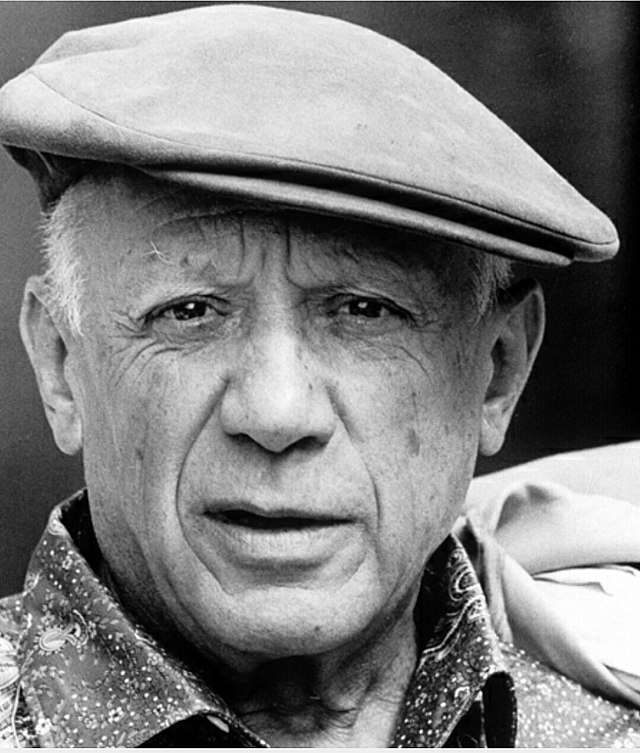
640px-Pablo_picasso_1
Pablo Picasso in 1962.

Yesterday’s question was: More so than most artists, Spanish artist Pablo Picasso’s (1881–1973) paintings are frequently categorized by period, during which the paintings bear striking similarities. How many of those periods can you name? Bonus point if you can name them in order.

And the answer is:

Blue Period: 1901–04
Rose Period: 1904–06
African-influenced Period: 1907–09
Analytic Cubism: 1909–12
Synthetic Cubism: 1912–19
For the next decade, most of his work is considered necoclassical and Surreal. His later work amalgamated his earlier styles.

***

Ian’s Tough Trivia is a daily feature of this blog (Monday’s category is History; Tuesday is Arts; Wednesday is Science; Thursday is Entertainment; and Friday is Grab Bag). Each day, I post a tough question, as well as the answer to the previous day’s question. Simply comment on this post with your answer. I’ll approve the comments after the next question is posted. Sure, you can probably find the answers by searching the web, but what’s the fun in that?

And if you’ve got a favorite trivia question—or even just a topic for which you’d like to see a question—let me know! Reader participation is warmly encouraged.

On Samuel R. Delany’s Dhalgren

A press release from Fantastic Books:

perf6.000x9.000.inddFantastic Books is honored to be publishing On Samuel R. Delany’s Dhalgren, edited by Bill Wood, put together with a great deal of assistance from Delany himself.

Samuel R. Delany is the winner of two Hugos and four Nebula Awards. He has been honored with lifetime achievement awards, including SFWA’s Grand Master, the Eaton Award, the Lambda Pilgrim Award, and the Gaylactic Spectrum Award, and was inducted into the Science Fiction Hall of Fame. Dhalgren, his most popular and most controversial novel, was first published in 1975. It was nominated for the Nebula Award, remains in print to this day, and has sold close to two million copies in a variety of editions.

This book—full of reviews, critical essays, and in-depth analyses of Dhalgren as a novel, and as commentary on life and the world—is an excellent companion to the novel itself. There are also discussions of how to read the novel, and clues to unraveling some of the mysteries hidden therein. Dhalgren is a difficult novel to read—playing with the reader’s perception through the use of circular text, interior echoes, multistable perception, and repeated imagery—but it is a worthwhile read. The book includes nine full-color illustrations (and more spot black-and-white illos), as well as an essay on “The Making of Hogg,” Delany’s infamous and nearly unpublishable novel.

Contributing authors include Douglas Barbour, Mary Kay Bray, Rudi Dornemann, Harlan Ellison, Robert Elliot Fox, Jean Marc Gawron, Kenneth R. James, Gerald Jonas, John Nizalowski, Steven Paley, Darrell Schweitzer, Steven Shaviro, K. Leslie Steiner, Theodore Sturgeon, and, of course, Samuel R. Delany himself.

Fantastic Books will publish On Samuel R. Delany’s Dhalgren on September 9, 2021, in simultaneous trade paperback and case laminate hardcover editions.

Trade Paperback
ISBN 978-1-5154-2419-2
272 pages, $21.99

Case Laminate Hardcover
ISBN 978-1-5154-4772-6
272 pages, $31.99

On Samuel R. Delany’s Dhalgren—and all Fantastic Books publications—are distributed through Ingram, and available through all major online retailers and specialty sf shops via direct order from the publisher.

Contents:
“Only One Hundred Years Till Death of Harlow!” by Steven Paley
“S. F.” by Gerald Jonas
“Breakdown of a Breakthrough Novel” by Harlan Ellison
“Galaxy Bookshelf” by Theodore Sturgeon
“The Autumnal City” by Douglas Barbour
“Dully Grinning Delany Descends to Disaster” by Darrell Schweitzer
“Words: And Now Tomorrow” by Gerald Jonas
“Now Read This” by John Nizalowski
“Dhalgren” by Rudi Dornemann
“Of Sex, Objects, Signs, Systems, Sales, Sf, And Other Things” by Samuel R. Delany
“Some Remarks Toward A Reading of Dhalgren” by K. Leslie Steiner
“From ‘The Semiology of Silence,’ an interview with Samuel R. Delany”
“Looking Back at the Autumnal City” by Samuel R. Delany
“The Instruction Manual” by John Ashbery
“Amnesia” by Steven Shaviro
“An ‘Introduction’” by Jean Marc Gawron
“Rites of Reversal: Double Consciousness in Delany’s Dhalgren” by Mary Kay Bray
“This You-Shaped Hole of Insight and Fire” by Robert Elliot Fox
“Subverted Equations G. Spencer Brown’s Laws of Form and Samuel R. Delany’s
Analytics of Attention” by Kenneth R. James
“The Making of Hogg

Tough Trivia, 5/25/21

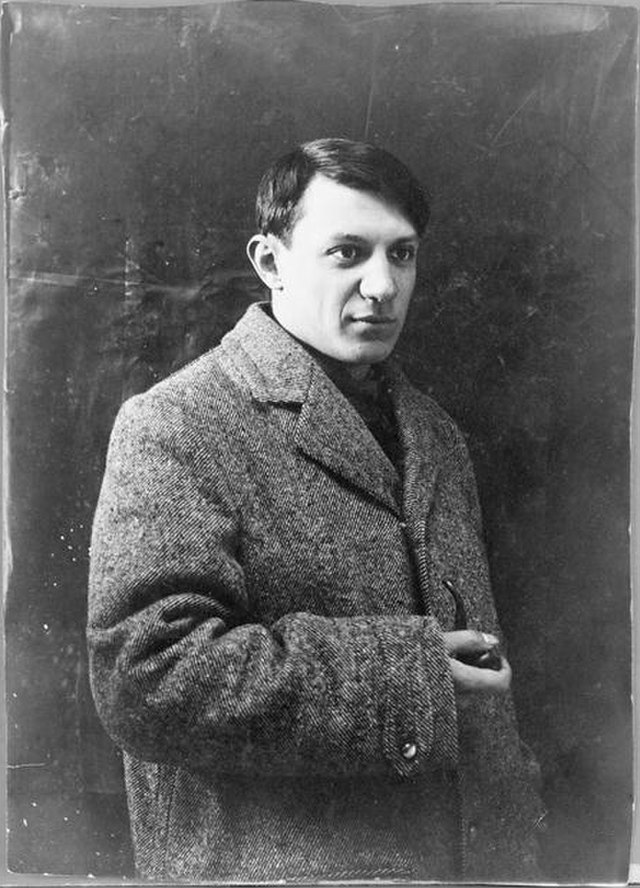
640px-Portrait_de_Picasso,_1908
Pablo Picasso in 1908.

Today’s Tough Trivia question: More so than most artists, Spanish artist Pablo Picasso’s (1881–1973) paintings are frequently categorized by period, during which the paintings bear striking similarities. How many of those periods can you name? Bonus point if you can name them in order.

***

Yesterday’s question was: They’re not twins, but each of these political figures was born the same day as another famous person. I’ll give you the politician and a hint, you give me the other person who shares the birth day. And as another hint, I’ll list them in chronological order (bonus points if you know the actual day in each case).

Abraham Lincoln and which controversial scientist were born the same day?
Jimmy Carter and which Supreme Court justice?
Margaret Thatcher and which controversial comedian?
Lee Harvey Oswald and which famous football coach?
Joe Biden and which “spiritual” singer?
Newt Gingrich and which singer/songwriter?
George W. Bush and which action actor?
Al Gore and which Cheers actress?
Michelle Obama and which Game of Thrones actress?
Angela Merkel and which science fictional television creator?

The answers are:

Abraham Lincoln and Charles Darwin — February 12, 1809
Lee Harvey Oswald and Mike Ditka — October 18, 1939
Michelle Obama and Michelle Fairley — January 17, 1964
Al Gore and Rhea Perlman — March 31, 1948
Margaret Thatcher and Lenny Bruce — October 13, 1925
Newt Gingrich and Barry Manilow — June 17, 1943
Jimmy Carter and William Rehnquist — October 1, 1924
George W. Bush and Sylvester Stallone — July 6, 1946
Joe Biden and Norman Greenbaum — November 20, 1942
Angela Merkel and J. Michael Straczynski — July 17, 1954

***

Ian’s Tough Trivia is a daily feature of this blog (Monday’s category is History; Tuesday is Arts; Wednesday is Science; Thursday is Entertainment; and Friday is Grab Bag). Each day, I post a tough question, as well as the answer to the previous day’s question. Simply comment on this post with your answer. I’ll approve the comments after the next question is posted. Sure, you can probably find the answers by searching the web, but what’s the fun in that?

And if you’ve got a favorite trivia question—or even just a topic for which you’d like to see a question—let me know! Reader participation is warmly encouraged.

Tough Trivia, 5/24/21

Sorry for the posting delay today: we had internet access troubles.

Today’s Tough Trivia question: They’re not twins, but each of these political figures was born the same day as another famous person. I’ll give you the politician and a hint, you give me the other person who shares the birth day. And as another hint, I’ll list them in chronological order (bonus points if you know the actual day in each case).
Abraham Lincoln and which controversial scientist were born the same day?
Jimmy Carter and which Supreme Court justice?
Margaret Thatcher and which controversial comedian?
Lee Harvey Oswald and which famous football coach?
Joe Biden and which “spiritual” singer?
Newt Gingrich and which singer/songwriter?
George W. Bush and which action actor?
Al Gore and which Cheers actress?
Michelle Obama and which Game of Thrones actress?
Angela Merkel and which science fictional television creator?

***

Friday’s question was: A friend in my Facebook presidential trivia group said something today, one of those things I knew but never thought about, that made me say “Wow!”: When did the last Democratic president die? Do you know?

That’s not today’s question, it just made me decide that today is a presidential trivia question. Can you rank the political parties in order of the number of presidents they claimed? Here’s a hint: there are more than two.

The answer is:

Republican: 19 (Lincoln’s first term, Grant, Hayes, Garfield, Arthur, Benjamin Harrison, McKinley, Theodore Roosevelt, Taft, Harding, Coolidge, Hoover, Eisenhower, Nixon, Ford, Reagan, George H.W. Bush, George W. Bush, Trump)

Democrat: 15 (Jackson, Van Buren, Polk, Pierce, Buchanan, Cleveland, Wilson, Franklin Delano Roosevelt, Truman, Kennedy, Lyndon Johnson, Carter, Clinton, Obama, Biden)

Democrat-Republican: 4 (Jefferson, Madison, Monroe, and John Quincy Adams)

Whig: 4 (William Henry Harrison, Tyler, Taylor, and Fillmore). An interesting fact about the Whigs: they won two elections, both of those presidents died in office, and neither of their successors was elected a presidential term of his own. All four Whig president served within a span of 12 years.

National Union: 2 (Lincoln’s second term and Andrew Johnson)

Federalist/No Party: 2 (Washington and John Adams)

Oh, and the answer to that “Wow” moment? Lyndon Baines Johnson, who was president from 1963 to 1969, died on January 23, 1973. He was the most recent Democratic president to die. Incidentally, the year and a half from his death until Richard Nixon’s resignation marked the last time in history when there was only one living president.

***

Ian’s Tough Trivia is a daily feature of this blog (Monday’s category is History; Tuesday is Arts; Wednesday is Science; Thursday is Entertainment; and Friday is Grab Bag). Each day, I post a tough question, as well as the answer to the previous day’s question. Simply comment on this post with your answer. I’ll approve the comments after the next question is posted. Sure, you can probably find the answers by searching the web, but what’s the fun in that?

And if you’ve got a favorite trivia question—or even just a topic for which you’d like to see a question—let me know! Reader participation is warmly encouraged.

I’m embarrassed by MTG, and I don’t even live in her district

Listening to the latest proof that Marjorie Taylor Greene is unfit for office, I’m also hearing half of Congress being upset, and all sorts of pundits opining on her. But the one thing I’m not hearing—the thing I want to hear—is the reaction of the people in Georgia’s 14th Congressional district. Those 732,000 people are the ones who gave her this seat in Congress (229,000 of them actually voted for her). Does she speak for them? Is she representing their views when she says these ignorant, inflammatory things? Should I be fearful if I have to travel to that district in northwest Georgia?

We can be outraged all we want, we can call on the other members of the House of Representatives to “do something.” But if she really is representing the views of her constituents, we don’t need to silence her: we need to send educators to that district. We need to teach away the ignorance and stupidity, because she’s just a symptom.

And if her words do not represent the opinions of her constituents, well, what the heck are they doing? If it was my Representative spouting such nonsense, I’d be sitting in her office, demanding that she justify her very existence, and making sure the world knew she didn’t speak for me.

Tough Trivia, 5/21/21

A friend in my Facebook presidential trivia group said something today, one of those things I knew but never thought about, that made me say “Wow!”: When did the last Democratic president die? Do you know?

That’s not today’s question, it just made me decide that today is a presidential trivia question. Can you rank the political parties by order of the number of presidents they claimed? Here’s a hint: there are more than two.

***

Academy_Award_trophyYesterday’s question was: The entertainment industry gives a slew of awards. We have the Oscar and the Emmy for movies and television, the Tony for stage plays, the Grammy for music, the Hugo, Edgar, and Pulitzer for literature, and scores more. Do you know who (or what) those seven are named for? And which organizations, specifically, do the awarding? How about when they were first awarded?

The answers are:

Oscar: more properly known as the Academy Award of Merit, the Academy of Motion Picture Arts and Sciences began handing them out in 1929. The Academy officially adopted the nickname “Oscar” in 1939, though its origin is disputed. Claims of its origin include then-president of the Academy Bette Davis naming it after her husband, band leader Harmon Oscar Nelson. Another story claims that Academy executive secretary Margaret Herrick said it reminded her of her Uncle Oscar (Oscar Pierce).

statuettes-Emmy-AwardEmmy: The Emmy Award is presented by three related organizations: the Academy of Television Arts and Sciences, the National Academy of Television Arts and Sciences, and the International Academy of Television Arts and Sciences. They were first awarded in 1949. The name is a derivation of the word “immy,” itself a nickname for the image orthicon tube, which was a key piece of television cameras from the 1940s until the 1960s.

b_Tony_Statuette_horiz.2e16d0ba.fill-1200x800Tony: More formally known as the Antoinette Perry Awards for Excellence in Broadway Theatre, they are presented by the American Theatre Wing and the Broadway League, and have been since 1947. The awards were founded by producer and director Brock Pemberton (1885–1950) and named for Mary Antoinette “Tony” Perry (1888–1946), who was an actress, director, and co-founder of the American Theatre Wing.

grammyGrammy: Originally called the Gramophone Award (named for the early record player which the award trophy depicts), they have been presented by the Recording Academy since 1959.

hugo_smHugo: Originally and more formally known as the Science Fiction Achievement Awards (in the early 1990s, they dropped the longer title), they are awarded by vote of the members (attendees) of the World Science Fiction Convention. They were first handed out in 1953, and then every year since 1955. Their namesake, Hugo Gernsback (1884–1967), was born as Hugo Gernsbacher in Luxembourg City, Luxembourg. He emigrated to the United States in 1904, and founded the first science fiction magazine, Amazing Stories, in 1926.

edgarEdgar: More formally known as the Edgar Allan Poe Awards, they were named after the American writer (1809–1849), and have been awarded by the members of the Mystery Writers of America since 1946.

pulitzerPulitzer: The Pulitzer Prize was established in 1917 under the provisions of Joseph Pulitzer’s will. Pulitzer (1847–1911) was born in Hungary, and immigrated to the US in 1864. He is best remembered as the publisher of the St. Louis Post-Dispatch and the New York World. He also served two brief terms in the House of Representatives. The Pulitzer Prizes (for journalism, literature, and musical composition) are administered by Columbia University.

***

Ian’s Tough Trivia is a daily feature of this blog (Monday’s category is History; Tuesday is Arts; Wednesday is Science; Thursday is Entertainment; and Friday is Grab Bag). Each day, I post a tough question, as well as the answer to the previous day’s question. Simply comment on this post with your answer. I’ll approve the comments after the next question is posted. Sure, you can probably find the answers by searching the web, but what’s the fun in that?

And if you’ve got a favorite trivia question—or even just a topic for which you’d like to see a question—let me know! Reader participation is warmly encouraged.

Financial support in the form of tips is very much appreciated: paypal.me/ianrandalstrock

Tough Trivia, 5/20/21

Today’s Tough trivia question has to do with the worlds of Entertainment: The entertainment industry gives a slew of awards. We have the Oscar and the Emmy for movies and television, the Tony for stage plays, the Grammy for music, the Hugo, Edgar, and Pulitzer for literature, and scores more. Do you know who (or what) those seven are named for? And which organizations, specifically, do the awarding? How about when they were first awarded?

***

400px-Saturn_V_launches
Photos of all 13 Saturn V launches.

Yesterday’s question was: The Saturn V rocket stack was the super heavy-lift launch vehicle that took the US manned space program to the Moon. It was—and remains—the tallest, heaviest, and most powerful rocket brought to operational status. It holds the records for the heaviest payload launched and largest payload capacity to low Earth orbit (310,000 pounds). It is also, still, the only launch vehicle to carry humans beyond low Earth orbit. Fifteen were built, but only thirteen were flown, all launching from Kennedy Space Center, in Florida, between November 9, 1967 (the uncrewed Apollo 4) and May 14, 1973 (Skylab). Do you know how tall it was? How heavy? And what percentage of the stack actually returned to Earth from the Apollo missions to the Moon?

The answer is:

The full Saturn V stack was 363 feet tall, and massed between 6,221,000 and 6,540,000 pounds (depending on the mission), with a maximum diameter (at the bottom) of 33 feet.

The Command Module was the only piece of the entire stack that returned to Earth. The three propulsion stages were destroyed getting to orbit. The lower portion of the Lunar Module remained on the surface of the Moon. The Ascent stage landed on the Moon, and then returned the astronauts to lunar orbit to rendezvous with the Command and Service Module. The Service Module was discarded and on the way back to Earth. The Command Module was the only piece of the entire stack that returned to Earth. It was 11 feet 5 inches tall, with a diameter of 12 feet 10 inches, and a mass of 12,250 pounds (plus the returning astronauts). In addition, the six missions that landed on the Moon brought back a total of 842 pounds of Moon rocks.

So the piece of the stack that returned was 3.1% of the height that was launched, and 0.2% of the weight that was launched.

***

Ian’s Tough Trivia is a daily feature of this blog (Monday’s category is History; Tuesday is Arts; Wednesday is Science; Thursday is Entertainment; and Friday is Grab Bag). Each day, I post a tough question, as well as the answer to the previous day’s question. Simply comment on this post with your answer. I’ll approve the comments after the next question is posted. Sure, you can probably find the answers by searching the web, but what’s the fun in that?

And if you’ve got a favorite trivia question—or even just a topic for which you’d like to see a question—let me know! Reader participation is warmly encouraged.

Tough Trivia, 5/19/21

Science for today’s Tough Trivia question: The Saturn V rocket stack was the super heavy-lift launch vehicle that took the US manned space program to the Moon. It was—and remains—the tallest, heaviest, and most powerful rocket brought to operational status. It holds the records for the heaviest payload launched and largest payload capacity to low Earth orbit (310,000 pounds). It is also, still, the only launch vehicle to carry humans beyond low Earth orbit. Fifteen were built, but only thirteen were flown, all launching from Kennedy Space Center, in Florida, between November 9, 1967 (the uncrewed Apollo 4) and May 14, 1973 (Skylab). Do you know how tall it was? How heavy? And what percentage of the stack actually returned to Earth from the Apollo missions to the Moon?

***

Rembrandt_Harmensz._van_Rijn_132
Rembrandt

Yesterday’s question was: It seems our most famous artists are either mononymous or pseudonymous, but before they were artists, they were children who were given full names by their parents. How many of these noms d’art can you fill out as they would have appeared on their birth certificates (if birth certificates had been a thing when and where they were born): Donatello, Michelangelo, Raphael, Titian, El Greco, Rembrandt, Hokusai, Hiroshige, Grandma Moses, Toulouse-Lautrec, Erté, Christo, Jeanne-Claude?

The answers are:

Donatello: Donato di Niccolo di Betto Bardi (born circa 1386, lived his whole life in Florence, died December 13, 1466)

Michelangelo: Michelangelo di Lodovico Buonarroti Simoni (born March 6, 1475 in Caprese, Republic of Florence [now Tuscany, Italy]; died in Rome on February 18, 1564)

Raphael: Raffaello Sanzio da Urbino (born March 28 or April 6, 1483, in Urbino, Italy; died April 6, 1520, in Rome)

Titian: Tiziano Vecelli (born circa 1488–1490, lived his whole life in Venice, died August 27, 1576)

El Greco: Domenikos Theotokopoulos (born in Heraklion, Crete, on October 1, 1541; died in Toledo, Spain, on April 7, 1614)

Grandma_Moses_NYWTS
Grandma Moses in 1953.

Rembrandt: Rembrandt Harmenszoon van Rijn (born in Leiden, Dutch Republic, on July 15, 1606; died in Amsterdam, Dutch Republic, on October 4, 1669)

Hokusai: Katsushika Hokusai (born about October 31, 1760, lived his whole life in Edo, Japan, died May 10, 1849)

Hiroshige: Utagawa Hiroshige (born in 1797, lived his whole life in Edo, Japan, died on October 12, 1858)

Grandma Moses: Anna Mary Robertson Moses (born in Greenwich, Connecticut, on September 7, 1860; died in Hoosick Falls, New York, on December 13, 1961)

Toulouse-Lautrec: Henri Marie Raymond de Toulouse-Lautrec-Monfa (born in Tarn, France on November 24, 1864; died in Saint-Andre-du-Bois, France, on September 9, 1901)

Erté: Romain de Tirtoff (born in St. Petersburg, Russia, on November 23, 1892; died in Paris, France, on April 21, 1990)

Christo: Christo Vladimirov Javacheff (born in Gabrovo, Bulgaria, on June 13, 1935; died in New York City on May 31, 2020)

Jeanne-Claude: Jeanne-Claude Denat de Guillebohn (born in Casablanca, Morocco, on June 13, 1935; died in New York City on November 18, 2009). Christo and Jeanne-Claude met in Paris, discovered that they shared a birthday, and created installation art projects together for the rest of their lives.

***

Ian’s Tough Trivia is a daily feature of this blog (Monday’s category is History; Tuesday is Arts; Wednesday is Science; Thursday is Entertainment; and Friday is Grab Bag). Each day, I post a tough question, as well as the answer to the previous day’s question. Simply comment on this post with your answer. I’ll approve the comments after the next question is posted. Sure, you can probably find the answers by searching the web, but what’s the fun in that?

And if you’ve got a favorite trivia question—or even just a topic for which you’d like to see a question—let me know! Reader participation is warmly encouraged.
Restarting Fantastic Books, Seeking Suggestions

IMG_0253I haven’t talked about business in a long time (pandemic and such), but now that I’m fully vaccinated, and see lots of people around me are as well, it’s time to look forward to a world where our first thought every day isn’t the pandemic. Toward that end, I’m getting Fantastic Books back into gear (I’ll be announcing a new book in a few days, as soon as the author and I agree on the cover, with another novel following on its heels, as soon as the author finishes going through the copy-edited manuscript). In addition to those, I’m planning our next Kickstarter campaign. I’m setting my sights a little higher this time: we’re going to try to fund two anthologies with one campaign (and trust me, you’ll know ALL about them in the coming days and weeks).

But right now, I’m looking for your input: for each of the last two anthologies we Kickstarted, one of the special rewards we offered was a limited edition cloisonne pin, but that didn’t seem to be the wonderful attractant I’d hoped. So for the new campaign, I’m looking for something else. Of course, the biggest reward we’ll offer are the books themselves, and the usual book-related things, too. But can you think of something else that might attract you to the campaign, might make you want to increase your pledge level a bit? Thanks for your thoughts.

Tough Trivia, 5/18/21

Today’s Tough trivia question in the Arts category: It seems our most famous artists are either mononymous or pseudonymous, but before they were artists, they were children who were given full names by their parents. How many of these noms d’art can you fill out as they would have appeared on their birth certificates (if birth certificates had been a thing when and where they were born): Donatello, Michelangelo, Raphael, Titian, El Greco, Rembrandt, Hokusai, Hiroshige, Grandma Moses, Toulouse-Lautrec, Erté, Christo, Jeanne-Claude?

***

Yesterday’s question was:

800px-Lincoln_Highway_marker_by_Matthew_BisanzLanes, roads, streets, avenues, boulevards, turnpikes, highways: the American road system is one of the iconic representations of the country. But it wasn’t always so; they were a creation of the automobile, which itself is barely more than a century old. Before the coming of our modern interstate highway system (about which there will be a question in the future), the two most famous roadways were the Lincoln Highway and Route 66. The Lincoln Highway was conceived in 1912, and formally dedicated on October 31, 1913. Route 66—also known as the Will Rogers Highway—was one of the original highways in the US Highway System. It was established on November 11, 1926, with road signs erected in 1927. Which states were crossed by the Lincoln Highway, and which by Route 66? (Bonus points if you know which states hosted both highways.) Further bonus if you know which of the two was longer (and can guess how many miles they covered).

The answer is:

At the time, it was a grand achievement in connecting the United States, but the Lincoln Highway had room for improvement. Riding in an Army convoy on the Lincoln Highway in 1915 convinced Dwight Eisenhower, when he was president four decades later, that the Interstate Highway System was a necessity. The Lincoln Highway ran from coast to coast, from Times Square in New York City to Lincoln Park in San Francisco. It originally ran through New York, New Jersey, Pennsylvania, Ohio, Indiana, Illinois, Iowa, Nebraska, Colorado, Wyoming, Utah, Nevada, and California, covering 3,389 miles. In 1915, the “Colorado Loop” was removed, and in 1928, a realignment shifted the highway to pass through northern West Virginia as well. By 1924, it had been improved, realigned, and shortened to 3,142 miles. In 1928,

IMG_4778
Ian Randal Strock at “the corner” in Winslow, Arizona, on Route 66.

Route 66 has been known as the Main Street of America and the Mother Road. It was memorialized in song, such as “(Get Your Kicks on) Route 66” by Bobby Troup, and the CBS television series Route 66 (which aired from 1960 to 1964), though it has largely been bypassed by the Eisenhower Interstate Highway System. Route 66 originally ran from Chicago, Illinois, to Santa Monica, California. It covered 2,448 miles, and passed through Illinois, Missouri, Kansas, Oklahoma, Texas, New Mexico, Arizona, and California.

***

Ian’s Tough Trivia is a daily feature of this blog (Monday’s category is History; Tuesday is Arts; Wednesday is Science; Thursday is Entertainment; and Friday is Grab Bag). Each day, I post a tough question, as well as the answer to the previous day’s question. Simply comment on this post with your answer. I’ll approve the comments after the next question is posted. Sure, you can probably find the answers by searching the web, but what’s the fun in that?

And if you’ve got a favorite trivia question—or even just a topic for which you’d like to see a question—let me know! Reader participation is warmly encouraged.