 Fantastic Books is Kickstartering a brand-new anthology! Jewish Futures: Science Fiction from the World’s Oldest Diaspora, is now live on the crowd-funding platform for pre-orders. The book will be edited by multiple-award-nominee Michael A. Burstein, and we have a very impressive line-up of authors promised to write stories (though there will be spots for your submissions, too!). For now, please check out the campaign, pledge your support if you will, and by all means, tell your friends!
Convention Weekend
Yet another convention-I-didn’t-mention-I’m-going-to weekend. But I’m going simply as an attendee: no dealer table, no programming appearances, no plans to do any real business (though I’m sure some business conversations will arise: that’s how it goes). I’ll be in Reston, Virginia, for Metropolitan Washington Mensa’s Regional Gathering. And then I’ll be spending Sunday and Monday night’s in DC to do some actual tourist-y things (haven’t done that in a long time). So I hope to see all you Mensans there!
Yep, I’m still alive
I just realized it’s a really long time since last I posted (actually, an entire month, which for me is nearly forever). I’m okay, just sitting at home, working, and trying to avoid the excessive heat outside. So nothing truly remarkable has happened that would urge me to post something.
I was in Nevada the beginning of July, for the American Mensa Annual Gathering. It was a very good time, very tiring, and we got a lot of work done (the “joys” of being an officer). I gave a talk on Punctuation, had an audience of nearly one hundred people (at 9 o’clock Saturday morning!), so that felt very good. And I’ve been working on turning that talk into a book.
But I came home from Nevada ill, so I missed Shore Leave, the convention I was planning to attend the very next weekend. And since then, I’ve just been recovering and staying home working.
Something else (other than a too-long-silence) that urged me to post today was my discovery of this song by Chicago from the 1970s that I’d never heard: “Harry Truman”. It’s a nice song, and a nice memory of President Truman. For more on the song, see this Wikipedia entry.
So, to sum up, I’m fine, still working. If you’re looking for me, I’m planning to be at Metropolitan Washington Mensa’s Regional Gathering in a week and a half (no scheduled talks), and then I’ll be in the dealers’ room at Worldcon (also no scheduled talks; if you want to know why, ask the programming department).
Convention Week
I don’t think I’ve mentioned that I have another convention coming up, a very long weekend. On Tuesday, I’m flying to Reno, Nevada, for the American Mensa Annual Gathering in Sparks, Nevada. Assuming my flights are on time, I’m leaving JFK at 7:40pm and landing at 10:53pm (flying JetBlue, if anyone else is getting in about the same time and wants to share a car). I’m scheduled to fly back to New York Monday, July 11th, leaving Reno at 11:45pm (again, on JetBlue), but since the AG ends Sunday, I’ll be on my own Sunday night and Monday, if anyone has any interesting suggestions.
If you’re at the AG, and looking to connect with me, here’s a hint of where I’ll be (unlike a science fiction convention, I won’t be in the dealers’ room, since there isn’t one). Since I’m attending as a member of the AMC, a lot of my time will be taken up with meetings and business, but here are some of the public times/places you’ll be able to meet me:
American Mensa Committee Meeting, Thursday, starting at 9am, running until we’re done (scheduled to end at 5pm, but who knows?), in Cascade 3. No time to chat during the meeting, but you can see the AMC transacting the business that keeps Mensa operating.
Annual Business Meeting, Friday, starting at 9am, in Sierra 5. Again, not a social event, but the time when the members hear from and can give commentary to the leaders of Mensa.
Region 1 Meet-and-Greet, Friday at 4:30pm, in Redwood 6. For everyone who lives in Region 1 (that is, all of New England, most of New York, and the northern part of New Jersey).
Gala Dinner, Friday at 7pm, in Nugget 2. (Gotta get a separate ticket for this one.)
“Punctilious Punctuation: Telling Tales With (and of) Those Jots and Tittles, Including Why They’re Called Jots and Tittles, and the Horrifying Story of Why the Period Goes Inside the Quotation Marks” by Ian Randal Strock (hey, that’s me! Come hear me talk!), Saturday at 9am in Sierra 2.
Enchantment Under the Sea Dance, Saturday starting at 9pm in Nugget 2. (Come dance with me!)
Drag Brunch, Sunday at 10am in Nugget 2. (This one, too, is separately ticketed.)
* * *
Other sessions that look interesting, if I’m not otherwise occupied with meetings or business:
“Hidden Gems of the United States Constitution” by Joseph Zodl, Wednesday at 3pm in Sierra 1.
“Two Degrees from Kevin Bacon: A Life Spent With Celebrities in NYC” by Matt Grob, Wednesday at 4:30pm in Sierra 3.
“Firehouse SIG Meet-and-Greet,” Thursday at 4:30pm in Redwood 6.
“Doctor Grammar Guy” by Richard Lederer, Friday at 1:30pm in Nugget 2.
“Mind Your Manners” by Thomas Willeford, Friday at 4:30pm in Sierra 5.
“Illuminating Mensa’s Past” by Simone van Egeren, Saturday at 1:30pm in Redwood 3.
“Real Steampunk” by Thomas Willeford, Saturday at 3pm in Sierra 5.
“The Future of Mensa” by Billie Lee and Rachel Kibler, Saturday at 3pm in Redwood 3.
“Life Members SIG Meet-and-Greet,” Saturday at 6pm in Redwood 6.
And of course, otherwise unscheduled meals will be in Hospitality.
Hope to see all you Mensans there!
Oh, and then there’s a quick three-day turn-around, before I leave for Shore Leave in Maryland.
Donald Trump is going to try to avoid prosecution by announcing his candidacy
This spit-balling may—unfortunately—not be so far-fetched: how likely is it that Donald Trump formally announces his candidacy for President in the election of 2024 this month? CNN is asking if the announcement would make it harder for the Department of Justice to bring charges against him, but that’s too rational a debate. They’re also opining that it will scare off his rivals for the Republican nomination. But again, they’re looking at it from a logical point of view, not Donald Trump’s.
I think the actual plan is to announce so that he can then turn to his followers and say, “They’re indicting me because they don’t want me to win.” It makes everything that is said about him—and every move and statement from the House January 6th Select Committee—look like nothing more than political posturing, rather than actual legal governmental proceedings. It’s like “not guilty by reason of insanity” writ large. Rather than facing the music for his prior bad acts, he’s trying to once again skate by. How many times did he say “you can’t attack me because I’m the President”? He’s about to do it again.
He doesn’t want to be President, he wants to be Dictator. He’s made an entire career out of being a grifter and a con artist: misdirect the marks by whatever means possible while picking their pockets. He thought he could do it as President of the United States (and he probably did), but the con isn’t over. He has more to steal, more legal consequences to avoid, more damage to do.
I keep asking myself what is hiding in his tax returns, that he’s never released them (one would think that such a great business man would be proud to show them). What he’s not telling us about himself and deals with other world leaders. Did you notice that the Trump International Hotel has been sold, so soon after he left office? So soon after he could no longer shake down foreign delegations by having them stay in his hotel?
Donald Trump remains a clear and present danger to the United States of America. In Trump, Mitch McConnell found the perfect front man for his decades-long plan to rewrite American society. And now that his Supreme Court is doing it, what more damage can Donald Trump do to this country? I shudder to think.
See also, “Donald Trump’s ‘slow-motion coup’ is becoming a runaway train.”
Time Traveling Publication Day
Today is publication day for Fantastic Books‘s newest anthology, Three Time Travelers Walk Into… You can grab a hardcover, trade paperback, or ebook copy at your favorite retailer. And thanks to our wonderful Kickstarter backers, without whom this book wouldn’t exist. Special thanks, also, to cover artist Lynne Hansen, editor Michael A. Ventrella, and all our incredible authors who wrote the kick-ass stories that make this a great anthology.

Convention day
Tomorrow, Saturday, June 4, I’ll be at a one-day show in New Jersey. Not a typical science fiction convention, and not a Mensa convention, I’m not really sure what it is or how it’s going to go. But if you’re in the neighborhood, feel free to stop by and experience it with me.
I’ll be at Freaky Mutant Weirdo 2022: The Steampunk Variant. I’ll be there as one of 30 or 40 vendors, at the Fantastic Books table. The program schedule is performances and concerts (check out the website from that link). The event is in Hackettstown, New Jersey, in Vasa Park (1 Vasa Drive), starting at 11am.
Hope to see some of you there!
Convention Weekend
Once again, convention weekend is upon us! This time, it’s Balticon, in the Inner Harbor area of Baltimore, Maryland, at the Renaissance Baltimore Harborplace Hotel. For more information on the convention, see http://www.balticon.org/wp56/
As usual, I’ll be spending most of the weekend at the Fantastic Books table in the dealers’ room (come see me, even though the dealers’ room is frequently hidden behind something they call Artist Alley, which looks suspiciously like a dealers’ room, in the atrium). UPS-willing, I may have a few advance copies of our new anthology, Three Time Travelers Walk Into… with me (and at least three authors in the book are scheduled to be at the convention: David Gerrold, Gail Z. Martin, and Hildy Silverman). The dealers’ room is scheduled to be open Friday, from 2 to 7pm; Saturday and Sunday, from 10am to 7pm; and Monday, from 10am to 2pm.
I’ll also be on four panels during the convention:
Saturday at 2:30pm, room 7029: “Writing Characters with Agency (In-person)” with Stephanie “Flash” Burke, Gail Z. Martin, and Mark L. Van Name.
Saturday at 4:00pm in the Homeland Room: “What Do Editors Want?” with Rigel Ailur, Scott H. Andrews, Joshua Bilmes, and Nancy Springer.
Sunday at 1:00pm in Room 7029: “Don’t Show Me the Money: Cashless Societies” with Elektra Hammond, Shahid Mahmud, and Christie Meierz.
Sunday at 4:00pm in Room 7029: “Fix that Episode!” with Stephanie “Flash” Burke, Andy Love, Ryan O’Nan, and Hildy Silverman.
I hope to see a lot of you there!
And if you can’t make it to Balticon, the next appearance on my schedule is Freaky Mutant Weirdo 2022: The Steampunk Variant, on June 4, outdoors in Vasa Park in Hackettstown, New Jersey. For more information, see https://www.freakymutantweirdo.com/.
Vice Presidents Getting Promoted
 A friend texted me yesterday. She’s visiting Washington, and wrote “How many Vice Presidents have become President? A friend was wondering in the National Portrait Gallery, and I figured you’d know off-hand.” Well, I did know, but it turns out the answer has changed fairly recently, so I figured it’s time to share with a wider audience.
The most common method for Vice Presidents to reach the Presidency is through succession. Four succeeded upon the deaths of the Presidents they’d been elected with:
- John Tyler, when William Henry Harrison died a month into his term, in April 1841.
- Millard Fillmore, upon Zachary Taylor’s death in 1850.
- Andrew Johnson, when Abraham Lincoln was assassinated in April 1865.
- Chester Arthur, when James Garfield finally succumbed to his assassin’s bullet (and his doctors’ ministrations) in September 1881.
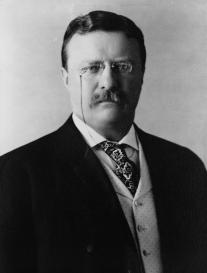 Additionally, four other Vice Presidents succeeded to the Presidency, and then were later elected to their own terms as President:
- Theodore Roosevelt, who became the youngest President in history (aged 42) when William McKinley was assassinated in September 1901. TR then won the election of 1904.
- Calvin Coolidge, when Warren Harding died in 1923 (and Coolidge’s father administered the oath of office). Coolidge won his own term in 1924.
- Harry Truman, when Franklin Roosevelt died three months into his fourth term, in April 1945. Truman won the election of 1948, and was the last President eligible to run for a third term (though he chose not to).
- Lyndon Johnson, when John Kennedy was assassinated in 1963. Johnson was elected in 1964, and eligible to run in 1968 (he’d served less than half of Kennedy’s term), but opted not to.
Gerald Ford is the odd man out: the only Vice President to succeed to the Presidency when his predecessor—Richard Nixon—resigned in August 1974. Ford lost the election of 1976 to Jimmy Carter.
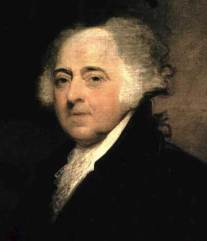 Finally, there are the Vice Presidents who were simply later elected President:
- John Adams, the first Vice President, who won the election of 1796 to become the second President.
- Thomas Jefferson, Adams’ Vice President, who then ran against Adams in 1800 and defeated him.
- Martin Van Buren, who was Andrew Jackson’s second Vice President, and then elected President himself in 1836.
- George H.W. Bush, the first sitting Vice President to be elected President in a century and a half, when he won the election of 1988 to succeed Ronald Reagan.
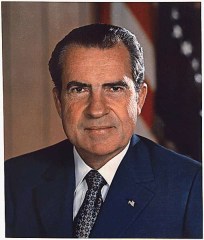 And, until recently, the only oddball on this list was Richard Nixon, who was Dwight Eisenhower’s Vice President from 1953 to 1961, lost the election of 1960 to John Kennedy, and then won the Presidential election of 1968.
Nixon had been the only former Vice President to be elected President, until just recently, when Joe Biden—Barack Obama’s Vice President from 2009 to 2017—won the election of 2020.
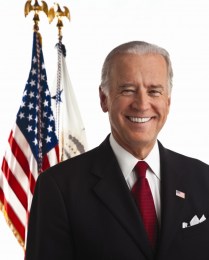
So, that’s 15 Vice Presidents who also served as President. 15 of 49. The Vice Presidency is not nearly the Presidential stepping stone one might think. Actually, the most popular job for future Presidents is (no surprise) lawyer: 23 of the 45 Presidents have been lawyers. 21 were members of state legislatures, 19 were governors, 18 served in the House of Representatives, and 17 served in the Senate.
It’s neat when technology works
Sometimes, technology really is remarkable. Right now, I’m sitting on the porch in South Carolina, with my computer open, and I got a text message from a friend in New Jersey, with a question about Mensa admissions testing. I thought I knew the answer, but opened another window to text the Mensa Testing Officer, who I know is on a train between New York City and Maine. She responded almost instantly, and I replied with the information (my assumption had been correct). It’s cool when all the pieces work as they ought.
 Ian Randal Strock